

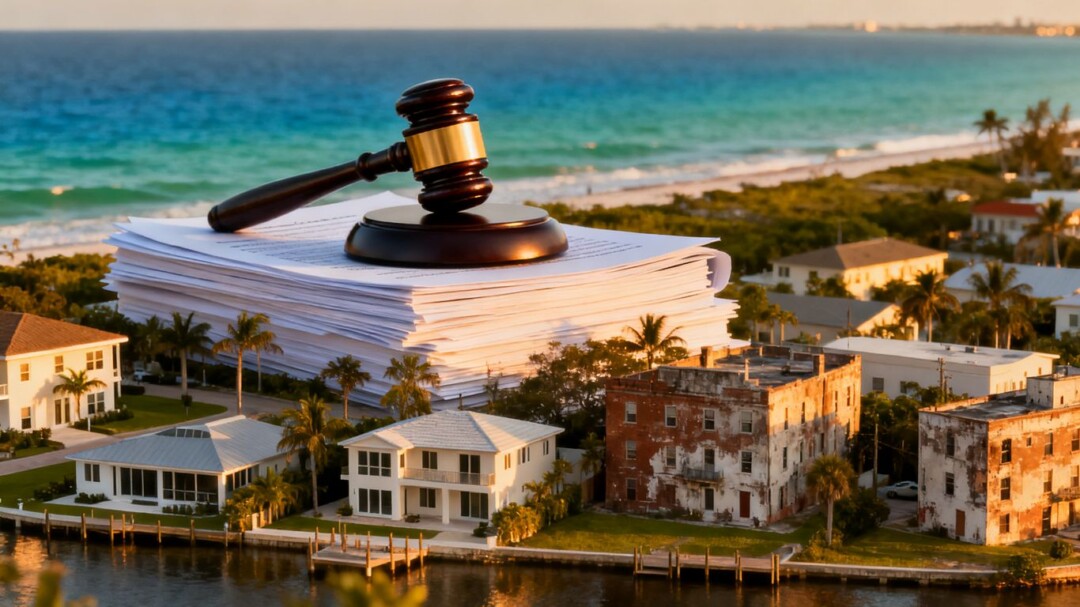
Florida’s real estate landscape is currently marked by a high-stakes legal battle between the Seminole Tribe and homebuilder Lennar Corp. over construction defects, while simultaneously, local governments are pushing forward with significant financial incentives to bolster affordable and workforce housing initiatives across the region.
Key takeaways
- The Seminole Tribe is suing Lennar Corp. for alleged construction defects, including mold and water intrusion, in over 500 homes.
- Lennar is attempting to move the dispute to private arbitration, while the tribe asserts its sovereign status to keep the case in public court.
- Palm Beach County is preparing to distribute $81 million in low-interest loans to support the construction of over 1,100 affordable housing units.
- Major developers, including Related Ross, are actively seeking these municipal funds to address the state’s escalating cost-of-living crisis.
A high-stakes legal confrontation
The Seminole Tribe of Florida has taken legal action against Miami-based construction giant Lennar Corp., alleging widespread defects in hundreds of homes built on tribal reservations. Residents have reported severe issues ranging from buckling floors and crumbling ceilings to pervasive mold growth that has rendered many properties uninhabitable. The tribe claims that despite repeated notifications, the developer failed to provide adequate repairs, forcing the relocation of many tribal members.
Lennar, one of the largest homebuilders in the United States, is contesting the allegations. The company has argued that the dispute should be settled through private, closed-door arbitration, citing standard warranty provisions. However, the tribe’s sovereign status has allowed them to pursue the case in a public courtroom, creating a rare and highly visible legal challenge for the industry titan.
Investing in affordable housing
While legal disputes dominate headlines, local governments are working to mitigate the state’s housing affordability crisis. Palm Beach County is set to approve $81 million in low-interest loans aimed at financing the development of over 1,100 income-restricted housing units. These initiatives are designed to help residents remain in their communities despite rising costs that have outpaced income growth.
The funding has attracted interest from several prominent real estate developers. Proposals include projects that cater to a wide range of area median income levels, ensuring that both workforce housing and senior living facilities receive necessary support. By providing 20-year loans at favorable interest rates, the county hopes to accelerate the delivery of much-needed residential inventory.
Balancing growth and accountability
The contrast between the Seminole Tribe’s litigation and the county’s investment programs highlights the complex nature of Florida’s current real estate market. On one hand, there is a clear demand for rapid development to house a growing population; on the other, there is a growing emphasis on construction quality and corporate accountability. As the Seminole case continues to unfold, it may set a precedent for how large-scale developers handle construction defect claims with powerful institutional clients, potentially influencing future contract negotiations across the state.
Sources
- Clash of Florida Titans Pits Powerful Tribe Against Homebuilder Lennar, Insurance Journal.
- Palm Beach County to Issue $81 Million in Housing Loans, The Real Deal.
- Related Ross among developers seeking affordable housing funds from Palm Beach County, The Business Journals.
- Affiliated Development seeks incentives for workforce housing in Hollywood, The Business Journals.