

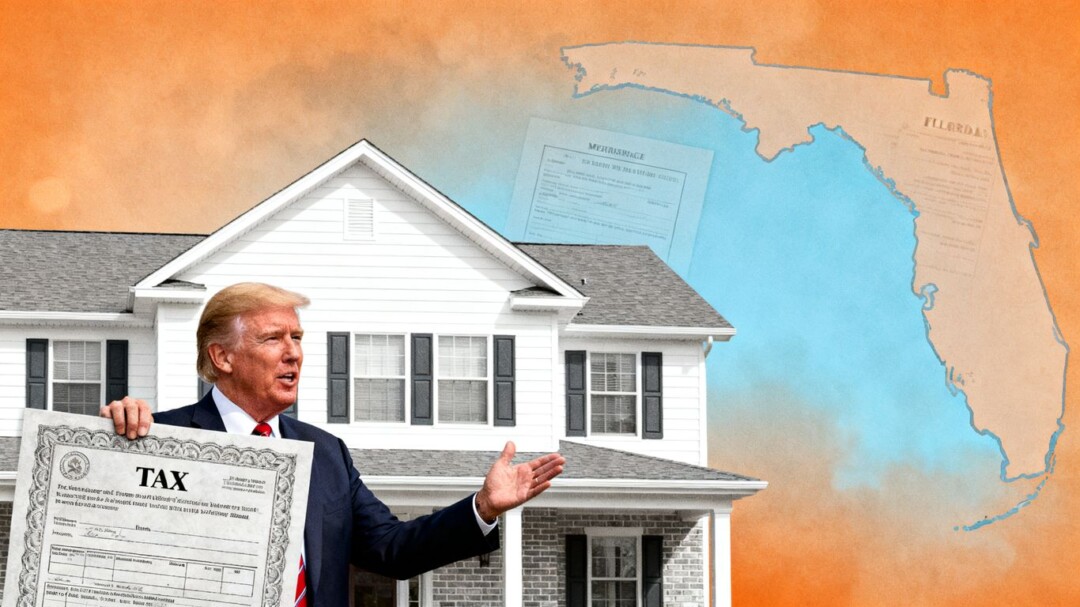
Florida Gov. Ron DeSantis plans to campaign for Amendment 3, a proposed constitutional change that would significantly increase Florida’s homestead exemption for certain non-school property taxes. Voters will decide the measure in November 2026, with supporters presenting it as a way to improve housing affordability while local governments and mortgage servicers assess the potential consequences.
Key takeaways
- The amendment would raise the non-school homestead exemption to $150,000 in 2027 and $250,000 in 2028.
- School district property taxes, homeowners insurance and second-home taxes would not be affected.
- DeSantis has estimated that the change could eliminate non-school property taxes for about 60% of homesteaded properties by 2028.
- Lower escrow collections could reduce custodial income and affect mortgage-servicing-rights valuations.
The governor’s support gives the proposal a prominent advocate ahead of the statewide vote. Florida Realtors also supports the measure, describing it as an opportunity to provide property-tax relief and strengthen attainable homeownership.
How the proposed exemption would work
Amendment 3 would increase the exemption applied to county, municipal and other non-school levies on qualifying homesteaded properties. The existing exemption for school district taxes would remain unchanged.
The primary beneficiaries would be full-time Florida residents who qualify for homestead status. New residents may initially receive a smaller benefit while they satisfy residency requirements, and investment properties and second homes would not receive the same treatment. The precise savings would vary by county, local tax rates, assessed value and the portion of a bill generated by affected levies.
Potential impact on homeowners and local governments
For eligible homeowners, the amendment could reduce monthly housing expenses by lowering the property-tax portion of escrow payments. That relief would come as many Floridians continue to face elevated home prices, insurance premiums and maintenance costs.
The measure could also reduce revenue available for services funded by non-school property taxes, including public safety, infrastructure, parks and libraries. Local governments might respond through spending reductions, alternative taxes or other locally approved revenue measures. The effects could differ significantly between affluent communities and jurisdictions with fewer financial options.
Why mortgage servicers are watching
Mortgage servicers collect and temporarily hold escrow funds for property taxes and insurance before sending payments to local authorities. Those custodial balances can generate income and contribute to the value of mortgage servicing rights, or MSRs.
If non-school tax bills fall broadly, servicers with large Florida portfolios could see lower escrow balances and reduced custodial earnings. The impact would depend on the number of Florida loans, borrower eligibility, local tax structures and portfolio concentration. Servicers may need to revise valuation assumptions, test for impairment and reassess expected income beginning in 2027.
Implementation could require operational changes
If voters approve the amendment, the first increase would take effect Jan. 1, 2027. Servicers could need to conduct updated or off-cycle escrow analyses when projected tax disbursements change materially, potentially reducing borrowers’ monthly payments before the regular annual review.
Industry analysts have recommended scenario modeling across counties and borrower types rather than relying on a single estimate. Testing reductions of varying sizes could help institutions prepare for changes in custodial income, escrow administration and MSR valuations.
A possible model for other states
The debate is being watched beyond Florida. Policymakers in other fast-growing Southern states may consider similar property-tax changes, creating broader implications for mortgage servicing and loan pricing if escrow balances decline across multiple markets. Amendment 3 still requires voter approval, and its ultimate effects will depend on eligibility rules, local budget decisions and how quickly tax savings appear in homeowners’ bills.
- DeSantis says he will campaign for Amendment 3, | Florida Realtors.
- Florida Amendment 3 and MSR Values for Servicers, HousingWire.