

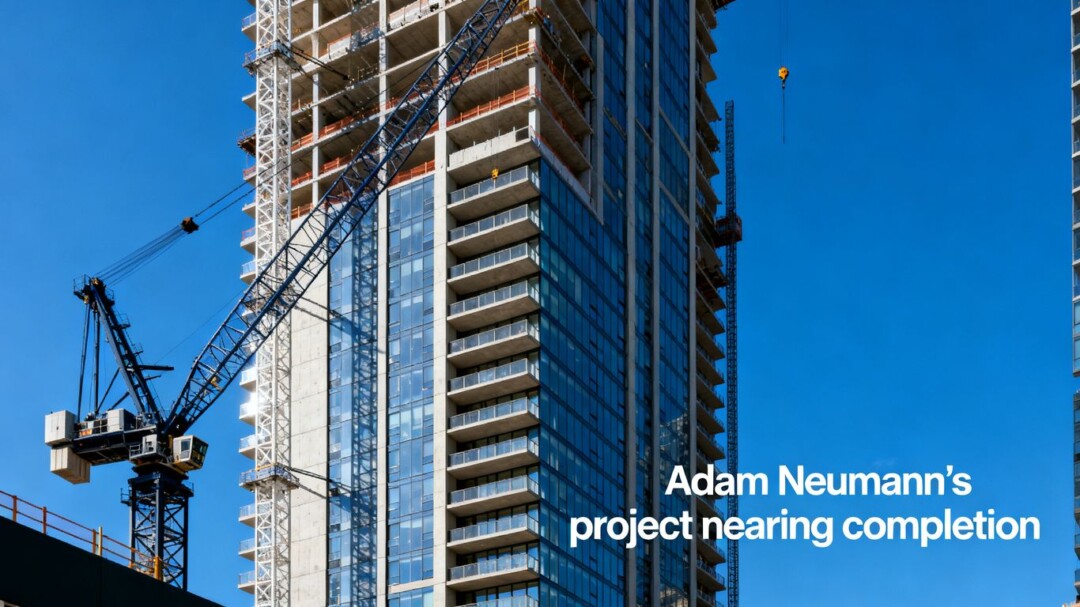
Adam Neumann’s multifamily development company, Flow, has secured $155 million in funding to complete its Flow House project in Miami. The 40-story, 466-unit development, originally planned as rentals, will now be converted into condominiums. Completion is anticipated by the end of the year, with units priced from $450,000.
Key Takeaways
- Flow has secured $155 million to complete its Flow House development in Miami.
- The project, initially planned as rental apartments, will now be converted into condominiums.
- Invictus Real Estate Partners and Integritas Capital provided the funding.
- Flow House is part of the larger Miami Worldcenter mixed-use development.
Flow House Development Details
Flow House, located at 697 N. Miami Ave. near downtown Miami, is a 40-story building with 466 units. The development is nearing completion and will offer studio, one- and two-bedroom condominiums. Prices for these units start at $450,000, with some featuring balconies and water views.
Amenities and Community Features
The development boasts a comprehensive suite of amenities designed to foster a sense of community. These include a 24/7 fitness center with personal trainers and group classes, a meditation room, Pilates studio, cold plunges, sauna facilities, and a swimming pool. Residents will also have access to a dedicated app for reserving amenity spaces and signing up for networking events.
Strategic Location and Market Context
Flow House is situated within the expansive Miami Worldcenter, a 27-acre mixed-use project that includes thousands of residential units, hotel rooms, and commercial spaces. This funding comes after Flow received $350 million in backing from Andreessen Horowitz in 2022. The company also has projects in Fort Lauderdale and Riyadh, Saudi Arabia, and recently acquired a site in El Portal, Florida, for future development.
Miami Condo Market Outlook
While Flow House moves towards completion, the broader Miami condominium market is facing projections of a slight decrease in sales for 2025, according to the Miami Association of Realtors. This is partly due to increased condominium assessments driven by new safety regulations. Despite this, median sales prices have seen consistent year-over-year growth over the past decade, and Miami remains relatively affordable compared to other major global cities.