

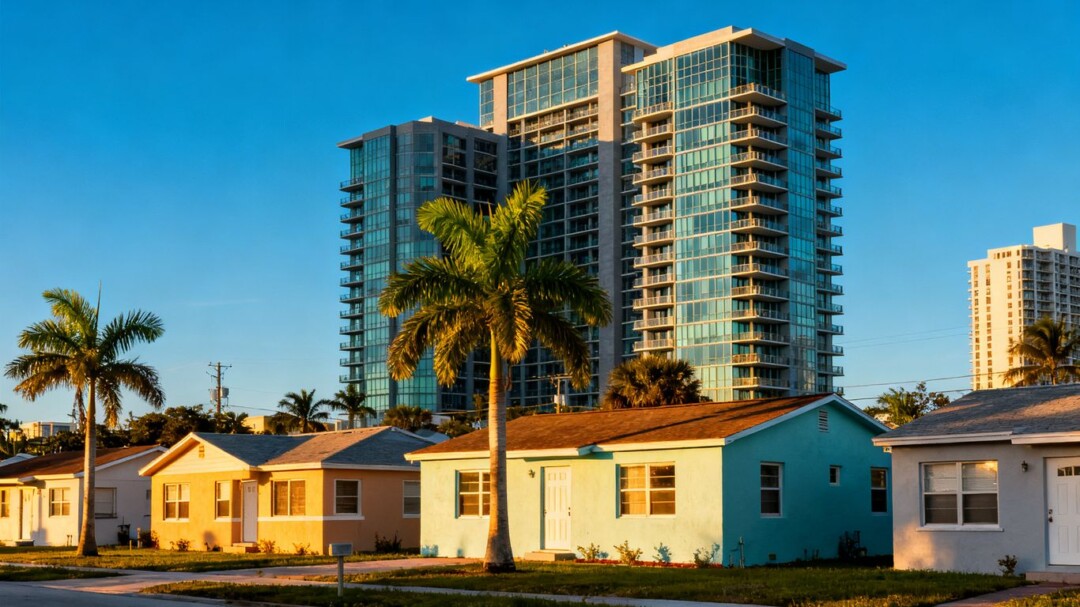
Florida’s once-affordable housing market is facing unprecedented challenges, with a surge of wealthy newcomers driving up prices and making it increasingly difficult for middle and lower-income residents to afford a home. This trend is reshaping communities and forcing many Floridians to consider leaving the state.
Key Takeaways
- A significant influx of high-earning individuals has dramatically increased housing costs across Florida.
- The state’s housing market is now ranked among the worst in the U.S., with several cities struggling significantly.
- Middle-class workers, including essential service providers, are being priced out, leading to a "dissolving" middle class.
- High insurance costs exacerbate the affordability crisis.
- Despite available funding, some cities are struggling to allocate resources for affordable housing projects.
The Wealth Migration Effect
Florida has become a prime destination for wealthy individuals relocating from other states, attracted by its lack of income tax and appealing climate. This migration, particularly accelerated since the pandemic, has injected billions of dollars in adjusted gross income into the state. However, this influx has directly fueled a rapid increase in home prices. In areas like Miami-Dade, median single-family home prices saw substantial spikes, with the share of million-dollar homes surging dramatically. Wealthy buyers often leverage cash, giving them a significant advantage over local buyers relying on financing, further intensifying competition and pushing prices higher.
A Shrinking Middle Class
The rising cost of living, especially housing, is creating a "cost-burdened" population, where shelter expenses exceed 30% of income. This squeeze is most acute for households earning between $75,000 and $125,000, who often don’t qualify for subsidies but struggle to afford market rates. Essential workers like teachers, nurses, and hospitality staff, who are crucial to the state’s economy, are finding it increasingly difficult to maintain a middle-class lifestyle. This has led to a "reshaping of who can realistically afford to live in these markets," with many essential workers considering or already leaving the state.
Broader Economic and Market Challenges
Beyond home prices, Florida’s housing market faces other significant hurdles. Home insurance premiums are substantially higher than the national average, adding another layer of financial strain for homeowners. Analysis by Construction Coverage ranks Florida as having the second-worst housing market in the U.S., with cities like Jacksonville, Tampa, and Miami showing particularly grim indicators. While some local markets, like Martin County, have seen median home prices drop significantly, the overall trend points to a market struggling with affordability and accessibility for a broad range of residents.
Unspent Funding and Future Outlook
Adding to the complexity, some cities are not fully utilizing allocated funds for affordable housing. Jacksonville, for instance, has millions in unspent state funding for affordable housing programs, despite the mayor’s stated priority to address the crisis. While efforts are being made to deploy these funds, challenges in program implementation and meeting state requirements persist. The situation highlights a critical juncture for Florida, where the economic benefits of wealth migration are increasingly offset by the growing unaffordability for its existing workforce and the potential long-term impact on its service-based economy.
Sources
- Florida’s influx of rich residents is killing the middle class and housing market, Fortune.
- Florida’s real estate ‘gold rush’ draws the super-rich as rising costs push others out | Florida, The Guardian.
- Jacksonville has $13 million in unspent affordable housing funding, JaxToday.
- Analysis shows Florida with second-worst housing market in U.S., Florida Politics.
- Florida local real estate market sees home prices plummet by $100k, Treasure Coast News.