

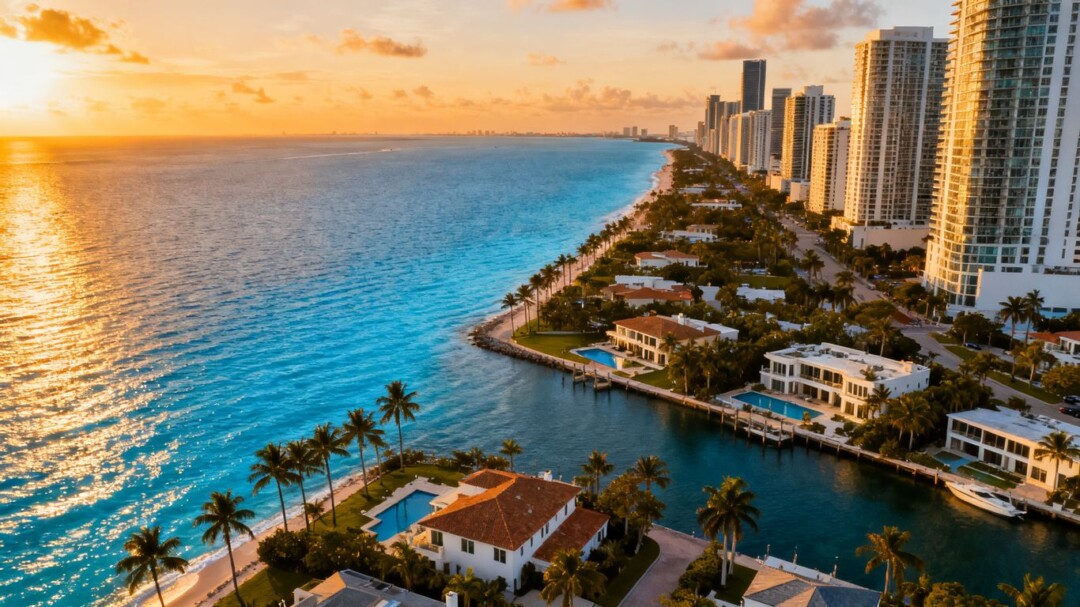
As Miami’s real estate market continues its dynamic evolution, discerning investors are seeking opportunities beyond the hype. Renowned luxury broker David Siddons, with over two decades of experience and billions in transactions, has identified five key property types poised for strong returns in 2026. His data-driven approach cuts through market noise, focusing on scarcity and enduring demand.
Key Takeaways
- Miami’s market has bifurcated: waterfront, ultra-luxury, and scarce assets are performing well, while oversupplied mid-tier condos are facing corrections.
- Demand is increasingly driven by end-users, particularly families relocating to the area.
- Scarcity, global wealth demand, and proven developer track records are critical factors for investment success.
1. Single-Family Homes Near Top Schools
Properties in desirable school districts like Coral Gables, Ponce Davis, Coconut Grove, and Pinecrest represent a consistently reliable investment. These homes, typically in the $1M-$2M range, are primarily sought by families relocating to Miami, ensuring demand from end-users rather than speculative investors. The limited supply in these established neighborhoods, especially in areas like East Coral Gables, provides a strong price floor. Investors should avoid cosmetically flipped homes and always conduct thorough inspections.
2. Waterfront Estate Homes
For wealth preservation, waterfront estates in gated Coral Gables communities (Gables Estates, Old Cutler, Cocoplum) and private island properties (Indian Creek, Star Island, Palm and Hibiscus Islands) are unparalleled. These assets benefit from permanently fixed supply and global wealth demand, creating a scarcity premium. While not high-yield investments, they offer capital preservation in a city with a growing global standing. Avoid dated, flood-prone properties or off-water homes within these exclusive communities.
3. Hospitality-Branded Oceanfront Condos
True hospitality-branded residences, such as those partnered with brands like Mandarin Oriental or Four Seasons, have significantly outperformed standard condos. The key is genuine operational partnerships and service infrastructure. Large-footprint, oceanfront units in projects like Ocean Terrace or Continuum on South Beach exemplify this category. Investors should steer clear of condos branded with fashion or car names, which often lack substantial operational involvement.
4. Pre-Construction From Proven Developers
Pre-construction offers high-return potential when approached strategically. Investing early in neighborhoods with proven demand drivers and from developers with a solid track record in Miami is crucial. Buyers who rely on independent market data over developer marketing, and who choose projects in areas with established infrastructure, are more likely to see appreciation. Avoid projects from developers new to the Miami market or those in underdeveloped areas.
5. Value-Play Single-Family Homes in Coral Gables-Adjacent Neighborhoods
Neighborhoods like Schenley Park, Biltmore Heights, and Glenvar Heights offer Coral Gables-quality living at a significant discount (20-30% less per square foot). As demand pushes into these adjacent areas, the price gap is expected to close. This strategy appeals to patient investors with a 5-to-10-year horizon seeking exposure to Miami’s wealth migration trend at a more accessible entry point. Ensure these neighborhoods share the school quality, character, and infrastructure that buyers value.
What to Avoid
Siddons advises against hotel condos, buildings with high investor-renter ratios, new construction from unproven developers, condos in underdeveloped areas, properties in flood hazard zones, and homes on busy streets. He also cautions against relying solely on developer or seller data.