

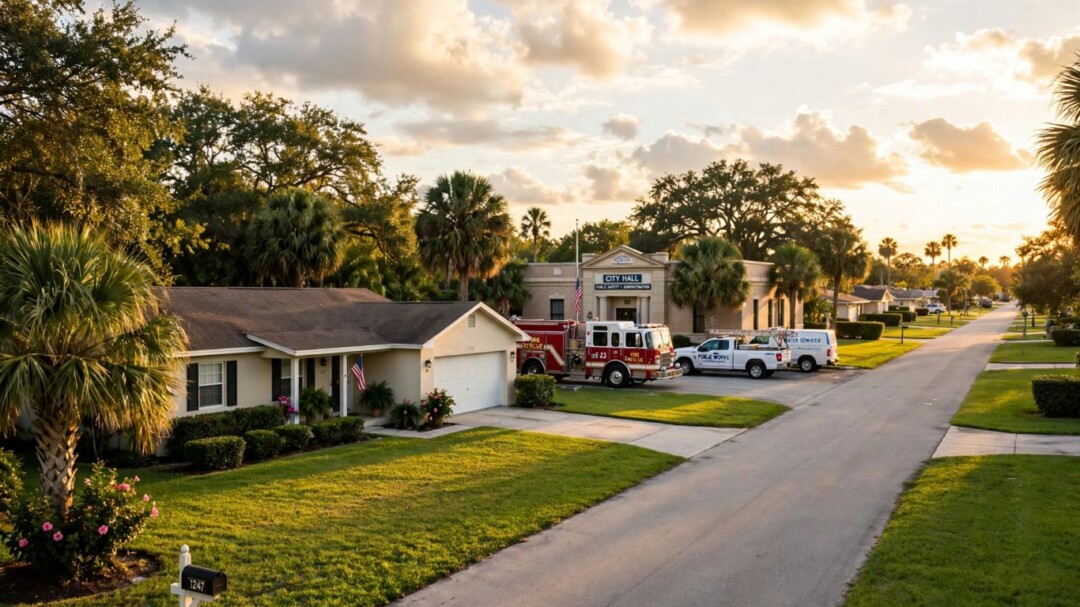
Florida’s proposed Amendment 3 is putting property taxes, housing affordability and public services at the center of a statewide debate. Supporters say it would reduce bills for homeowners; critics warn that lost revenue could shift costs to renters, businesses and other property owners—or leave communities with fewer services. The proposal also raises questions about funding for water management and flood protection.
Key takeaways
- The amendment would expand the homestead exemption for primary residences, excluding more of their value from certain property taxes.
- It would also lower the annual assessment cap for non-homestead properties, including rentals and commercial buildings, from 10% to 5%.
- Local governments could respond to reduced revenue with service cuts, higher fees or tax-rate increases, though the effects would vary by community.
- Passage requires approval from at least 60% of voters.
What the proposal would change
For a homeowner’s primary residence, Amendment 3 would raise the maximum homestead exemption from roughly $51,000 to $150,000 next year, then to $250,000 in 2028. The expanded exemption would apply to non-school property taxes, not school taxes. The governor has described the measure as a step toward eliminating non-school property taxes on homesteaded homes.
A separate provision would reduce the annual cap on assessed-value increases for properties without homestead exemptions—from 10% to 5%. That category includes rental homes, second homes and commercial properties. The cap can benefit owners when market values rise faster than the limit, but a sale resets the property’s assessed value to its current market value.
Homeowner savings and renter concerns
Florida Realtors, which has backed the proposal, argues that the exemption would offer meaningful relief as housing costs strain household budgets. The group’s chief executive has estimated average homeowner savings of more than $1,000 in 2027 and more than $2,500 in 2028. Those figures are projections from a supporter, not guaranteed savings for every homeowner.
Opponents say lower property-tax collections may prompt local governments to raise other taxes or fees, such as charges for garbage, fire services or utilities. Renters could feel indirect effects if landlords face higher fees or property-tax rates, although the extent would depend on local decisions and whether owners pass costs along. The reduced assessment cap could also help some landlords, but it would not prevent governments from increasing tax rates.
Possible effects on services and water resources
State estimates cited in coverage of the proposal project that local governments could lose a combined $8.7 billion in revenue by 2028 if it passes. Governments could combine spending reductions with higher fees or tax rates. Possible pressure points include parks, libraries, emergency services, transit and public hospitals. Supporters counter that homeowner relief is important and that tax savings should not automatically be dismissed because governments may adjust budgets.
Property taxes also help fund Florida’s five water management districts. Their work includes flood control, water supplies, restoration and conservation. In Central and South Florida, districts support projects such as Everglades restoration, land acquisition and alternative drinking-water supplies. Conservation advocates warn that reduced revenue could force difficult choices about these responsibilities; the overall effect would depend on how the amendment is implemented and how districts respond.
A decision with local consequences
The debate is not only about whether a homeowner’s tax bill falls. It is also about which properties and residents ultimately carry the cost, and what local governments can maintain with the revenue available. Voters weighing Amendment 3 face a choice between expanded tax relief and the risk that communities may have to replace lost revenue or scale back services.
- What’s at Stake for Florida’s Housing Market and Water Resources Under Amendment 3, Central Florida Public Media.
- How Amendment 3 would change South Florida property tax caps, Miami Herald.