

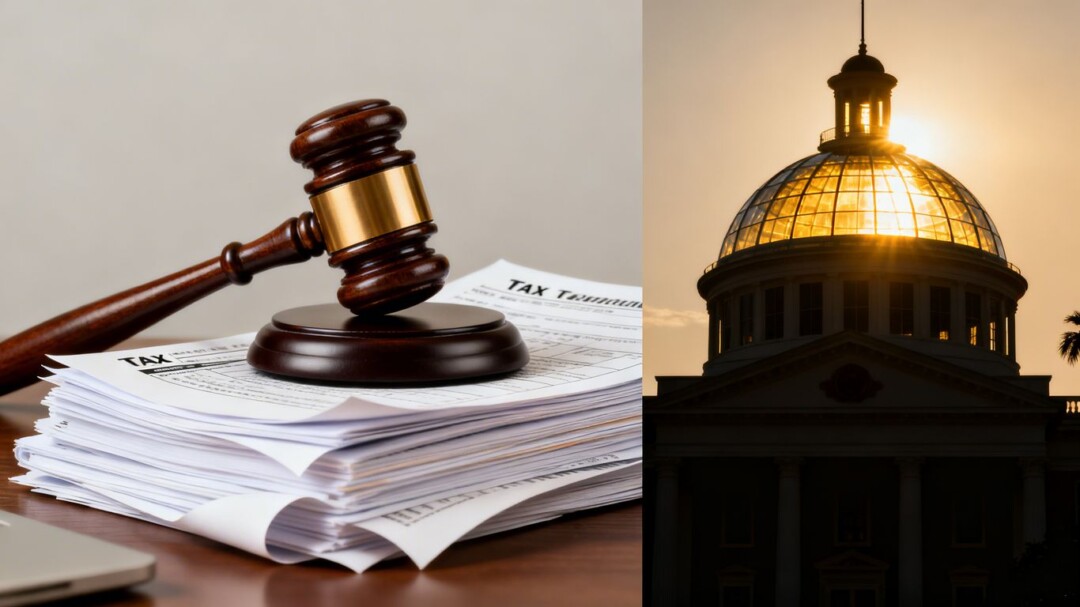
The Florida House of Representatives has passed a proposed constitutional amendment that would phase out non-school property taxes for homesteaded properties starting January 1, 2027. The vote, largely along party lines, now sends the proposal to the Florida Senate, where its future remains uncertain due to significant resistance and alternative proposals being considered.
Key Takeaways
- The Florida House approved a joint resolution to place a constitutional amendment on the November 2026 ballot that would eliminate non-school property taxes on homesteaded properties.
- The measure passed with a 80-30 vote, with all Republicans in favor and all Democrats opposed.
- The Florida Senate has not yet introduced a similar bill, and its leadership has indicated a different approach may be taken.
- Critics warn the elimination of property taxes could lead to significant budget shortfalls for local governments, impacting essential services.
- Governor Ron DeSantis has expressed a desire for a bold property tax reform but has not fully endorsed the House’s specific proposal, suggesting a preference for a special session.
A Bold Move by the House
The Florida House of Representatives has taken a significant step towards potentially eliminating property taxes for homeowners. The approved joint resolution, HJR 203, aims to put a constitutional amendment before voters in November 2026. If passed by voters, it would end non-school property taxes on primary residences beginning in 2027. Supporters argue this move is crucial for addressing the state’s affordability crisis and allowing Floridians to keep more of their hard-earned money.
Senate and Governor’s Hesitation
Despite the House’s decisive action, the path forward is far from clear. The Florida Senate has yet to embrace the House’s proposal, with some senators indicating their chamber will introduce its own, potentially less generous, measure. Governor Ron DeSantis has also signaled a preference for a more deliberate approach, suggesting that "doing it right" is more important than "doing it quick," and hinting at a potential special legislative session. This divergence between the House, Senate, and Governor creates significant uncertainty about whether the amendment will even reach the ballot.
Concerns Over Local Government Funding
Opponents of the House’s proposal, primarily Democrats, have voiced strong concerns about the potential impact on local governments. They argue that eliminating property taxes, a primary source of funding for services like police, fire departments, parks, and infrastructure, could lead to drastic budget cuts. For example, the city of Pensacola projects a $9.1 million shortfall, representing a nearly 27% cut to its non-public safety general fund budget. Critics contend that local governments would be forced to either slash essential services or find alternative, potentially regressive, revenue sources like increased sales taxes, which could disproportionately affect lower-income residents and renters.
The Road Ahead
For the proposed amendment to appear on the ballot, it must pass both the Florida House and Senate with a three-fifths majority. Given the current legislative landscape, this presents a significant hurdle. The debate highlights a fundamental disagreement on how to provide tax relief and fund essential public services in Florida, setting the stage for intense negotiations in the remaining weeks of the legislative session, or potentially beyond.
Sources
- Florida House passes proposed amendment to immediately phase out property taxes • Florida Phoenix, Florida Phoenix.
- Florida Wants to Eliminate Property Tax: Here’s Who Would Really Pay Instead, Kiplinger.
- Florida’s property tax proposal cuts $9 million from Pensacola budget, pnj.com.
- House approves dramatic property tax rollback, sets up clash with Senate, WPTV.
- Florida’s property tax cut plan is flailing. Here’s what should happen, Tampa Bay Times.