

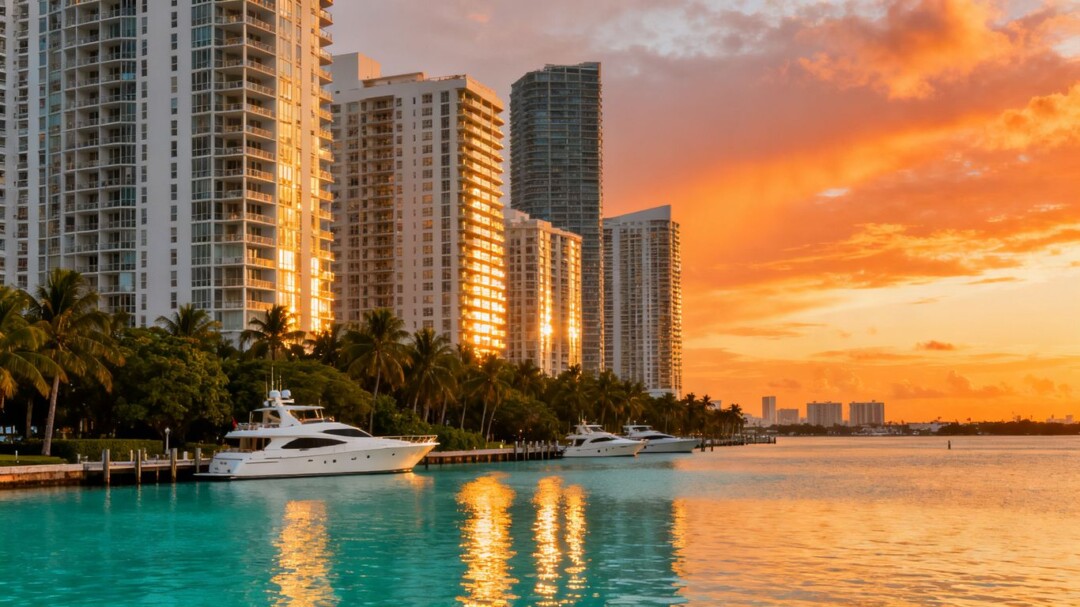
Brickell Key is entering a pivotal phase. The private, 44-acre island has evolved from an early condominium experiment into one of Miami’s most distinctive waterfront communities. Its established residential character, limited land supply, and major redevelopment plans are now reshaping how buyers view the island’s past, present, and future.
Key takeaways
Brickell Key’s appeal rests on its combination of urban access and island privacy. The community’s defining trends include:
- A transformation that began with its first condominium tower in the 1980s.
- Eleven residential towers, a waterfront promenade, and everyday neighborhood services.
- Average closed prices per square foot that reportedly rose about 27% between 2021 and 2026.
- Current pricing that remains more than 10% below Brickell mainland averages, according to the source’s market analysis.
- New luxury development that could establish higher pricing benchmarks for the island.
The past: Building a neighborhood
Brickell Key was developed as a compact, private island community beside Miami’s rapidly growing financial district. Over time, its condominium towers, controlled entrance, landscaping, and waterfront paths created an identity distinct from mainland Brickell.
The island also developed the practical features of a neighborhood rather than functioning solely as a collection of residential towers. Cafés, restaurants, offices, a marketplace, a veterinary clinic, and wellness services give residents access to daily necessities without requiring a trip across the bridge.
The present: A market defined by the building
Today, Brickell Key attracts buyers seeking walkability, security, water views, and a quieter setting near downtown employment and entertainment. Most buildings emphasize full-time or long-term residents, with restrictions that limit short-term rentals and help preserve the island’s residential atmosphere.
The condominium market is highly building-specific. Frequently considered options include Carbonell, Asia, One Tequesta Point, Two Tequesta Point, Three Tequesta Point, and Courts Brickell Key. Each offers a different mix of floor plans, services, views, age, and pricing.
For buyers, the decision between resale and new construction is increasingly important. Established units may offer more space, immediate occupancy, and lower pricing per square foot, while newer residences can deliver modern systems, expanded amenities, and higher service levels.
The future: Luxury redevelopment arrives
The former Mandarin Oriental site is being redeveloped into a two-tower residential and hospitality project. Reported pricing of roughly $2,700 per square foot places the project at the top end of Brickell Key’s market and could reset expectations for future sales.
A nearby condominium site has also been acquired for redevelopment, adding to the signs of long-term investment. Because the island has limited land and finite residential inventory, new construction may create a sharper contrast between premium residences and established buildings.
For example, a three-bedroom residence in the new Mandarin Oriental Private Residences reportedly begins near $6.85 million, while an existing penthouse cited in the analysis was priced around $4.35 million. The difference reflects more than size: buyers are weighing newer construction and hospitality services against space, immediate availability, and established community character.
Why Brickell Key remains distinctive
Brickell Key occupies a rare position in Miami real estate. Residents can walk to mainland Brickell for work, dining, shopping, and entertainment, then return to a landscaped island with open water views and a slower pace.
Its next chapter will bring greater luxury, stronger competition between buildings, and potentially higher values. Yet the island’s enduring advantage remains the same: it offers the convenience of the city without requiring residents to live entirely within its intensity.