

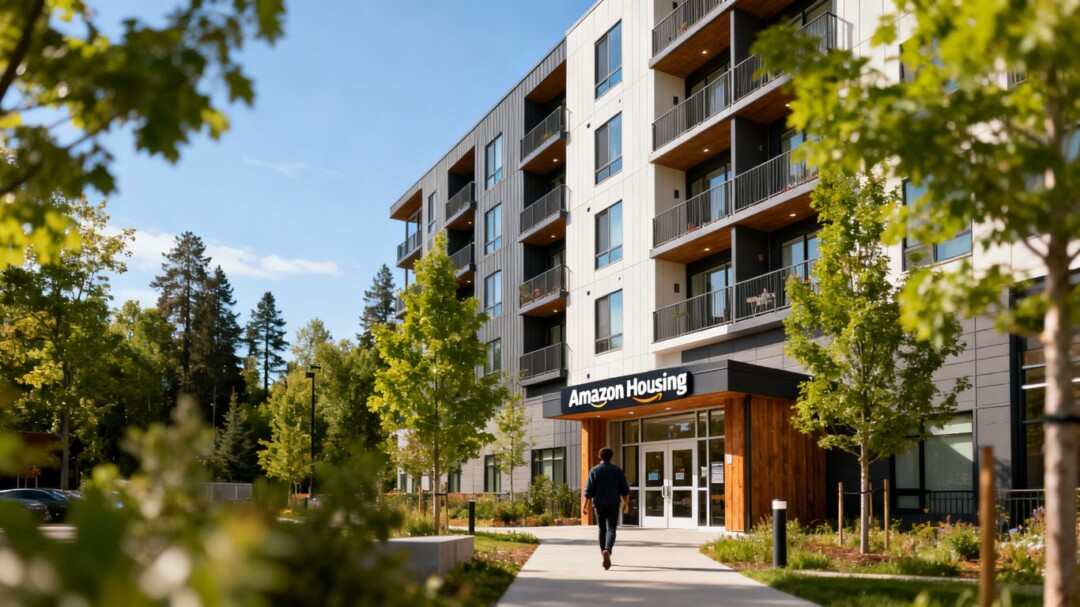
Amazon pledged a significant investment to combat the affordable housing crisis, aiming to create and preserve thousands of units in key metropolitan areas. The company’s Housing Equity Fund, launched in 2021, initially committed $2 billion. Now, the tech giant has reached a milestone of 10,000 affordable housing units supported in the Puget Sound region, with plans for further expansion.
Key Takeaways
- Amazon’s Housing Equity Fund has supported the creation of 10,000 affordable housing units in the Puget Sound region.
- The fund focuses on housing for individuals earning between 50% and 80% of the Area Median Income (AMI).
- Amazon’s approach involves providing low-interest loans and grants to local developers and housing authorities.
- While progress is being made, challenges such as flattened rents and a dwindling supply for extremely low-income individuals persist.
Amazon’s Housing Equity Fund In Action
Amazon’s commitment to affordable housing is exemplified by projects like Connection Angle Lake in SeaTac, Washington. This 130-unit development, located near public transit, received a $17 million low-interest loan and a $2 million grant from Amazon’s fund. Approximately 40% of these units have already been occupied.
The company’s initial $2 billion commitment was intended to create 20,000 affordable housing units across Seattle, Arlington, Virginia, and Nashville, Tennessee. However, Amazon announced last year that it had already surpassed this goal, with 21,000 units completed. Subsequently, the company committed an additional $1.4 billion to create another 14,000 homes in these same regions.
Focus on Middle-Income Housing
Alice Shobe, global director of Amazon Community Impact, highlighted the fund’s intentional focus on housing for those earning between 50% and 80% of the Area Median Income (AMI). This strategy aims to address a gap often overlooked by federal funding, which typically targets lower-income brackets. This focus is crucial for essential workers like teachers and security guards who struggle with rising rents in expensive urban areas.
Addressing Displacement and Gentrification
In Seattle, Amazon has directed funds towards projects in neighborhoods vulnerable to displacement. Beacon Pacific Village, a 160-unit complex near Amazon’s former headquarters, serves residents within the 50% to 60% AMI range. Developed in partnership with community organizations, this project prioritizes local residents and offers units suitable for multigenerational families, aiming to counteract gentrification.
Challenges and Future Outlook
Despite significant progress, Amazon’s efforts are occurring in a complex housing market. Flattened rents in Seattle have led to higher vacancy rates in some affordable housing projects. Furthermore, while the fund addresses the needs of low- to middle-income earners, there remains a critical shortage of housing for extremely low-income individuals. Amazon acknowledges this tension and states that its portfolio includes units for families below the 50% AMI mark.
Compared to other tech giants like Apple, Meta, Google, and Microsoft, Amazon’s approach involves supplementing existing funding with loans and grants, rather than committing land. The success of these initiatives is being closely watched, with mixed results reported for similar funds launched by other companies, often due to regulatory hurdles and development delays.