

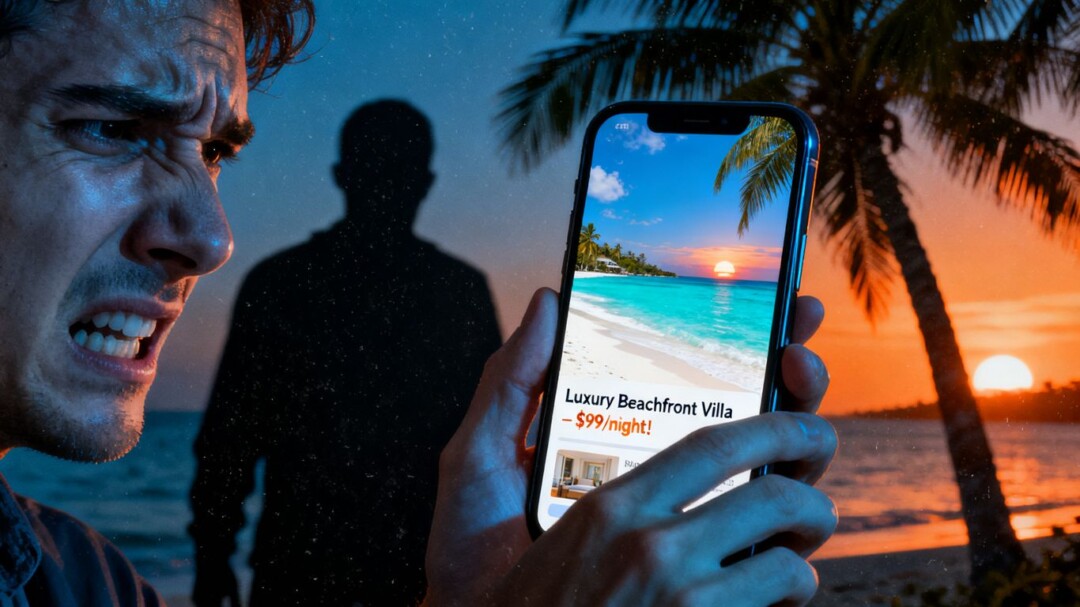
As summer travel season approaches, financial experts are urging vacationers to exercise extreme caution when booking short-term rentals. With reports of widespread scams—including fake property listings and sophisticated bait-and-switch tactics—travelers are being advised to stick to reputable platforms and verify every detail to avoid losing money or being left without accommodations.
Key takeaways
- Always book and pay through official platforms to maintain fraud protection.
- Be wary of prices that seem too good to be true or hosts who pressure you to act quickly.
- Conduct a reverse image search on property photos to ensure they are not stolen from other sites.
- Document the condition of your rental immediately upon arrival to avoid disputes.
Protecting against rental fraud
Financial crimes investigators report that scammers are increasingly using AI-generated content to create convincing, yet entirely fake, property listings. Many of these scams originate on social media platforms, where fraudsters post attractive photos of properties that do not exist or are not available for rent. To protect yourself, always perform a background search on the host and the property address. If you find numerous negative reviews or warnings about scams, it is best to look elsewhere. Additionally, using tools like Google Street View can help confirm that the property matches the description provided in the listing.
Avoiding the bait-and-switch
A common tactic used by swindlers is the bait-and-switch. In this scenario, a host lures travelers with a highly desirable property at a competitive price. Right before the scheduled check-in, the host claims the property is unavailable due to maintenance issues or overbooking and offers a lower-quality alternative instead. Experts advise travelers to decline these last-minute alternatives. If a host attempts this, contact the booking platform immediately to request a refund or assistance, as staying in the unverified alternative often leads to further financial loss.
Understanding insurance and responsibilities
Beyond avoiding scams, travelers must understand the limitations of insurance coverage. Many guests mistakenly assume that a homeowner’s insurance policy or a platform’s protection plan covers every possible issue, such as theft or property damage. In reality, these programs often have strict eligibility requirements and exclusions. Before your trip, confirm whether your own insurance provides protection for personal belongings while traveling. Furthermore, safety is a shared responsibility; upon arrival, take the time to locate emergency exits and confirm that safety devices like smoke alarms are functional. Documenting the condition of the rental with photos as soon as you arrive can also serve as vital evidence should any disputes arise regarding damage or security deposits after your stay.
Sources
- Planning a getaway? Avoid these rental scam red flags, WGAL.
- 8 Red Flags Your Vacation Rental Is a Scam, According to Financial Crimes Investigators, AOL.com.
- Mercury Insurance: 5 Vacation Rental Coverage Myths, Stock Titan.