

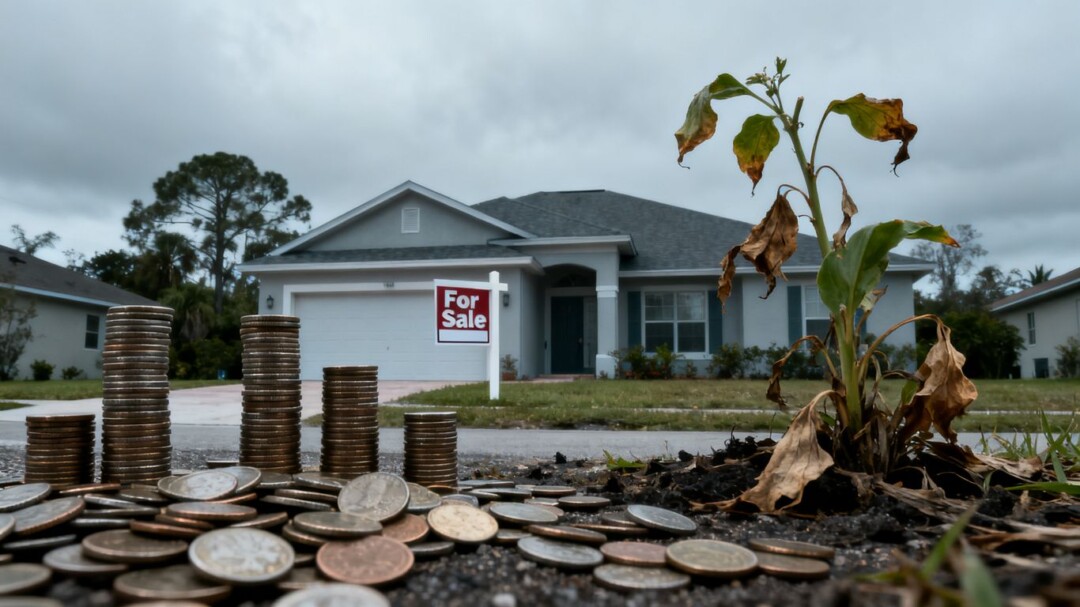
Real estate investors are increasingly bypassing Florida’s housing market, a significant shift from its previous popularity. This trend, observed in late 2025, sees investors favoring West Coast cities like Seattle, while Florida markets, particularly Orlando, experience notable declines in investor purchases. The move away from the Sunshine State is attributed to a confluence of factors including escalating insurance and HOA fees, softer rental yields, and a general cooling of demand following the pandemic-era boom.
Key Takeaways
- Investor home purchases nationally saw only a marginal 2% year-over-year increase in Q4 2025, marking the eighth consecutive quarter of subdued activity.
- Florida experienced significant double-digit drops in investor purchases, with Orlando leading the decline at 16%.
- Conversely, West Coast cities like Seattle saw substantial gains, with investor purchases jumping 37%.
- Rising insurance and HOA costs, coupled with softer rents, are making Florida less profitable for investors.
- Proposed federal policies aim to curb institutional investor activity, though their impact is debated.
A Geographic Divide Emerges
Recent data reveals a stark contrast in investor behavior across the United States. While national investor activity remained largely stagnant, a clear geographic split has emerged. West Coast metropolitan areas such as Seattle, Portland, and San Francisco have witnessed double-digit increases in investor purchases. Seattle, in particular, recorded a 37% year-over-year jump in investor activity, the highest among major U.S. metros. This surge is partly driven by the expectation of renewed demand fueled by AI hiring and return-to-office mandates.
Florida’s Shifting Investment Landscape
In contrast, Florida is experiencing a significant pullback from investors. Orlando saw the steepest decline in investor purchases, down 16% year-over-year. This downturn is attributed to several factors that have eroded the state’s appeal for real estate investment. The end of the pandemic-driven boom, coupled with soaring insurance premiums and homeowners association (HOA) fees exacerbated by climate-related risks, has made it considerably harder for investors to achieve profitability. Additionally, softening rental rates and increasing inventory have further diminished the profit potential for both flippers and landlords.
Factors Influencing Investor Decisions
The decision for investors to shy away from Florida is multifaceted. Beyond the rising operational costs, the state’s housing market has cooled considerably since the pandemic frenzy. High home prices, combined with increased mortgage rates and a return to office policies, have dampened demand from both residents and newcomers. This has led to a surplus of inventory in some areas, putting downward pressure on prices and making it more challenging to "flip" properties for a profit. Some Florida metros, including Cape Coral-Fort Myers and West Palm Beach-Boca Raton-Delray Beach, are even flagged as being at higher risk of price declines in the coming year.
National Trends and Policy Considerations
Nationally, the overall investor market remains subdued, with purchases rising only 2% year-over-year in the fourth quarter of 2025. This represents the eighth consecutive quarter of minimal change, a stark departure from the pandemic-era frenzy. Redfin data indicates that investors still accounted for approximately 18% of homes sold in the fourth quarter, a rate unchanged from the previous year. However, investors are showing a preference for higher-end properties and single-family homes over townhouses. Amidst these trends, policy discussions have emerged, including a proposal to ban large institutional investors from acquiring more single-family homes, aimed at improving affordability for individual buyers. However, analysts suggest that such measures might have a limited impact given the relatively small share of the single-family stock controlled by these large players.
A Glimmer of Opportunity in West Palm Beach
Despite the general retreat, certain pockets within Florida continue to attract investor interest. West Palm Beach, often referred to as "Wall Street South," has bucked the trend, with investor purchases rising by 17% year-over-year in the fourth quarter of 2025. This surge is linked to a booming luxury home market in the area, indicating that specific high-end segments may still offer attractive opportunities for investors.
Sources
- Real estate investors turn away from Florida, Mortgage Professional America.
- Investors Are Avoiding Florida’s Housing Market, Newsweek.