

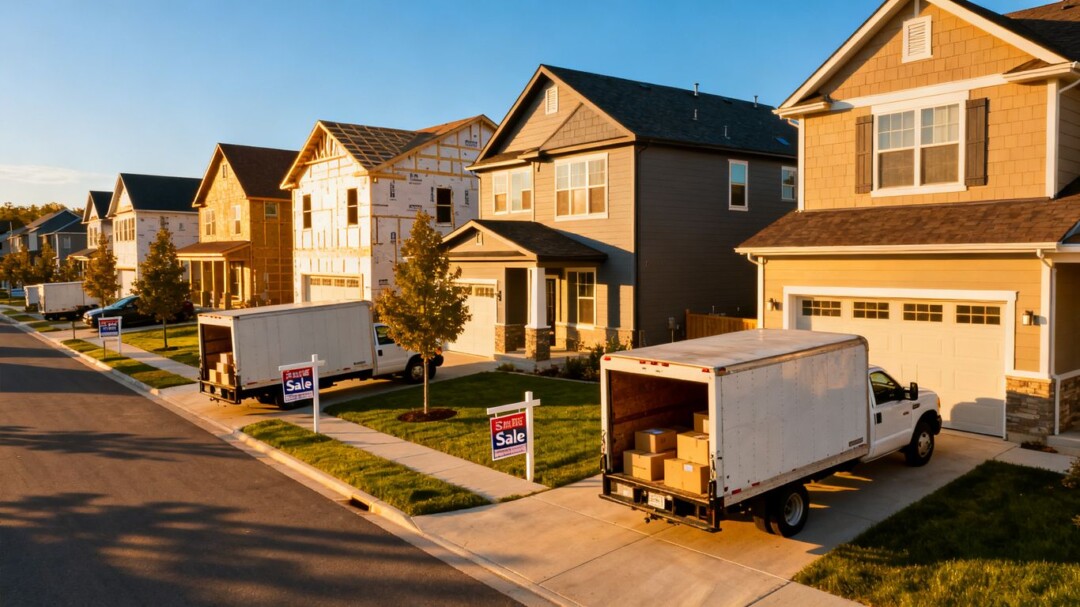
The U.S. housing shortage continued to grow in 2024, but at its slowest pace in years, offering an early sign that supply conditions may be improving. Zillow estimates the national deficit reached 4.7 million homes, while affordability held steady instead of deteriorating further—a modest but meaningful shift for buyers and policymakers.
Key takeaways
- The housing shortage expanded by about 43,000 homes in 2024.
- The estimated national deficit reached 4.7 million homes.
- About 33% of homes listed for sale were affordable for a median-income household.
- Affordability was unchanged from 2023 but remained well below 2021 levels.
These figures suggest the housing market may be moving toward greater stability, although the underlying shortage remains substantial and affordability challenges continue.
The shortage is growing more slowly
The addition of roughly 43,000 homes to the national shortfall was the smallest annual increase in several years, according to Zillow’s analysis. That slower growth could indicate that new construction, household formation, and available inventory are beginning to move closer together.
However, a slower increase is not the same as a reversal. With the estimated deficit standing at 4.7 million homes, the market would need sustained construction and additional listings over many years to meaningfully close the gap.
Affordability has stopped worsening
Affordability also showed a measure of stability in 2024. Approximately one-third of homes listed on Zillow were considered affordable for a household earning the median income, matching the share recorded in 2023.
The pause in deterioration is notable after several years of rising home prices, elevated mortgage rates, and limited inventory. Still, buyers remain under pressure: the 33% share is far below the roughly 54% of listings considered affordable in 2021.
What the numbers mean for buyers
For prospective buyers, the data points to a market that may be less rapidly worsening rather than one that has become broadly accessible. More inventory and slower shortage growth could eventually give buyers additional choices, but prices, borrowing costs, and local supply conditions will continue to determine whether homes are within reach.
Conditions are also likely to vary widely by region. Markets adding homes more quickly may see better selection, while areas with restrictive building conditions or strong population growth could continue to face intense competition.
The road ahead for housing supply
Closing the national gap will require more than a single year of improved figures. Builders, local governments, and policymakers will need to support sustained housing production across a range of prices and locations.
The 2024 results nevertheless provide a cautiously positive signal. The shortage is still expanding, but its slower growth and the stabilization of affordability suggest that the market may be beginning to move away from the sharp deterioration seen earlier in the decade.