

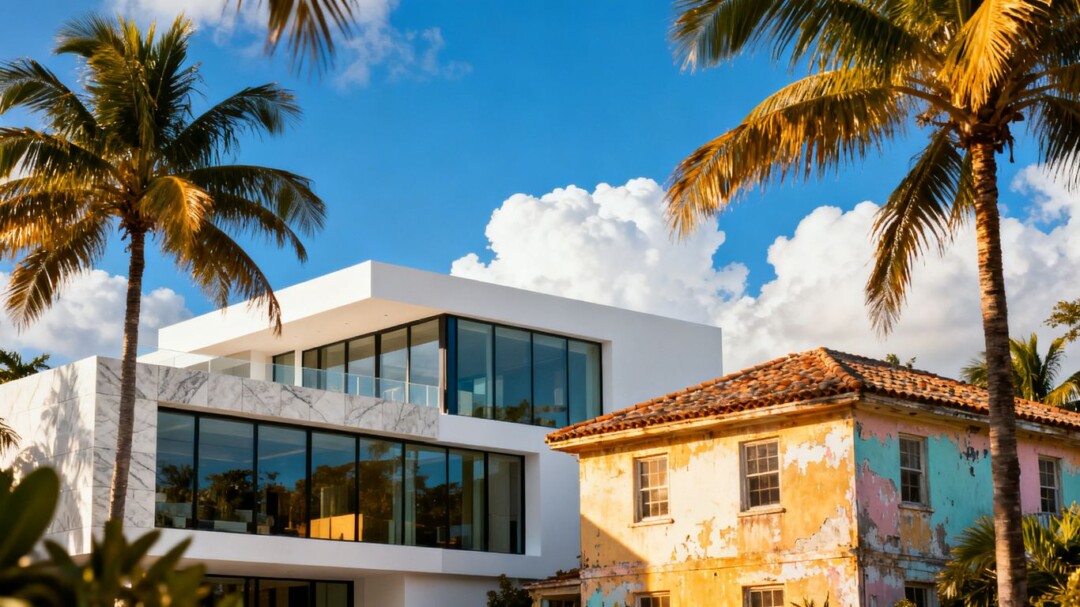
The first quarter of 2026 has highlighted a significant bifurcation in the Miami real estate market, according to a new report. This "two-economy model" is characterized by a traditional demand-driven housing sector and a distinct ultra-wealth scarcity market, leading to divergent price trends across different property types and neighborhoods.
Key Takeaways
- Miami’s real estate market is no longer monolithic, operating as two separate economies: one driven by local demand and financing, the other by global wealth and scarcity.
- Ultra-luxury and waterfront properties continue to see price appreciation, driven by global migration and all-cash buyers.
- Mid-tier condos and properties in supply-heavy areas are facing price pressure due to rising inventory and financing sensitivity.
- Building quality, location, and specific micro-market dynamics are now more critical than ever in determining property value and performance.
The Two-Economy Model Explained
The report identifies two distinct economic systems at play in South Florida’s real estate. The first is the traditional demand-driven economy, influenced by local incomes, second-home buyers, and financing conditions. This segment behaves like a conventional housing market, with pricing tied to demand elasticity and affordability. Core neighborhoods in this category include Kendall, North Miami, Aventura, and parts of Edgewater and Downtown Miami.
The second is the ultra-wealth scarcity economy, fueled by global wealth migration, all-cash transactions, and lifestyle relocations. This segment functions more like a global luxury asset class, where scarcity in prime coastal and waterfront locations dictates pricing power. Key neighborhoods here include Coral Gables, the core of Brickell, South of Fifth, Coconut Grove, Bal Harbour, Surfside, Fisher Island, Golden Beach, and prime waterfront areas of Miami Beach.
Condo Market Fragmentation
The condo market, in particular, is showing a clear split. Approximately 50% of buildings are classified as "weak," experiencing price cuts and longer days on market, often due to older construction, dated finishes, or less desirable locations. Another 30% fall into a "stable" category, representing established boutique or oceanfront properties holding their value.
The remaining 20% are considered "strong," characterized by luxury branding, signature architecture, spacious floor plans suitable for primary residences, and resort-level amenities in prime locations. These properties are gaining value, even amidst market softening, due to their inherent scarcity and desirability.
Navigating the Market in 2026
For buyers and sellers in 2026, understanding this nuanced market is crucial. Success hinges on micro-positioning and property-specific strategies rather than broad market trends. While ultra-prime coastal properties continue to command premiums, mid-tier segments and older condo stock may offer negotiation opportunities. The report emphasizes that precise market knowledge and strategic decision-making are key to maximizing value and mitigating risk in Miami’s increasingly fragmented real estate landscape.