

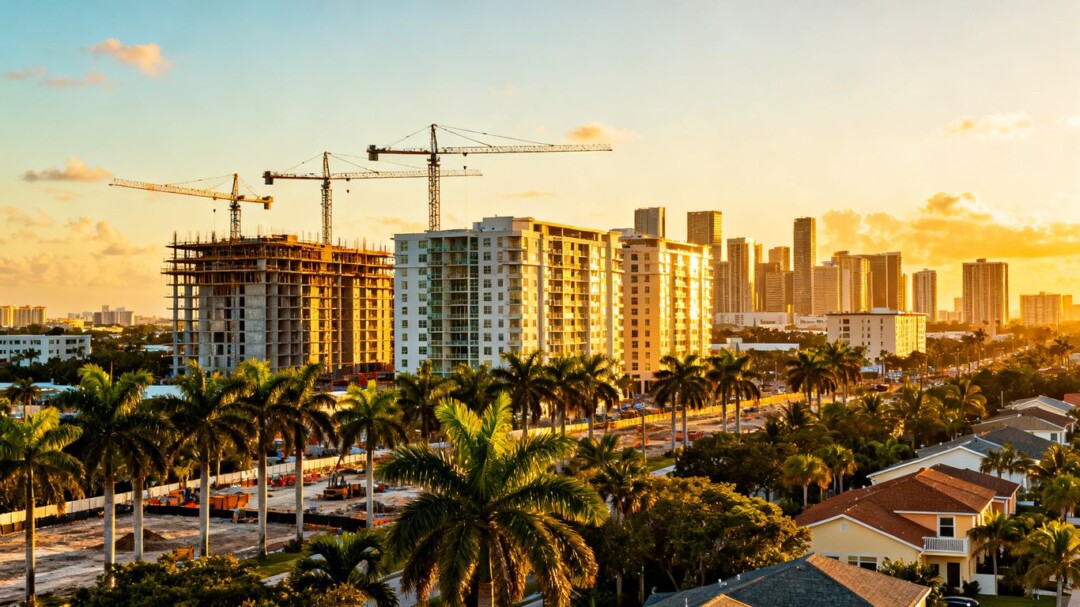
Miami-Dade County is actively addressing its significant affordable housing shortage by prioritizing the development of new mixed-income and affordable housing projects. These initiatives often involve redeveloping existing public housing sites into denser, more modern communities, reflecting a national shift towards public-private partnerships in housing solutions.
Key Takeaways
- Miami-Dade faces a deficit of approximately 90,000 housing units.
- Redevelopment of public housing sites is a key strategy, increasing unit density.
- Public-private partnerships are crucial for financing and developing affordable and workforce housing.
- New developments are often transit-oriented, enhancing community connectivity.
Redeveloping Public Housing
Miami-Dade is transforming aging, county-owned public housing sites into new, denser affordable and workforce housing developments. This approach, championed by developers like Related Urban Development Group, moves away from the traditional, often underfunded, government-run public housing model. Instead, it embraces public-private partnerships that leverage subsidies and incentives to create housing for various income tiers. Affordable housing typically targets individuals earning up to 80% of the area median income (AMI), while workforce housing extends to 120% of AMI.
Projects like the redevelopment of Liberty Square and Rainbow Village exemplify this strategy. Liberty Square, one of Miami’s oldest public housing complexes, is undergoing a multi-phase transformation by Related Urban to include nearly 1,500 new public, affordable, and workforce units. Similarly, Housing Trust Group is developing Rhapsody at Rainbow Village in Overtown, replacing 136 older units with over 1,500 mixed-income affordable units.
New Developments and Partnerships
Beyond public housing redevelopments, new projects are emerging through various partnerships. Developer Ellen Buckley’s Prospera Real Estate Collective is planning 93 homes for sale at below-market prices in Coconut Grove and near North Miami. The Grand Bahamas Place project in Coconut Grove will feature 56 condo units and nearly 3,000 square feet of retail space, with units restricted for households earning up to 80% AMI. Another project, Faith Place Village, will offer 37 townhomes for households earning up to 120% AMI.
Atlantic Square in Overtown represents a significant milestone as Miami-Dade’s largest single-phase mixed-income transit-oriented development. This 36-story tower offers 616 apartments, including 320 workforce and 40 affordable units, alongside retail space. Developed through a public-private partnership involving multiple county and city agencies, it is strategically located near major transit hubs like Brightline’s MiamiCentral station, Metrorail, and Metromover.
Addressing the Housing Squeeze
The county’s limited land availability, bordered by the bay and the Everglades, intensifies the housing shortage, estimated at 90,000 new units. Strategies like increasing unit density on existing sites and developing transit-oriented communities are crucial. These developments not only expand housing opportunities but also aim to improve mobility and connect residents to jobs and community resources, fostering a more resilient and equitable future for Miami-Dade.