

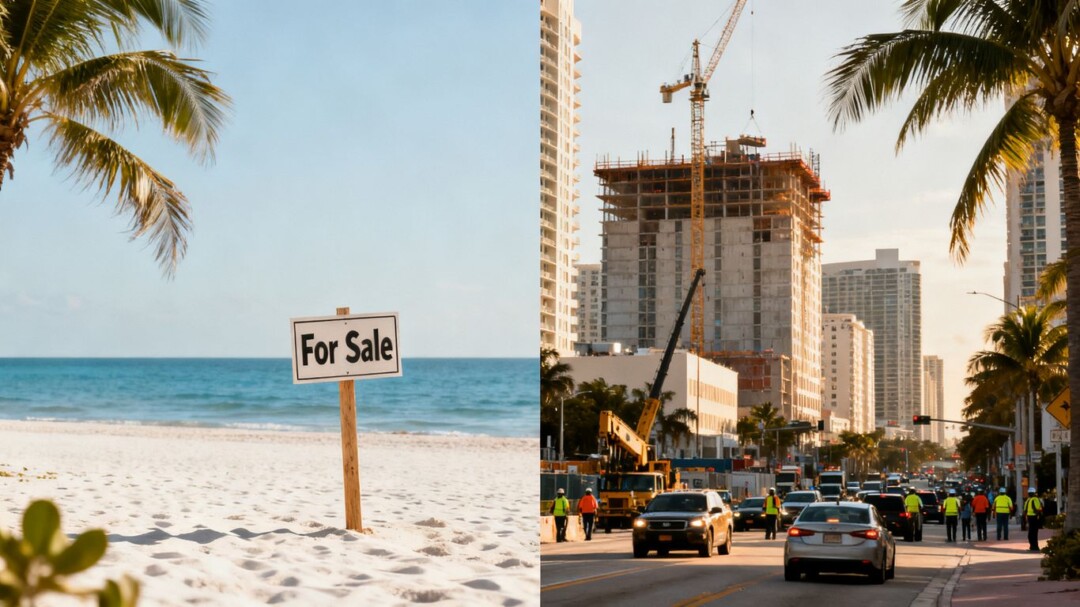
Florida’s real estate investment landscape presents a mixed picture, with activity cooling in certain sectors and markets while others experience significant growth. While house-flipping faces headwinds and some commercial deal volumes have decreased, other areas, particularly industrial and certain commercial properties, are seeing a surge in investment, driven by factors like population growth and a favorable business climate.
Key Takeaways
- House-flipping activity nationwide has slowed due to increased costs and competition.
- South Florida’s commercial real estate deal volume has seen a dip, influenced by geopolitical uncertainty and elevated interest rates.
- Despite a general slowdown in some investment sales, the industrial sector in South Florida is experiencing a boom.
- Commercial real estate investment is surging across Florida, fueled by population growth and tax advantages.
Cooling Investment in Some Sectors
House-flipping nationwide has experienced a notable slowdown. Higher borrowing and renovation costs, coupled with limited inventory and increased competition, are squeezing profit margins for investors. This has led to a decrease in single-family home and condo flips compared to previous years. Some experienced investors are adapting by focusing on lighter renovations or alternative exit strategies like rentals.
In South Florida, commercial real estate deal flow has also cooled. Factors such as geopolitical instability, including the Iran War, rising oil prices, and uncertainty surrounding interest rate cuts, have created hesitation among investors. First-quarter commercial deal volume was down significantly compared to the previous year, with multifamily and retail sectors showing notable declines. The multifamily sector, in particular, is grappling with an oversupply of new units and slower leasing, leading to decreased average asking rents.
Booming Commercial Real Estate
Despite the slowdown in certain segments, Florida’s commercial real estate market is experiencing a surge overall. This growth is attributed to the state’s dynamic economy, increasing population, and favorable tax environment. West Palm Beach, for instance, is seeing record-high retail occupancies, driven by the migration of high-net-worth individuals and tech leaders.
Companies are relocating to Florida, and new developments are attracting a well-compensated population seeking enhanced lifestyle experiences. This has created a self-sustaining cycle of growth and demand, particularly benefiting mixed-use developments and the retail sector.
Industrial Sector Shines
Within the broader commercial real estate market, the industrial sector has emerged as a significant bright spot. Deal volume in industrial investment sales has increased substantially, outperforming other sectors. This strength is partly due to the nature of industrial properties, which often feature triple net leases where tenants cover taxes, insurance, and maintenance. Banks are reportedly favoring industrial investments, leading to a high volume of transactions and closings in this segment.
Outlook and Influencing Factors
The future of Florida’s real estate investment market will likely depend on several factors. Geopolitical stability, a potential decrease in interest rates, and the overall health of the housing market are expected to play crucial roles. While some investors are adopting a cautious approach, waiting for market conditions to stabilize, others remain active, particularly in sectors like industrial real estate, demonstrating the resilience and diverse opportunities within the state’s property market.
Sources
- Miami investment real estate sales surged above $9 billion in 2025, The Business Journals.
- House-Flipping Activity Continues to Cool, | Florida Realtors.
- Analysis of South Florida’s Investment Sales Market, The Real Deal.
- Real estate investors turn away from Florida, Mortgage Professional America.
- Florida Sees Surge in Commercial Real Estate, | Florida Realtors.