

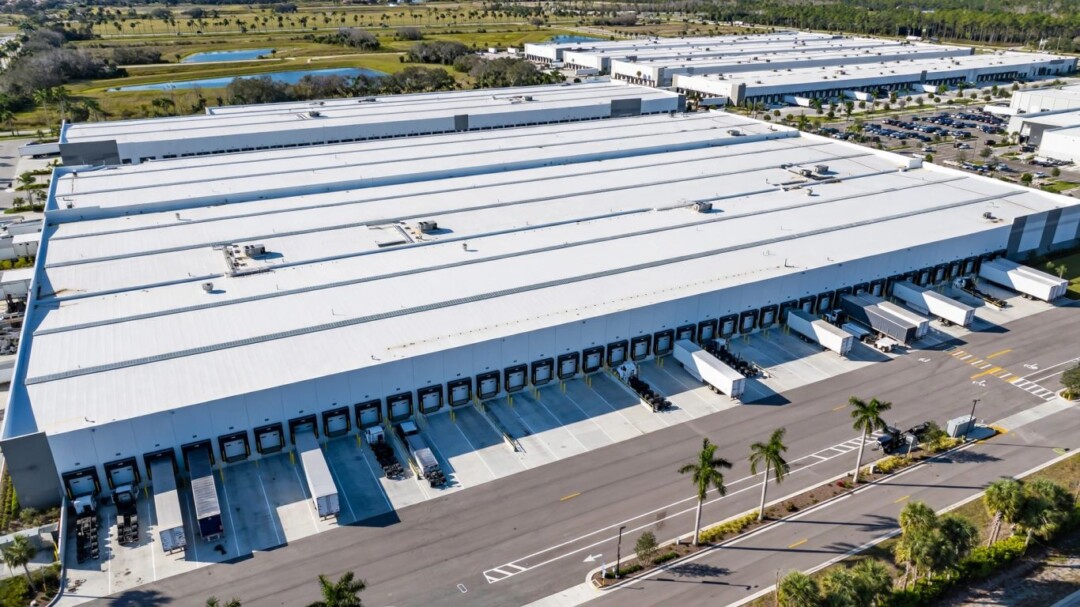
A newly expanded, 685,000-square-foot Central Florida warehouse has sold to a Florida-based investment firm and family office at a reported 4% cap rate. The transaction concludes a nearly decade-long investment by an affiliate of Paul V. Profeta & Associates and combines a long-term lease to a Fortune 500 consumer goods company with layered financing and tax strategies.
Key takeaways
- The 685,000-square-foot distribution facility sold at a 4% cap rate; the sale price was not disclosed.
- The property is leased to a Fortune 500 consumer goods company under a new 25-year triple-net lease with annual 3% increases.
- The sale used credit-tenant lease financing, mezzanine debt and a structured 1031 exchange.
The deal pairs a long-term tenant commitment with financial structuring intended to boost sale proceeds and provide tax benefits to the buyer. The family office was not identified.
From 1031 acquisition to build-to-suit
The Roseland-based firm acquired the property in 2018 through a Section 1031 like-kind exchange, following the sale of a development tract in Franklin Township, New Jersey. During a tour of the Florida site, the prospective tenant requested a larger warehouse and 49-foot ceilings to support an automated inventory-handling system.
The project was expanded into a build-to-suit distribution center designed around a gantry-driven, artificial intelligence-controlled robotic system. Construction took nine months—four months ahead of schedule—and finished $5 million under budget, according to Profeta.
Long-term lease and financing structure
The building changed hands with a new 25-year, triple-net, bondable lease. Its annual 3% rent increases provide scheduled growth in lease payments over the term. A triple-net lease generally leaves the tenant responsible for property expenses such as taxes, insurance and maintenance, subject to the lease’s terms.
PGIM provided credit-tenant lease financing. The structure incorporated a derivative of residual value insurance, allowing the first-mortgage financing to require amortization of 58% of the original principal value. The deal also included a mezzanine note designed to avoid phantom income for the buyer during the lease term, as well as a paydown-readvance provision intended to let the buyer retrieve its cash down payment tax-free.
1031 exchange strategy shaped the sale
Profeta said the sale employed an innovative 1031 exchange structure that increased proceeds by about 20%. The transaction also involved restructuring the mezzanine financing during the contract period to address federal rules governing applicable interest rates and avoid potential tax consequences for the buyer.
The financing and exchange arrangements added complexity to a sale that capped a transformation from an acquired property into a specialized distribution hub. The resulting long lease, annual rent escalations and high-specification automation infrastructure distinguish the facility from a conventional warehouse investment.