

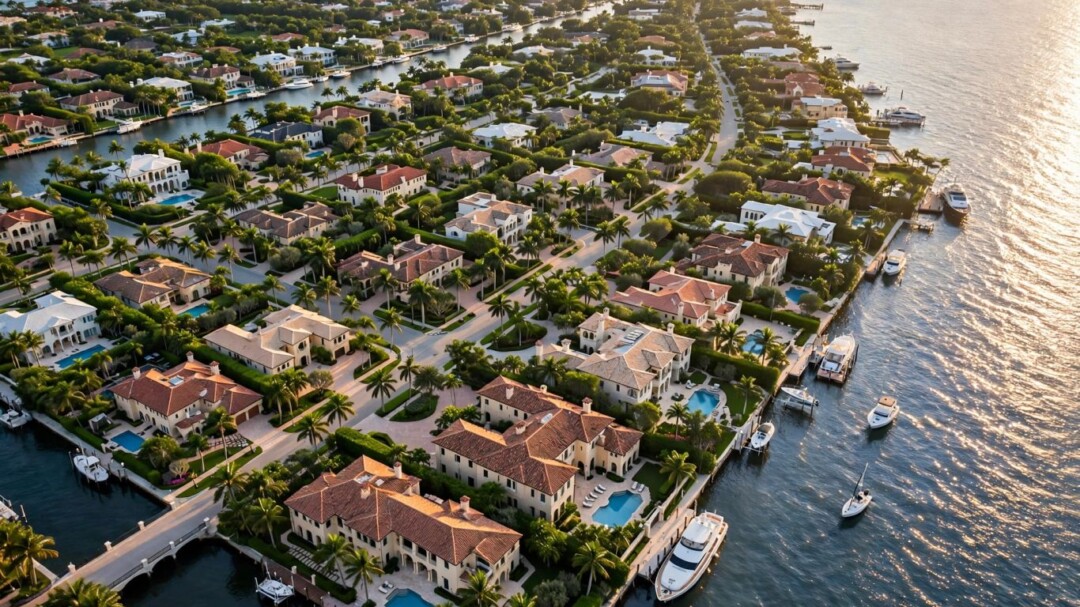
West Palm Beach recorded a 43.9% surge in luxury-home sales, the fastest growth among major U.S. metropolitan markets, according to the reported ranking. The increase puts South Florida’s high-end housing market in the national spotlight. The figure signals a sharp rise in sales activity, though it does not, by itself, show how prices or total transaction values changed.
Key takeaways
- Luxury-home sales in the West Palm Beach metro area rose 43.9%.
- The growth rate ranked first among major U.S. metropolitan markets in the report.
- Sales growth is distinct from price appreciation; the figure alone does not establish that luxury homes became more expensive.
The ranking highlights activity in the region’s upper-tier housing segment, but additional details—such as the period measured, the number of transactions and the report’s definition of “luxury”—are needed to interpret the increase fully.
What the reported growth means
A 43.9% increase indicates substantially more luxury-home sales than in the comparison period used by the report. It does not necessarily mean that sales rose by the same amount across every neighborhood or price bracket in the metro area. Nor does it reveal whether the increase came from more available listings, stronger buyer demand or a combination of market conditions.
Percentage changes can also be affected by the number of sales in the starting period. Without transaction totals and the comparison dates, the ranking describes the pace of growth but not the market’s overall size or how durable the trend may be.
Why the ranking matters
Being the fastest-growing major metro can draw attention from prospective buyers, sellers and real-estate professionals considering South Florida. For sellers, stronger transaction activity may indicate a deeper pool of buyers for high-end properties. Buyers, meanwhile, should not treat a sales-growth figure as proof that prices are rising or that every property is attracting heightened competition.
The result is best read as a measure of recent market momentum rather than a complete picture of affordability, inventory or long-term performance. Those factors can vary considerably across a metropolitan area.
What to watch next
Future data on luxury-home prices, listings, time on market and transaction counts would help show whether the sales surge reflects a sustained shift or a change in activity over a shorter period. The report’s measurement window and luxury-home threshold would also help readers compare West Palm Beach with other metros on consistent terms.
For now, the 43.9% figure establishes West Palm Beach as the standout market for luxury-sales growth in the ranking, while leaving broader questions about prices and the trend’s staying power open.