

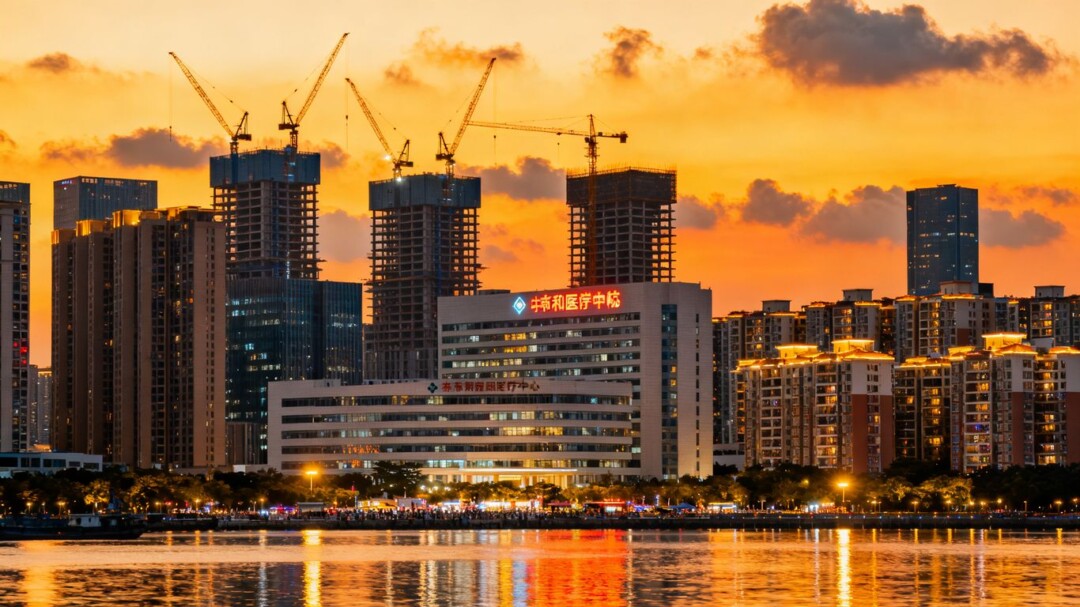
West Palm Beach is entering another phase of rapid transformation as billions of dollars in planned investment flow into offices, residences, hospitality, health care and higher education. The projects are expanding the city’s economic base while influencing neighborhood character, housing demand and how residents, workers and visitors experience the Palm Beach County market.
Key takeaways
- More than $10 billion in investment has been announced across West Palm Beach and Palm Beach County.
- Vanderbilt University is advancing plans for a graduate campus and a new $250 million fundraising phase.
- Cleveland Clinic is planning a larger hospital and outpatient presence in the city.
- Residential, hospitality and waterfront development continue to shape the local real estate market.
These projects are part of a broader development cycle rather than isolated construction efforts. Together, they point to an expanding urban economy with new employment centers, services, housing options and entertainment destinations.
Investment reaches beyond traditional real estate
Ross has announced more than $10 billion in planned investment across West Palm Beach and Palm Beach County, including office, residential and hospitality projects. The scale of that activity is drawing attention from buyers and homeowners who want to understand how surrounding development could affect property values, traffic, amenities and neighborhood identity.
Florida Realtor Christie Di Lemme said the city’s transformation is increasingly visible in daily life. In her view, investment in businesses, restaurants, health care, education and housing is changing how people live and spend time in West Palm Beach.
Education and health care add economic momentum
Vanderbilt University announced in January 2026 that it was proceeding with plans for a graduate campus in West Palm Beach. The university also launched a new $250 million phase of fundraising, adding an education component to the city’s expanding institutional economy.
Cleveland Clinic is likewise expanding its local footprint. Its plans include a new hospital and an outpatient and ambulatory surgery center at 15 CityPlace. According to the organization, the expansion would nearly quadruple the size of its current West Palm Beach health center.
These institutions could bring students, medical professionals, researchers, patients and support businesses to the area, potentially strengthening demand for nearby housing and services.
Residential growth changes the market outlook
Luxury residential development continues along the waterfront and in downtown areas, where new projects are adding homes near offices, restaurants and cultural amenities. The combination of employment growth and expanded services may make West Palm Beach more attractive to people seeking a full-time residence rather than a seasonal home.
For prospective buyers, the development pipeline creates both opportunities and considerations. New amenities and jobs can increase an area’s appeal, while construction, congestion and changing building density may affect the experience of existing neighborhoods.
A city increasingly viewed as a long-term destination
Di Lemme said buyers are looking beyond a property’s current appearance and evaluating what is being built around it. That approach reflects West Palm Beach’s evolution from a primarily seasonal destination into a city positioned as a place to live, work and establish a long-term future.
As major developers, universities and health care organizations continue committing resources to the region, West Palm Beach’s real estate story will likely be shaped as much by interconnected infrastructure and institutions as by individual buildings.