

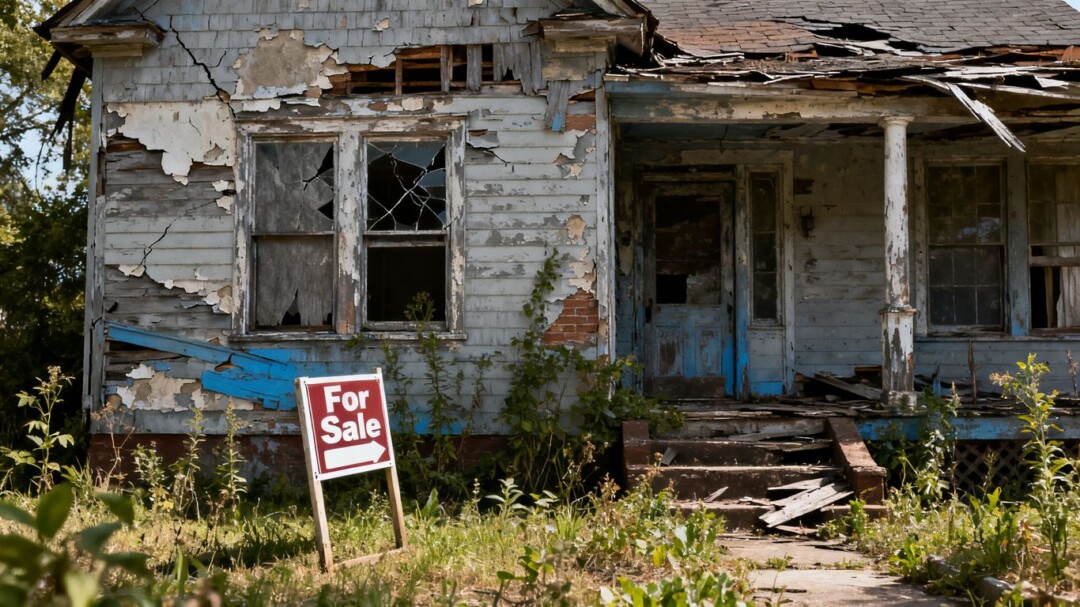
A Florida couple who bought a waterfront foreclosure in Titusville discovered that a steep purchase discount came with substantial risks. Benjamin and Cosette Bodenschatz secured the unusual 3,052-square-foot property for $479,000, but later spent about $170,000 addressing aging systems, safety concerns, and extensive remodeling needs.
Key takeaways
The couple’s experience highlights both the potential value and uncertainty of buying a foreclosure:
- The home’s price fell from an original $700,000 listing to $479,000.
- An appraisal valued the property at $610,000 at the time of purchase.
- Major repairs included air conditioning, electrical panels, flooring, and a full kitchen renovation.
- The buyers faced delays and the possibility that another offer could derail the sale before closing.
The final result was a distinctive waterfront home that the couple believes was worth the expense and effort.
A discounted waterfront property
The four-bedroom, 2.5-bath home was built in 1981 and sits on 1.6 acres. It had remained on the market for years, with multiple price reductions before the couple made an offer. Although they were not specifically seeking a foreclosure, its midcentury-modern design, wood ceilings, size, and waterfront setting made it stand out from the newer, more uniform homes they had previously considered.
The couple ultimately offered the then-current asking price of $479,000. Because the home appraised for $610,000, they appeared to gain approximately $131,000 in equity immediately after closing—before accounting for renovation costs.
Foreclosure brought added uncertainty
The inspection initially revealed only a water-heater problem, which cost about $1,000 to replace and install. However, buying a foreclosure created complications beyond the physical condition of the home. Communication with the seller’s representatives was slow because the property was being handled by a department rather than an individual owner.
The buyers also understood that the seller could accept another offer until the transaction was completed. That concern became tangible on closing day, when another prospective buyer appeared at the property and said he intended to make an offer. The couple closed successfully within the required 30-day period, avoiding a contractual charge of $150 for each additional day.
Repairs quickly escalated
Once they had the keys, the buyers found that the property required considerably more work than the inspection alone suggested. The carpets were badly worn, the air-conditioning systems were unreliable, and the electrical infrastructure posed a serious concern.
The two air-conditioning units failed shortly after the purchase, resulting in a $7,100 replacement bill. An electrician then determined that the two electrical panels were close to becoming a fire hazard; replacing them cost $14,865. The kitchen required a complete overhaul because the cabinets were stuck and unusable, adding approximately $18,700.
Other improvements included new flooring, exterior work, updated fixtures, and repairs throughout the house. The combined renovation bill eventually reached roughly $170,000. The couple paid cash, with assistance from family members experienced in renovating properties, rather than financing the work with a loan.
Buyers say the investment was worthwhile
Although the renovation has taken time and the house is not yet completely finished, the couple says the project gave them the opportunity to customize a rare property. They remain pleased with the purchase and view the home as a possible long-term residence.
Their experience illustrates why foreclosure buyers must look beyond the listing price. A discounted property can offer meaningful equity and unique features, but deferred maintenance, transaction uncertainty, and unexpected system failures can quickly consume those savings.