

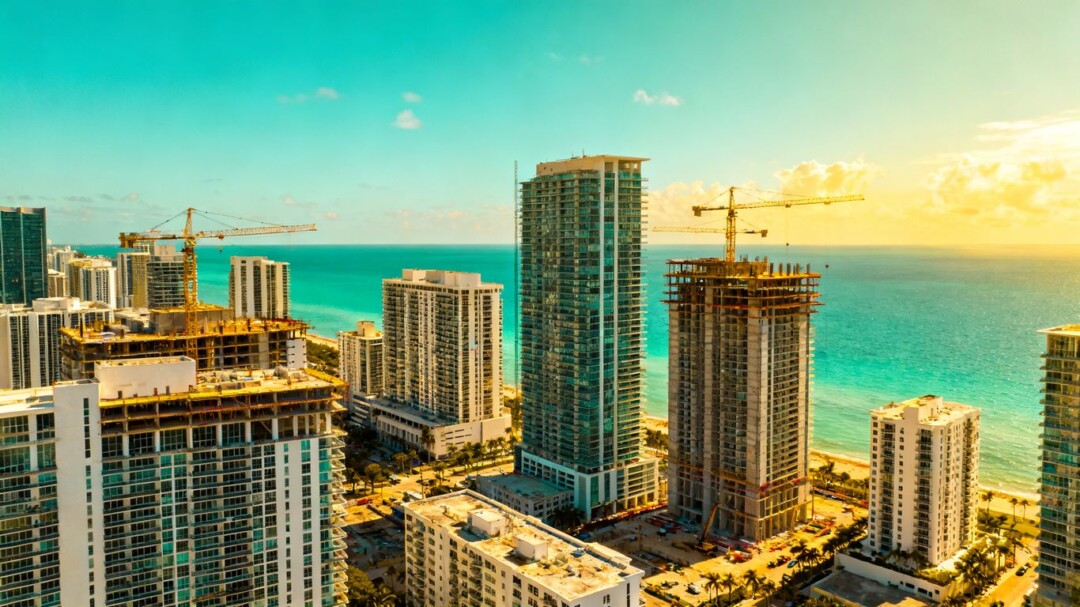
Miami’s real estate landscape is approaching a critical juncture as 2028 nears. Market analysts are warning of a significant imbalance in the Brickell area, where a wave of investor-owned units is expected to hit the resale market simultaneously. While this poses risks for certain segments, ultra-luxury projects designed for primary residents remain largely insulated from the volatility.
Key takeaways
- A projected 1,300 new condo units are scheduled for delivery in Brickell by 2028.
- Historical data suggests 25% of investor-purchased units return to the resale market shortly after completion.
- This influx could create a 50% increase in competing resale inventory for mid-tier properties.
- Ultra-luxury, end-user-focused developments are expected to maintain stability due to high owner-occupancy rates.
The mechanics of the inventory cliff
The term "inventory cliff" describes a potential oversupply scenario in the Brickell neighborhood. Because a substantial portion of new construction in this district is historically geared toward rental investors, the market is sensitive to shifts in rental demand. When these investors decide to exit their positions, the sudden surge in available resale units can lead to increased competition and downward pressure on pricing. This phenomenon is particularly relevant for buildings that lack a strong base of primary residents who are committed to long-term ownership.
Insulation in the ultra-luxury segment
Not all residential developments are equally susceptible to this market shift. Projects that cater to primary residents—often affluent buyers relocating from major metropolitan areas like the Northeast and Midwest—tend to perform differently. In these buildings, the majority of units are purchased as primary homes rather than speculative rental investments. Because these owners are not chasing short-term rental yields, they are less likely to flood the market with resale listings, providing a buffer against the broader neighborhood trends.
Market forecast through 2030
Looking ahead, the divergence between investor-driven properties and ultra-luxury, end-user-focused assets is expected to widen. While the mid-tier market may face a period of price correction and heightened competition, the ultra-luxury sector is projected to see continued appreciation. Factors such as land scarcity in prime locations and the demand for large-footprint, resort-scale residences suggest that values for top-tier properties could rise by 30% to 40% by 2030. As supply becomes increasingly constrained, buyers are likely to shift their focus toward established, high-end addresses that have proven their value over time.