

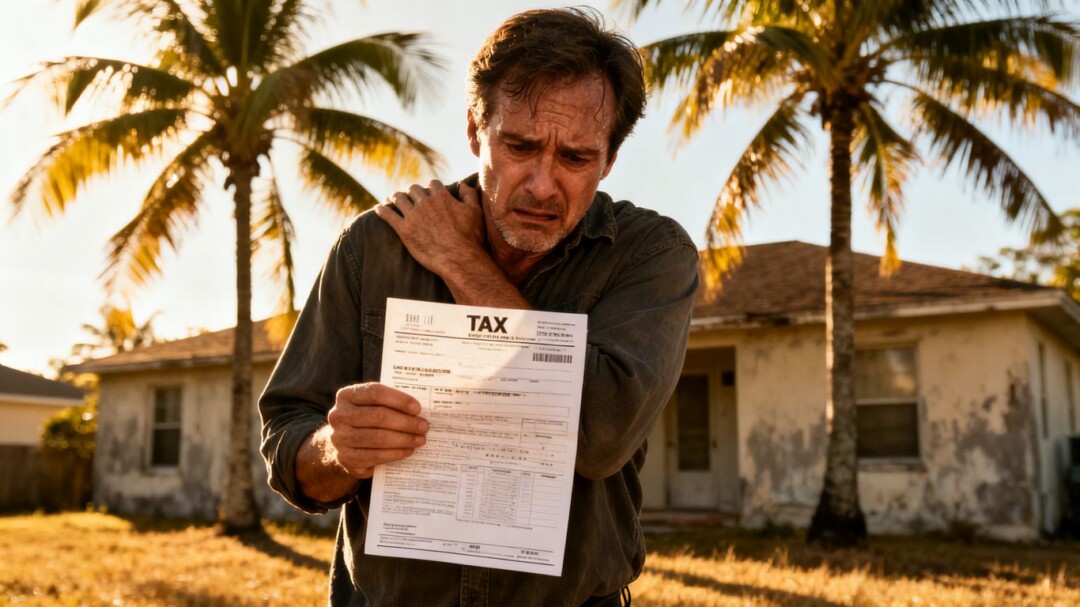
Florida’s booming real estate market, with typical home prices soaring to around $400,000, is presenting a hidden cost for new homebuyers: significant property tax increases. Many buyers are unaware that the advertised price on real estate websites doesn’t reflect their actual tax burden due to Florida’s unique homestead exemption laws.
Key Takeaways
- Florida’s homestead exemption significantly reduces property taxes for long-term residents.
- When a home is sold, the tax assessment resets to the current market value for the new owner.
- This reset can lead to a substantial increase in annual property taxes, catching new buyers off guard.
Understanding Florida’s Homestead Exemption
Florida’s homestead exemption laws are designed to lower property tax bills for homeowners. These exemptions reduce the taxable value of a property. For instance, the first $25,000 of a home’s assessed value is tax-exempt. Additional exemptions apply to portions of value between $50,000 and $75,000, excluding school taxes. Further exemptions are available for active military members, veterans, individuals 65 and older, those with disabilities, and surviving spouses of first responders.
The ‘Save Our Homes’ Cap and Its Impact
Beyond the initial exemptions, Florida’s "Save Our Homes" amendment caps the annual increase in a property appraiser’s assessment at 3% or the change in the Consumer Price Index, whichever is less. This cap benefits long-term homeowners, allowing their assessed value to lag significantly behind the current market value. Crucially, homeowners can transfer these tax savings to a new primary residence within Florida.
The Reset and the ‘Sticker Shock’
The core issue arises when a home is sold. Upon sale, the property’s tax assessment resets to the current market value for the new owner, regardless of the previous owner’s lower tax rate. For example, a home bought for $100,000 and now worth $300,000 might have had annual taxes of around $1,000 for the long-term owner. However, a new buyer purchasing that same home at $300,000 could face annual taxes closer to $8,000 or more, depending on the specific exemptions they qualify for.
Navigating the Tax Landscape
Orange County Property Appraiser Amy Mercado emphasizes that this discrepancy often leads to frustration, as buyers are unaware of the tax reset. She advises prospective buyers to utilize the tax estimator tools available on county property appraiser websites. These tools can provide a more accurate estimate of potential property taxes based on the current market value and any new exemptions the buyer might qualify for. A legislative attempt, SB 856, to require listing sites to use more accurate tax estimation methods did not pass the Florida House.
Finding Your Tax Estimate
Prospective homebuyers in Florida are strongly encouraged to visit the Florida Department of Revenue website to locate the property appraiser’s website for the county they are interested in. These sites typically offer free tax estimator tools that can help prevent the unexpected "sticker shock" of higher-than-anticipated property tax bills.