

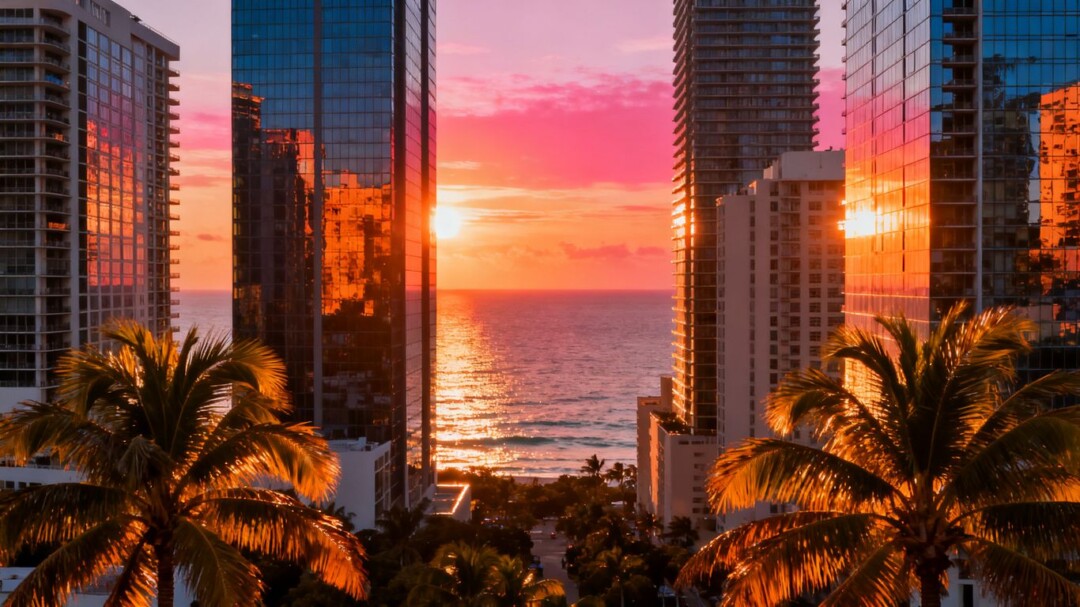
Miami has once again cemented its status as the premier U.S. destination for international real estate investment, attracting significant capital, particularly from Latin America. While this influx fuels the market, it also raises concerns about a potential housing bubble, with the city now ranked as the world’s most at-risk market.
Key Takeaways
- Miami leads the U.S. in foreign real estate investment, with 15% of residential sales to international buyers in 2025.
- Latin America, especially Colombia and Argentina, is the primary source of this foreign capital.
- Concerns are mounting over a potential housing bubble, with Miami identified as the world’s most at-risk market by UBS.
- Factors driving investment include capital security, dollar stability, and Florida’s tax advantages.
Foreign Investment Surge
Miami’s real estate market continues to be a magnet for international buyers, with 15% of home purchases in the metropolitan area attributed to foreign investors in 2025. This figure significantly outpaces the national average of around 2% and Florida’s state average of approximately 5%. The total investment from international buyers reached $4.4 billion in 2025, with over 5,300 properties acquired, marking a substantial increase from the previous year.
Latin America remains the dominant force behind this investment trend. Buyers from Colombia and Argentina led the pack, followed by those from Mexico, Brazil, and Venezuela. For these investors, Miami’s property market offers a stable haven for wealth preservation, a hedge against macroeconomic volatility in their home countries, and a diversified international portfolio.
Drivers of Investment Appeal
International buyers are drawn to Miami for several key reasons. Capital security, the stability of the U.S. legal framework, and Miami’s strategic location are paramount. Furthermore, Florida’s favorable tax environment, notably the absence of state income tax, adds to its allure. The market’s high liquidity and sustained demand also contribute to its attractiveness for long-term returns and potential rental income in dollars.
The new development and pre-construction segments are particularly popular among Latin American investors. These projects offer staggered payment plans and the potential for asset appreciation before property delivery. Areas like Brickell, Downtown Miami, Edgewater, and Sunny Isles are seeing high concentrations of these transactions due to their urban development, international connectivity, and strong rental demand.
Bubble Risk and Market Concerns
Despite the robust foreign investment, Miami’s housing market is facing significant bubble risk. A recent report by UBS identified Miami as the world’s most at-risk housing market, citing a bubble risk score of 1.73, well above the threshold for "high" risk. This assessment is based on metrics such as price-to-income and price-to-rent ratios, construction activity, and mortgage rates.
The report highlights that affordability for buyers has reached near record lows, with home prices diverging sharply from rents. The current price-to-rent ratio has reportedly surpassed the extremes seen during the 2006 property bubble. Adding to market pressures, housing inventory has increased, and rising insurance premiums due to environmental risks like flooding and hurricanes are prompting more owners to sell.
Sources
- Miami Once Again Leads Foreign Real Estate Investment in the U.S., Funds Society.
- Foreign real estate investment in South Florida hits $4.4 billion in 2025, The Business Journals.
- Florida’s Miami market is the world’s top bubble risk, warns UBS — with one metric higher than the 2006
housing crisis, Yahoo Finance.