

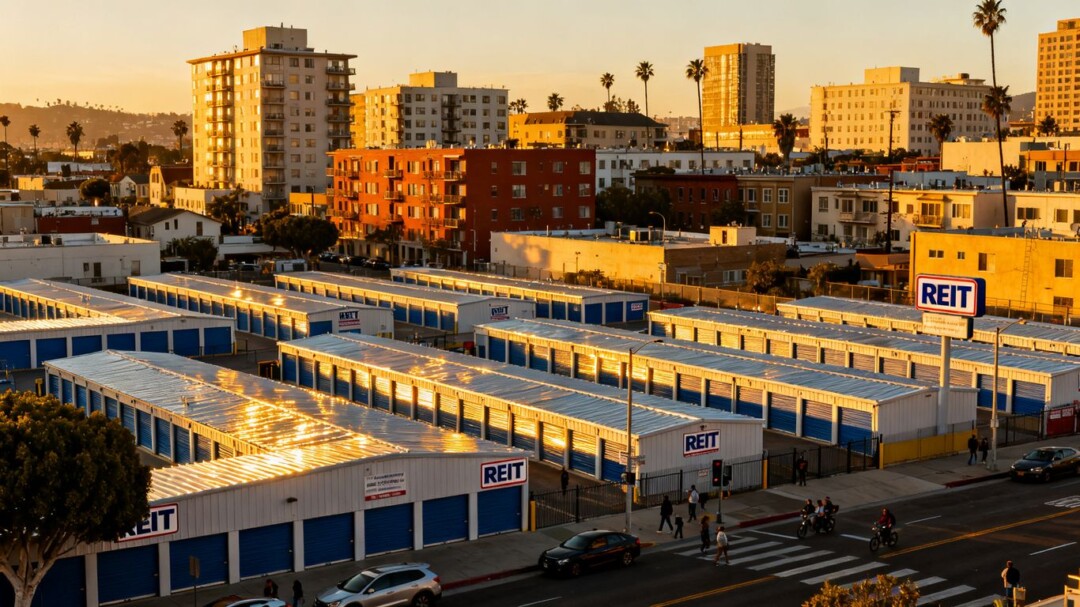
The US self-storage sector has matured into a significant institutional asset class, with five major real estate investment trusts—CubeSmart, Extra Space Storage, National Storage Affiliates, Public Storage, and U-Haul—collectively holding over 31% of the national inventory. As demand for storage space stabilizes, these companies have entrenched themselves in key metropolitan areas, influencing pricing and development trends.
Market concentration and key takeaways
- REITs command nearly 50% of the storage inventory in the nation’s most dominated markets.
- Despite institutional control, most tracked cities experienced year-over-year declines in average asking rents.
- Washington, D.C. stands out as the only major market in this group to record positive rent growth.
Institutional investors have focused their expansion on high-density metros, as shown in the table below, which ranks the top 10 markets by REIT footprint percentage:
| Rank | Market | REIT Market Share |
|---|---|---|
| 1 | Baltimore | 50.3% |
| 2 | Miami | 49.9% |
| 3 | Chicago | 49.4% |
| 4 | Central New Jersey | 48.6% |
| 5 | Austin | 47.8% |
| 6 | Atlanta | 47.6% |
| 7 | Washington, D.C. | 47.5% |
| 8 | Buffalo | 47.5% |
| 9 | Dallas-Fort Worth | 45.5% |
| 10 | Houston | 45.4% |
Performance and development trends
The competitive landscape is further defined by aggressive development pipelines. Markets like Miami, Atlanta, and Dallas-Fort Worth are seeing extensive new projects, as developers attempt to capitalize on shifting local demand. However, the surge in supply, coupled with broader economic pressures, has put downward pressure on average advertised asking rents.
In Baltimore, the leading market for REIT dominance, asking rents dipped 3.1% year-over-year. Similarly, Chicago and Dallas-Fort Worth experienced rent contractions as supply growth outpaced absorption. Atlanta observed the most significant market correction, with an average rent decrease of 7.6% across the combined mix of unit sizes.
Conversely, Washington, D.C. demonstrated relative resilience, recording a 0.2% increase in asking rents. This outlier performance highlights how specific regional supply-and-demand dynamics can still override national trends even within markets dominated by the same institutional players.