

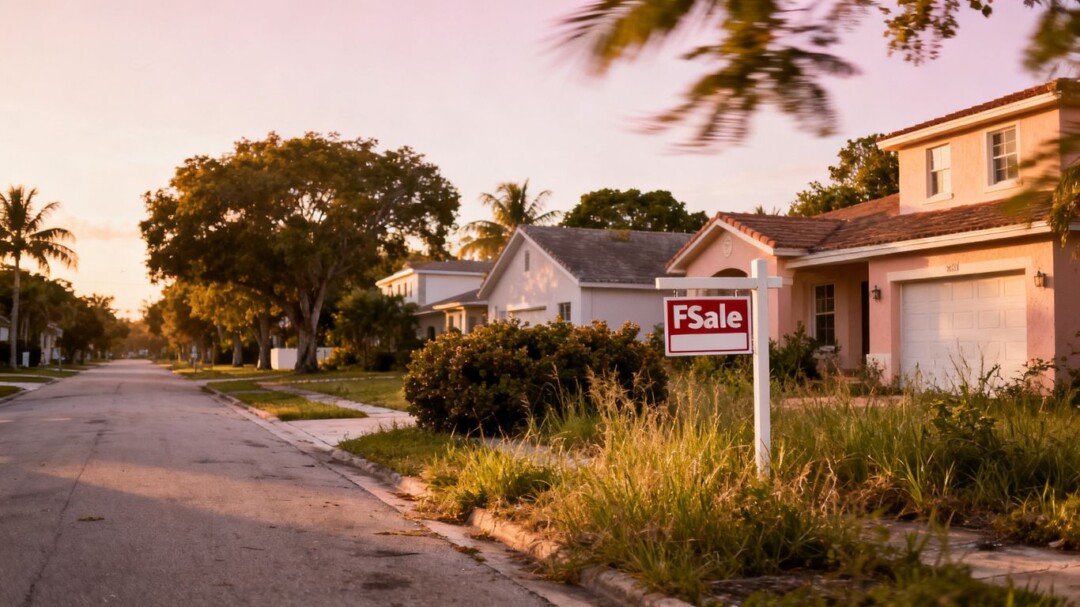
Palmetto Bay’s housing market is presenting a counterintuitive picture: buyers are still purchasing homes even as available inventory remains exceptionally limited, yet dozens of listings continue to linger. Recent market data suggests the problem is not a lack of demand, but a widening gap between seller expectations, property condition, pricing and buyer perceptions of value.
Key takeaways
- Only 80 single-family homes were actively listed as of September 1, 2026.
- Seventy-nine homes sold during the preceding roughly 90 days.
- Sold homes averaged 73 days on the market, compared with 104 days for active listings.
- Expired listings averaged 194 days before leaving the market.
- Buyers are separating original homes, renovated properties and new construction rather than treating them as equivalent.
Limited supply has not eliminated buyer selectivity
Palmetto Bay has approximately 7,187 single-family properties, meaning the 80 active listings represent roughly one home for every 90 properties. That scarcity might normally give sellers significant leverage. However, recent sales activity shows that buyers remain selective about price, condition, design and long-term costs.
The 79 homes that sold over approximately 90 days spent an average of 73 days on the market. By contrast, the 80 properties still listed had already averaged 104 days, while 19 listings that expired during the same period averaged 194 days. The figures indicate that low inventory alone does not guarantee a timely sale.
The comparable-sales problem
A central issue is the use of unsuitable comparable properties, or “comps,” to establish asking prices. Homes with similar square footage, lot sizes and bedroom counts may appeal to very different buyers.
Original-condition properties attract buyers interested in land, location and renovation potential, but those buyers typically deduct anticipated costs for roofs, impact windows, kitchens, bathrooms and floor-plan changes. Renovated homes may command more, although buyers distinguish between comprehensive upgrades and primarily cosmetic work.
New construction represents a separate category, with modern layouts, higher ceilings, impact glass and updated building standards often supporting substantially different price points.
New construction is resetting expectations
Palmetto Bay’s luxury segment is expanding. During the period analyzed, sales exceeded $2 million, $3 million, $4 million, $5 million and $6 million, while active listings approached $9.5 million.
That higher ceiling may strengthen the area’s luxury identity, but it does not automatically increase the value of every older home. Buyers spending several million dollars increasingly compare architecture, construction quality, finishes, outdoor areas and overall design—not just land size or interior square footage.
What the market means for sellers
For sellers, a listing that passes the 100-day mark should prompt a reassessment rather than a decision to wait indefinitely. The key questions are whether the property is competing with original homes, renovated residences, new construction or buyers primarily seeking land and location.
That classification should guide pricing, improvements, marketing and buyer targeting. In Palmetto Bay’s current market, the strongest listings are those where condition, positioning and price accurately reflect what buyers believe they are receiving. Limited inventory creates opportunity, but only for properties that make sense within the comparison set buyers are actually using.