

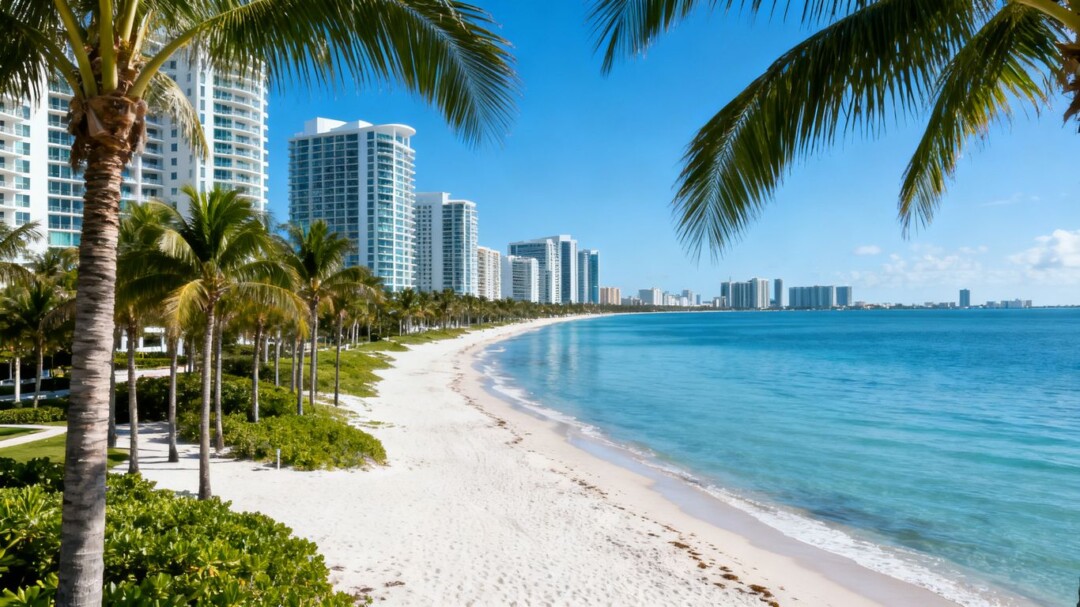
The Bal Harbour and Surfside real estate corridor is currently navigating a complex period, characterized by a buyer’s market with roughly 15 months of inventory. While ultra-prime, branded residences continue to set price records, legacy properties are showing signs of structural stagnation, making precise, data-driven investment strategies essential for success in 2026.
Key takeaways
- The market is split into three distinct segments: record-setting ultra-prime product, steady contemporary luxury, and struggling legacy buildings.
- High-end demand remains focused on scarcity and brand-backed, world-class service.
- Liquidity issues are prevalent in older buildings with significant price gaps between asking and closing.
- Buyers should prioritize buildings with consistent, cash-based transaction volume to avoid capital stagnation.
Current market dynamics
The corridor currently sees average closings near $1,837 per square foot, with typical units lingering on the market for approximately 200 days. This statistical backdrop suggests a buyer’s market, but this headline figure hides the reality of a multi-tiered environment. Ultra-prime projects like The Surf Club have reached price points as high as $7,949 per square foot, while older mid-tier buildings are heavily reliant on price reductions to compete for the few active buyers.
Top five condominium investments
Based on closed sales data, the following properties represent the strongest positions in the current market:
- Balmoral: The top choice for value under $3M, demonstrating high liquidity with consistent price appreciation.
- Bellini Bal Harbour: A prime option for the $3M–$5M range, characterized by stable, cash-only demand and end-user interest.
- Oceana Bal Harbour: The standout for $5M–$10M, offering contemporary luxury that provides excellent value compared to newer, more expensive deliveries.
- The Surf Club Four Seasons: The market leader for homes over $10M. Despite the high entry point, the property exhibits records-breaking demand and extremely limited supply.
- Rivage Bal Harbour: The premier choice for new construction, with limited remaining inventory targeting buyers looking for large, modern, oceanfront footprints.
Properties to approach with caution
Not all properties in the corridor are performing well in the 2026 climate. Data suggests avoiding the following due to significant liquidity and valuation issues:
- The Plaza of Bal Harbour: This 1965 building suffers from a 24% gap between asking and closing prices, with units sitting on the market for an average of over 500 days.
- The Waverly at Surfside: This is considered an illiquidity trap with approximately 44 months of supply—the equivalent of nearly four years of inventory—leading to stagnant trades and minimal turnover.
Strategic advice for investors
The Bal Harbour and Surfside markets are currently rewarding those who ignore aspirational asking prices in favor of concrete closed-sale data. Whether looking for boutique luxury in nearby Bay Harbor Islands or ultra-luxury oceanfront towers, success depends on analyzing vacancy, absorption rates, and the financial health of the building’s association before committing capital.