

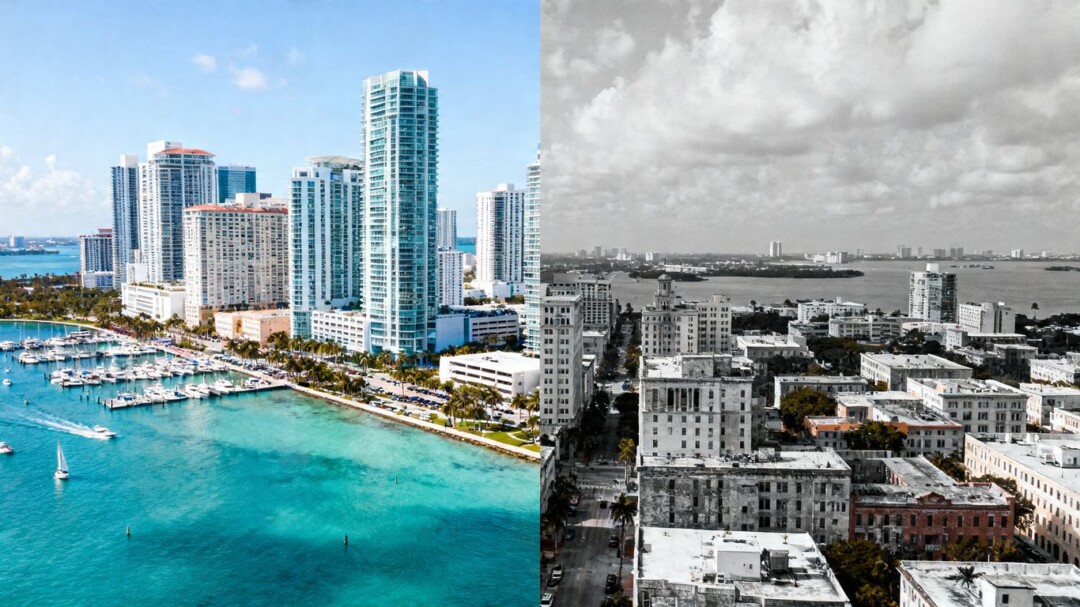
The first quarter of 2026 has highlighted a significant bifurcation in the Miami real estate market, presenting a "two-market reality" that is driving price divergence. This analysis, based on real-time transaction data, reveals distinct economic engines at play, impacting different neighborhoods and property types in unique ways.
Key Takeaways
- The South Florida market is operating under a "two-economy model": a traditional demand-driven housing market and a global ultra-wealth scarcity market.
- Pricing cycles, liquidity conditions, and buyer profiles differ significantly between these two segments.
- Understanding this split is crucial for interpreting market behavior and making informed decisions.
The Two-Economy Model Explained
The Miami real estate landscape in early 2026 is characterized by two parallel economies:
- Traditional Demand-Driven Economy: This segment is influenced by local income levels, second-home buyers, financing conditions, and relative affordability. It behaves like a conventional housing market, with pricing tied to demand elasticity and financing capacity. Core neighborhoods include Kendall, North Miami, Aventura, and parts of Edgewater and Downtown Miami.
- Ultra-Wealth Scarcity Economy: This segment is driven by global wealth migration, all-cash transactions, lifestyle relocations, and structural scarcity in prime coastal and waterfront locations. It functions more like a global luxury asset class, where scarcity and wealth concentration dictate pricing power. Key neighborhoods include Coral Gables, Brickell’s core, South of Fifth, Coconut Grove, Bal Harbour, Surfside, Fisher Island, Golden Beach, and prime waterfront areas of Miami Beach.
Navigating the Fragmented Market
Success in the current South Florida real estate market hinges on micro-positioning, timing, and property-specific strategies rather than broad market trends. Building quality is now as critical as neighborhood location, leading to vastly different performance outcomes even within the same area. For buyers, opportunities lie in identifying assets misaligned with current conditions, while sellers must adopt nuanced pricing and positioning strategies depending on their segment.
Neighborhood Performance Insights
Reports from Q1 2026 indicate varied performance across key areas:
- Pinecrest: Experiencing rapid price appreciation.
- Coconut Grove: Remains expensive and continues to rise.
- West Palm Beach: Has seen significant price surges, with many buyers still catching up.
- South of Fifth: Scarcity continues to control pricing power.
- Brickell: Building quality is now a primary determinant of value.
- Fort Lauderdale: Undergoing a quiet but significant market shift.
- Aventura: Adjusting under pricing pressure.
- Sunny Isles Beach: Highly polarized, with affordability present but often misunderstood.
- Golden Beach: The luxury market has seen a substantial increase.
- Coral Gables: The market is exceptionally strong, though facing a major issue.
- Kendall: Emerging as a distinct market, no longer just a secondary option.
- Surfside and Bal Harbour: Strong performers in terms of price per square foot.
- Edgewater: Buyers are maturing and moving towards different property types.
Conclusion
The Q1 2026 Miami Real Estate Market Report underscores the necessity of detailed, property-specific analysis. The market’s polarization means that only the best-positioned assets, meeting the highest standards of design and location, will continue to drive market direction. Understanding these micro-dynamics is paramount for buyers and sellers aiming to maximize their outcomes.