

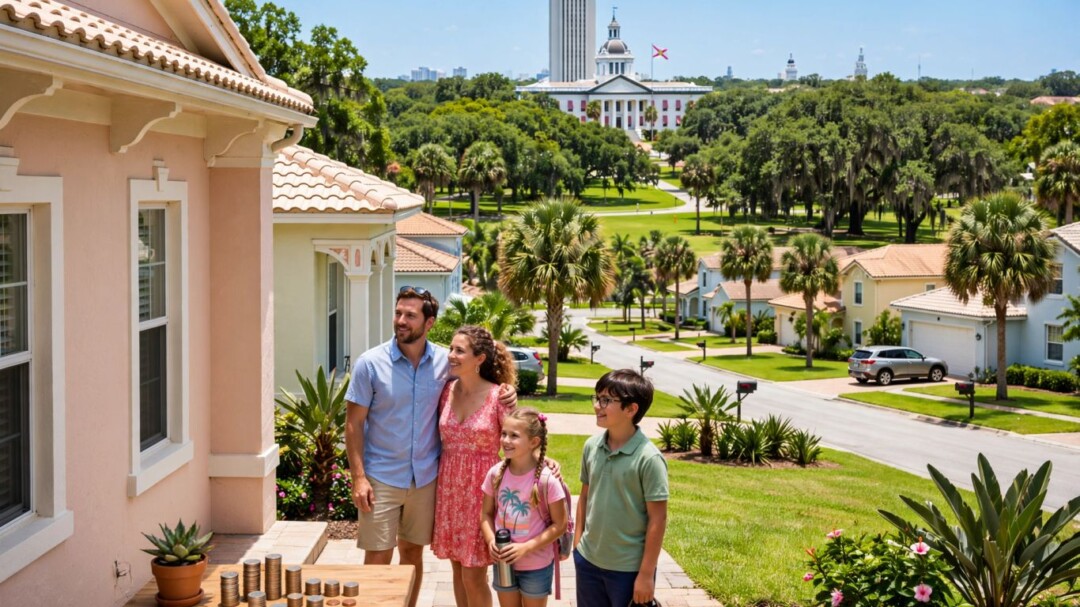
Florida voters approved Amendment 3, clearing the 60% threshold needed to change the state constitution and expand homestead exemptions on non-school property taxes. The measure could lower eligible homeowners’ bills starting in 2027, but it also sets up a difficult debate over how cities and counties will maintain services as revenue declines.
Key takeaways
Amendment 3 passed with about 62% support. Its tax benefits phase in over two years, while local governments and community organizations prepare for possible funding cuts.
- The homestead exemption rises to $150,000 in 2027 and $250,000 in 2028 for eligible homeowners.
- Savings will vary by home value and local tax rates; estimates range from roughly $1,300 in 2027 to several thousand dollars in 2028.
- The measure applies to non-school property taxes, so school-district taxes remain.
- Local leaders warn that reduced revenue could affect public services, infrastructure and community programs.
How the tax relief is expected to work
The amendment expands the portion of a qualifying primary residence’s value exempt from certain property taxes. The full benefit will not arrive all at once: the exemption increases to $150,000 in 2027, then to $250,000 in 2028. Individual savings depend on a home’s assessed value, tax rates and the homeowner’s existing exemption status.
The measure does not eliminate property taxes, and school-related taxes are not covered by the expanded exemption. Reported eligibility terms also distinguish between current and future residents: people establishing permanent Florida residency by the end of 2026 can qualify for the immediate schedule, while later purchasers may have to wait five years for the additional savings.
Local budgets face uncertainty
The tax reduction will narrow revenue available to local governments, with the largest effects expected as the exemption is fully phased in. State economists estimate the change could reduce local property-tax revenue by about $11.86 billion annually once fully implemented. Hillsborough County, for example, has been projected to lose roughly $353 million by fiscal year 2028-29.
Local officials say the consequences could reach beyond road and infrastructure projects to parks, libraries, senior centers, public safety and services for families. Tampa prepared alternative budget plans ahead of the vote. Nonprofit leaders also worry that reduced public funding could place added pressure on programs serving children and vulnerable residents.
What happens next
Cities and counties will have time to assess the effects before the largest reductions take hold, but they will need to make choices about budgets, staffing and service levels. Some officials have pointed to economic development and more efficient operations as ways to respond; others caution that nonprofits cannot simply replace lost public funding.
Gov. Ron DeSantis has said he wants safeguards against local governments making up the difference through other taxes or fees. That proposal is a separate policy debate, not a protection established by the amendment itself. The practical impact will become clearer as the new exemption takes effect and local governments update their budgets.
Sources
- Amendment 3 approved: What it means for major property tax relief, municipal funding concerns, FOX 13 Tampa Bay.
- Amendment 3 passes, providing tax relief for homeowners, Bay News 9.
- Florida on track to approve property tax reform, validating Ron DeSantis’ vision, Florida Politics.
- Florida passed Amendment 3. What now?, Tampa Bay Times.