

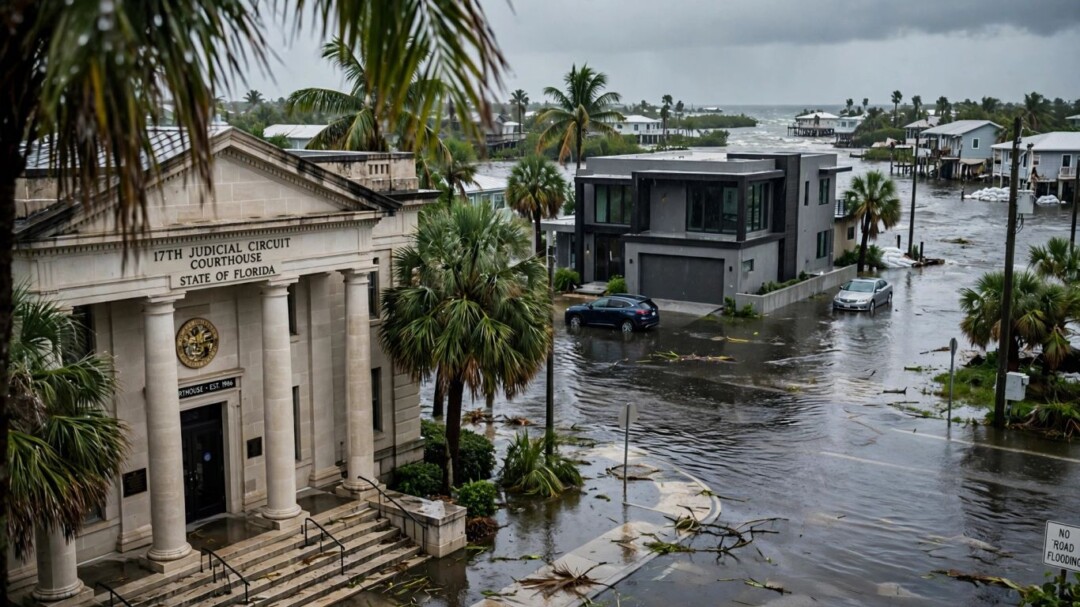
Florida has sued climate analytics company First Street Technology, alleging its property-level flood and other climate-risk ratings rely on flawed models and can mislead homebuyers. The case adds to a wider debate over how climate threats should be measured—and whether risk scores help consumers or unfairly damage homeowners’ finances.
Key takeaways
The lawsuit challenges First Street’s methods and disclosures, while raising questions about the consequences of making uncertain climate projections widely available.
- Florida says inaccurate scores could hurt home values and affect insurance decisions.
- First Street’s 1-to-10 ratings appear on real estate websites and are used in some financial assessments.
- Experts warn that model differences do not, on their own, establish deception.
What Florida alleges
Attorney General James Uthmeier announced the lawsuit, accusing First Street of overstating risks and presenting its estimates as reliable at the individual-property level without adequately explaining their limits. The complaint, filed in Polk County under Florida’s consumer-protection law, seeks an injunction, civil penalties and other monetary relief.
The state argues that First Street’s ratings can stigmatize homes, weaken sales and potentially influence insurance costs or coverage. In one example cited in the complaint, a home in Oldsmar classified by FEMA as a minimal flood-hazard area received a First Street flood score of 7, labeled “Major.” The state says the rating conflicts with the company’s published risk thresholds.
How the scores are used
First Street uses computer models to estimate property-level exposure to hazards including flooding, wildfire, extreme heat and wind, translating estimates into scores from 1 to 10. Its ratings have appeared on platforms such as Redfin and Realtor.com; Zillow previously stopped displaying First Street scores directly on listings after objections from a real estate industry group. The complaint also says mortgage buyers and insurers use the company’s data.
First Street has distinguished its approach from FEMA maps, saying its projections assess individual properties, account for future climate conditions and include risks such as intense rainfall. FEMA maps, by contrast, are designed to show flood risk at a community level. The state says the divergence between the systems raises concerns about the accuracy and presentation of First Street’s estimates.
A wider dispute over climate-risk modeling
Research cited in the complaint found substantial differences between First Street’s estimates and another flood model in Los Angeles. A separate industry assessment also reported variation among vendors’ property-level flood estimates. Such disagreements can complicate decisions for buyers, sellers, insurers and public officials.
But model disagreement is not proof of intentional misconduct, said Madison Condon, a Boston University law professor who studies climate risk. She has raised concerns about how First Street markets its data, while warning that litigation could discourage climate-risk information more broadly. Nebraska filed a similar lawsuit against First Street in August. MSCI, which recently acquired the company, did not respond to a request for comment, according to reporting by the Los Angeles Times.
- Florida sues climate analytics company First Street over home risk scores, Los Angeles Times.
- Florida Sues Tech Firm Over Real Estate Climate Scores, Alleging Exaggerated Flood Risks Hurt Homeowners, AOL.com.
- Florida sues climate analytics company First Street over home risk scores, Los Angeles Times.