

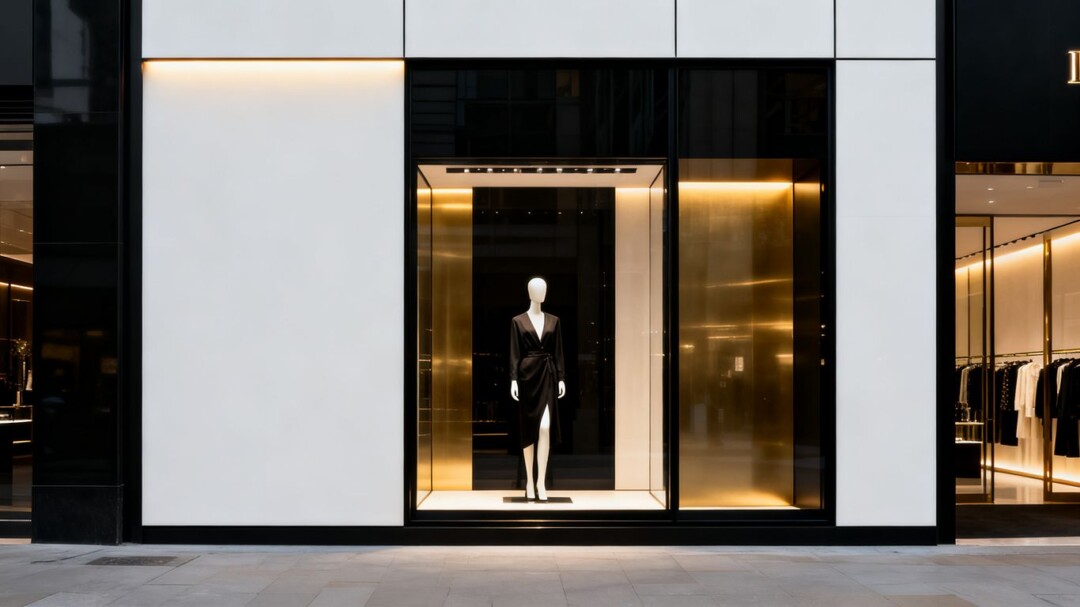
Luxury retailers are becoming more selective about where they open stores, favoring prime locations and distinctive experiences over a larger number of doors. JLL data show luxury leasing slowed in the first half of 2026 after a strong 2025, while opening-size figures point to a market dominated by compact shops and a smaller group of ambitious flagships.
Key takeaways
- Luxury retail leasing exceeded 500,000 square feet in 2025; 277,000 square feet was completed in the first half.
- First-half 2026 leasing reached 123,334 square feet, according to JLL.
- Nearly half of tracked openings were smaller than 2,500 square feet, while just 5.3% exceeded 10,000 square feet.
- Brands are concentrating street-store openings in established corridors and adding hospitality and cultural features to select flagships.
Brands prioritize fewer, stronger locations
Deloitte’s Global Powers of Luxury report found that 39.3% of luxury executives are focused on network optimization. The strategy puts greater emphasis on the quality and performance of a smaller set of locations rather than maximizing store count.
That focus comes as U.S. luxury leasing has varied since 2023. JLL cautions that quarterly results can be uneven: activity often picks up in the second half as brands schedule major openings for holiday shopping and finalize capital plans before a new fiscal year.
Prime corridors capture street openings
The distribution of openings reflects that selective approach. Three of the five U.S. openings larger than 10,000 square feet were on the street in New York and Los Angeles. Across street retail, prime corridors accounted for 30 of 45 openings, with activity concentrated in established addresses rather than spread broadly into secondary retail streets, JLL said.
Store sizes also skew smaller. JLL’s breakdown shows that 48.4% of openings were under 2,500 square feet, and another 29.5% measured between 2,500 and 5,000 square feet. A further 16.8% fell in the 5,000-to-10,000-square-foot range; only 5.3% topped 10,000 square feet.
Flagships add experiences—and space demands
Some brands are making their largest stores more than traditional retail outlets. New flagships may include cafés, dining rooms, galleries or exhibition areas, and space for temporary installations and traveling pop-ups. Those features can require more square footage and specialized infrastructure than a conventional shop.
That creates different opportunities for landlords. Corridors and centers able to meet flagship requirements may be better positioned to secure those deals, JLL said. Properties that cannot support the added specifications may still compete for smaller store formats. The result is a market where location quality and a property’s ability to support a brand’s concept matter alongside the amount of space on offer.