

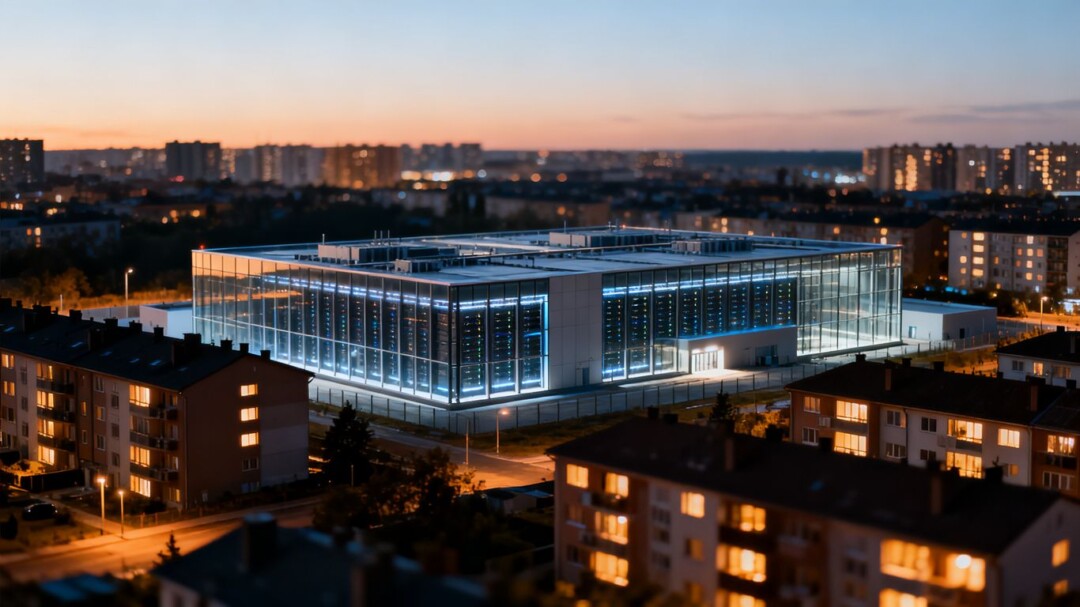
Large data centers are becoming a more common neighbor for American homeowners as artificial-intelligence and cloud-computing demand accelerates. New Realtor.com research finds that about 1.5% of home sales now occur near a large facility, more than double the share recorded in 2018. The growth is increasingly concentrated in lower-income, rural communities.
Key takeaways
The research points to a changing relationship between technology infrastructure and residential real estate:
- Large data centers now operate in 108 U.S. ZIP codes, up from 12 in 2015.
- New facilities are increasingly opening in lower-income, lower-density areas.
- Nearby home prices show only a temporary first-year increase of about 1%.
- Listing activity remains higher near data centers, potentially signaling more move-outs.
- Homeowners should not assume a new facility will reduce their property-tax bills.
Data centers are moving toward residents
The rise in nearby home sales is not primarily the result of people relocating to data centers. Instead, facilities are spreading into established communities. The share of home sales near a large center is projected to exceed 2% by the end of 2027.
The typical facility expected to open in 2027 will be about 34 miles from a major city center—26% farther out than the 2026 median. These projects are also being built in areas with fewer homes: the typical 2026 center is surrounded by 32 housing units per square mile, compared with 116 for facilities activated in 2017.
Lower-income communities face the next wave
From 2020 through 2023, new data centers were more commonly located in ZIP codes with above-average household incomes. That pattern has reversed. In 2026, new large facilities are largely opening in ZIP codes below the national median income, and the shift is expected to continue in 2027.
Memphis, home to the xAI Colossus facility, illustrates the trend. One in eight cities that added a large data center since 2022 has a median household income below $60,000—roughly 72% of the national median cited in the study.
Home prices remain relatively stable
So far, the research does not show a lasting difference in home values between communities with new data centers and comparable areas without them. Prices may rise about 1% during the first year after construction, but that effect generally disappears by the second year.
List prices follow a similar pattern: a modest initial increase followed by slight underperformance compared with areas without a facility. However, active listings remain notably higher three years after an opening. ZIP codes near data centers retained 66% of their pre-opening listings, versus 43% in comparable communities, a possible sign that more households want to leave—even though the additional listings have not translated into more sales.
Infrastructure and tax questions persist
Local opposition has led some cities and counties to impose construction moratoriums or bans. Concerns include electricity demand, water consumption, noise and the potential burden on utility customers. Those issues may be especially significant in Sun Belt communities already facing drought and water shortages.
Property-tax benefits are also uncertain. Although tax rates initially softened near new facilities, they rose roughly 7% above baseline after the third year, while rates in comparison areas declined. The findings do not establish that data centers caused the increase, but they offer little evidence that nearby homeowners should expect lower tax bills.
As facilities become larger, more remote and more concentrated in communities with limited resources, local governments and residents may face greater challenges assessing their long-term housing and infrastructure effects.