

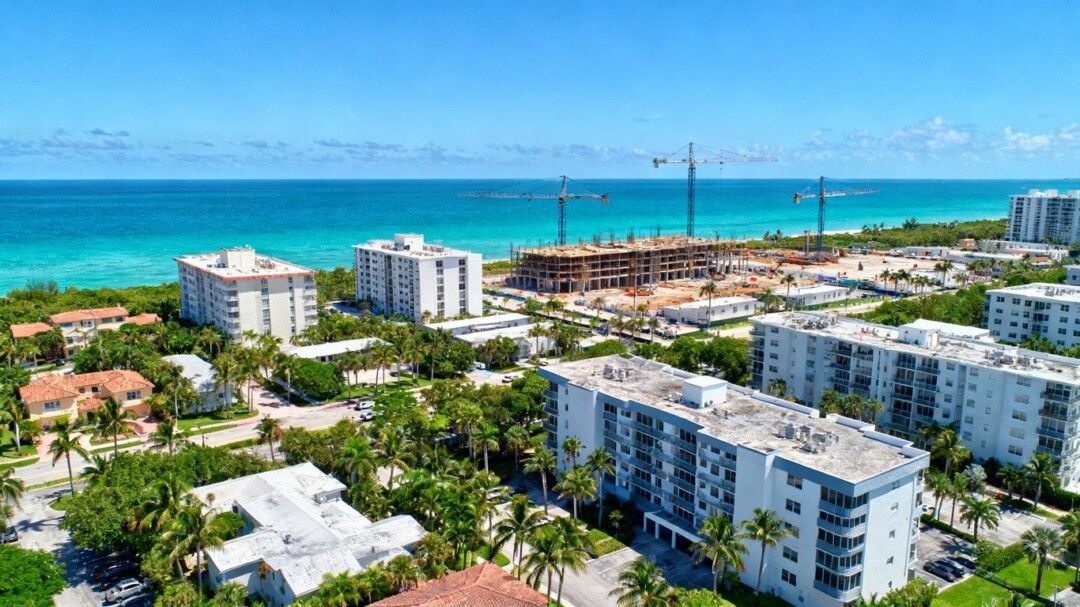
South Florida’s residential development market remains highly active, yet developers face increasingly complex challenges. Rising costs for insurance, labor, materials, and financing are putting pressure on underwriting and site selection. Despite these headwinds, strategic partnerships and strong local fundamentals continue to drive major luxury and mixed-use projects forward.
Key takeaways from the market
- Location and Demand: Prime locations with strong population growth, job creation, and limited supply remain the top filters for project viability.
- Underwriting Precision: Developers are adjusting to higher costs across the board, requiring more precise assumptions regarding timelines and capital structures.
- Luxury and Mixed-Use Resilience: High-end buyers prioritize lifestyle experiences and wellness amenities, while mixed-use redevelopments create resilient, multi-driver destinations.
- Power of Partnerships: Joint ventures with best-in-class partners help developers mitigate risks and successfully execute complex, large-scale projects.
Shifting underwriting and lender expectations
To navigate the shifting financial landscape, developers like BH Group have adjusted their underwriting to reflect elevated costs for labor, insurance, and financing. Precision has become the defining factor for securing capital in today’s market. Lenders are scrutinizing project fundamentals more closely than ever.
To gain lender confidence, sponsors must demonstrate a proven track record of execution, a highly stable capital structure, and robust pre-sales. Despite these tighter standards, there remains a healthy appetite for well-located South Florida developments backed by experienced teams.
What buyers and renters prioritize
Today’s luxury buyers and renters are looking far beyond basic square footage. They prioritize curated lifestyle experiences, high-quality design, wellness amenities, outdoor spaces, and immediate access to retail and dining. This demand for premium living experiences is shaping how developers conceptualize new projects.
These preferences dictate whether a site is developed as a condominium, multifamily rental, or mixed-use destination. While some locations are prime for exclusive condos due to limited supply, others are better suited for transformational mixed-use redevelopments that serve as community hubs.
The rise of complex mixed-use destinations
| Project Name | Location | Key Features & Scale |
|---|---|---|
| The Ritz-Carlton Residences | West Palm Beach, FL | 138-unit waterfront luxury condominium; completion in 2028 |
| Southplace City Center | Cutler Bay, FL | Redevelopment of Southland Mall; first phase features 350 units |
| The Eclipse | Boca Raton, FL | 493 luxury units, 425,000 sq. ft. of office, 20,000 sq. ft. of retail |
Redeveloping underutilized commercial properties into walkable, connected mini-cities is an increasingly attractive strategy. Although mixed-use projects require significant capital and coordination, they create multiple demand drivers that insulate them from market volatility.
The strategic role of joint ventures
As projects grow in scale and complexity, partnerships have become essential to crossing the finish line. Collaborating with best-in-class groups allows developers to pool expertise, share financial risk, and leverage local market knowledge.
Ultimately, the projects that move forward in South Florida will be those backed by experienced teams, strong capital structures, and an unwavering focus on quality. With sustained wealth migration and business investment, the region’s long-term growth fundamentals remain highly optimistic.