

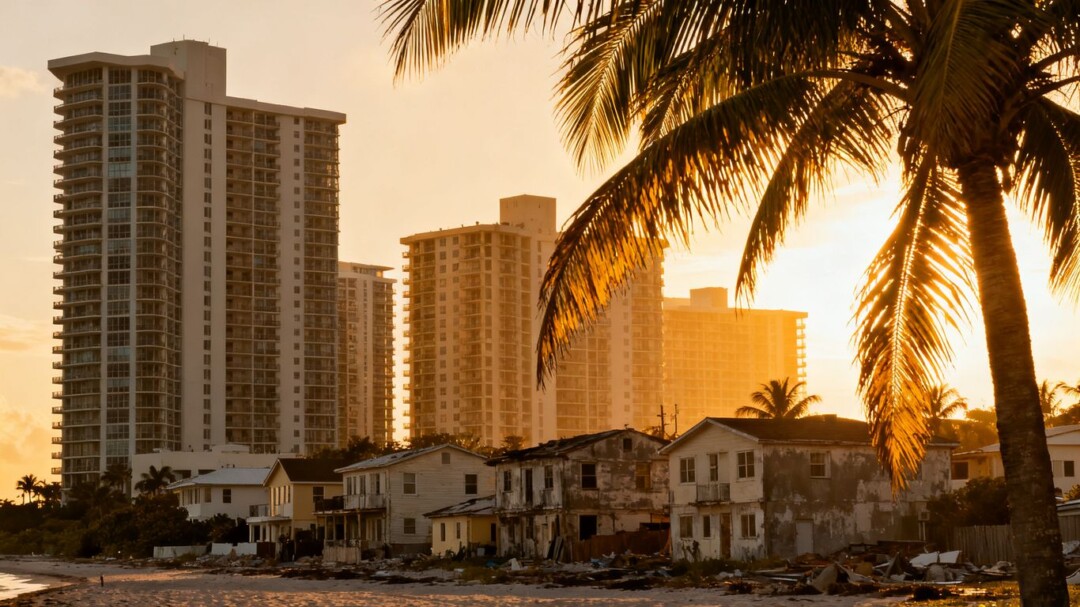
South Florida is experiencing a real estate "gold rush" as ultra-wealthy individuals acquire luxury properties, driving up costs and creating affordability challenges for existing residents. While the influx of wealth benefits the state’s economy, a growing number of Floridians are contemplating leaving due to the escalating cost of living, particularly housing.
Key Takeaways
- A significant portion of Florida residents are considering leaving the state due to high living costs, with housing affordability being the primary concern.
- The influx of wealthy buyers is contributing to a widening wealth disparity within the state.
- Essential workers and middle-income families are increasingly finding it difficult to afford housing in popular metropolitan areas.
The Allure of the Sunshine State
Florida’s appeal to the super-rich is multifaceted, encompassing its desirable year-round climate and the absence of state income tax. This has led to a surge in demand for high-end properties, with mega-mansions and luxury condos selling rapidly. Reports indicate a substantial increase in the millionaire population in areas like Miami.
Rising Costs and Resident Concerns
Despite the economic benefits of this boom, a parallel reality is emerging for many Floridians. The rising cost of living extends beyond housing to essentials like insurance, gas, and groceries. A poll by Florida Atlantic University revealed that at least half of the state’s residents are considering relocating due to these financial pressures, with 80% citing housing affordability as the main driver.
Affordability Crisis Deepens
Florida has climbed into the top 10 most expensive states to live in. Metropolitan areas like Miami and Fort Lauderdale are particularly affected, with new condos fetching tens of millions of dollars. Consumer Affairs reports highlight that three cities in this region have a disproportionately high percentage of household income dedicated to housing (32% or above), compared to the national average of 24%.
Migration Patterns Shift
While Florida has historically seen significant migration, recent data suggests a slowdown. A study indicated an almost equal split between people arriving and leaving. Previously, around 1,200 people were moving in daily, but more recent estimates show this number has dropped to about 500. This trend is partly attributed to the high cost of living, which is also impacting the retention of essential workers in sectors like healthcare and education.
Efforts Towards Affordability
Recognizing the challenges, municipalities and private developers are prioritizing affordable housing projects. One developer in Miami’s Wynwood neighborhood is building loft-style apartments with prices starting around $400,000 to $500,000, aiming to make them accessible to local residents. There’s a growing acknowledgment that investments in education, infrastructure, public transport, and healthcare are crucial for Miami’s long-term livability and to ensure the "Florida promise" remains attainable for all.