

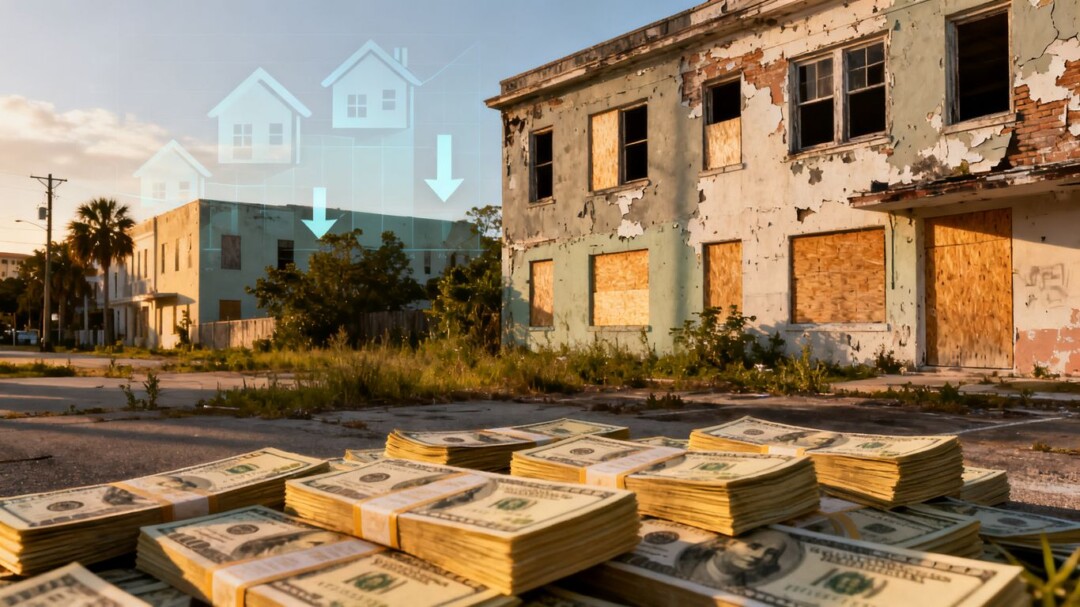
Florida cities, including Jacksonville, are facing scrutiny for millions in unspent state funding designated for affordable housing initiatives. Despite a pressing need and mayoral priorities, significant portions of the State Housing Initiatives Partnership (SHIP) program funds remain unallocated, raising questions about the pace and effectiveness of local housing solutions.
Key Takeaways
- Jacksonville has approximately $13.4 million in unspent SHIP funding out of $28.5 million received over three years.
- The state SHIP program, funded by documentary stamp taxes on property transfers, has seen record funding levels in recent years.
- Challenges in spending include state requirements for new construction and targeting very low-income residents.
- Cities like Titusville are seeing progress with new developments, while others, like Fellsmere, are rejecting proposals due to concerns about compatibility and public benefit.
Jacksonville’s Funding Dilemma
Jacksonville has received substantial funding through Florida’s SHIP program, with Mayor Donna Deegan identifying affordable housing as a top priority. However, a significant portion of these funds, around $13.4 million, remains unallocated. Travis Jeffrey, chief of the city’s Housing and Community Development Division, acknowledged that Jacksonville, like other cities, has been slow to spend the SHIP money, attributing delays to the complexities of meeting state requirements for new construction and assistance for very low-income residents. The city is working to address this by shifting funds towards owner-occupied home repairs and a new single-family development program aimed at creating new homeownership opportunities.
Progress and Setbacks in Affordable Housing Projects
While Jacksonville navigates its funding challenges, other parts of Florida are seeing different outcomes. In Titusville, the Forest Glen community, an 80-unit affordable senior housing development, has reached its topping-off milestone. This $28 million project, a collaboration between Housing Trust Group and HfH Supportive Housing, aims to provide much-needed housing for low-income seniors in Brevard County. The development is financed through a mix of public and private sources, including Low-Income Housing Tax Credits and construction financing.
Conversely, the Fellsmere City Council recently rejected a proposal for a 231-unit development named Legacy Landing. The council cited concerns that the project was incompatible with the city’s comprehensive plan, offered insufficient public benefit, and included an inaccurate traffic study. While one council member supported the project for its potential to offer affordable housing options, the majority sided with residents who voiced concerns about traffic, infrastructure strain, and the project’s overall impact on the community’s character.
The Broader Context of Affordable Housing
The lack of affordable housing is a national concern, particularly impacting residents with below-median incomes, including essential workers like teachers and public safety employees. In Jacksonville, Mayor Deegan has expressed commitment to addressing the issue, even as she navigates budget proposals and community demands for dedicated funding, such as the $10 million affordable housing trust fund proposed by the Interfaith Coalition for Action, Reconciliation and Empowerment (ICARE). The state’s SHIP program, historically subject to budget sweeps, has seen increased funding in recent years due to a robust real estate market, making the efficient allocation of these resources a critical focus for Florida communities.
Sources
- Jacksonville has $13 million in unspent affordable housing funding, JaxToday.
- Jacksonville has $13 million in unspent affordable housing funding, The Florida Times-Union.
- Housing Trust Group and HFH Supportive Housing Celebrate
Topping Off of $28M Affordable Senior Housing Community in Titusville
Florida, Yield PRO. - Florida city rejects proposal for 231-unit development, AOL.com.