

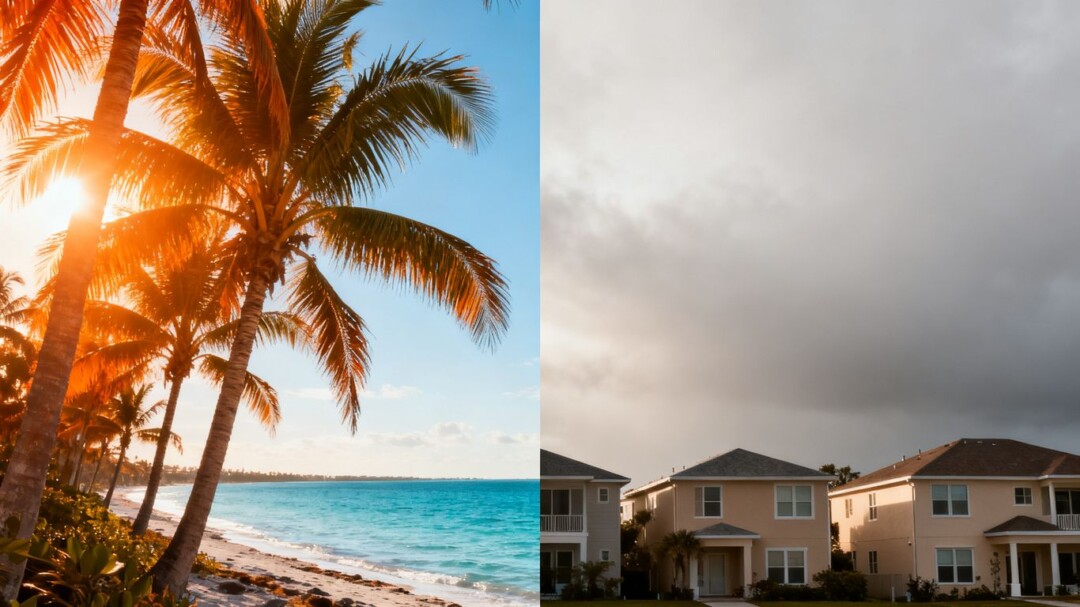
Recent national reports have painted a grim picture of Florida’s housing market, citing rising foreclosures and plummeting prices. However, a closer look at the latest data reveals a more nuanced reality. While challenges exist, the state’s housing sector is demonstrating resilience, with increased sales and near-record median prices in March, defying widespread claims of a crisis.
Key Takeaways
- Florida’s housing market saw a 5.9% rise in single-family home sales in March, with a median sale price of $420,000.
- Foreclosure filings have increased year-over-year but remain a small fraction compared to the 2010 housing crash.
- Claims of plummeting demand are misleading, as housing inventory and population have grown at similar rates.
- Price reductions on some listings are often corrections from inflated COVID-era asking prices.
The Reality of Florida’s Housing Market
Despite headlines declaring "Foreclosure filings jump" and "Prices ‘dropping hard,’" the Florida Realtors association reported a 5.9% year-over-year increase in single-family home sales in March. The median sale price reached $420,000, marking the fourth-highest on record. Experts like Brad O’Connor, chief economist for Florida Realtors, argue that negative stories often lack context, and while challenges exist, plummeting demand is not currently one of them.
Foreclosure Filings: A Matter of Context
While ATTOM data indicated Florida had the nation’s third-highest foreclosure rate in March, with 1 in every 2,124 housing units in some stage of foreclosure, O’Connor emphasizes that this is nowhere near the levels seen in 2010. At the peak of the 2010 housing crash, foreclosures accounted for one in every five homes in Florida. Currently, the 4,929 foreclosure filings represent less than half of one percent of the state’s over 10.25 million housing units.
Housing Supply: Growth, Not Oversupply
Articles suggesting Florida and Texas are "biggest losers" in the housing market, with active inventory exceeding pre-pandemic levels, overlook crucial demographic shifts. Between March 2019 and March 2025, active listings increased by 9.5%, from 156,204 to 171,045. However, Florida’s population grew by a similar 9.1% during the same period, from 21.49 million to 23.46 million. Furthermore, the state’s housing vacancy rate has remained relatively low, at 2.2% in 2025, far from the 5.1% peak in 2007. In fact, inventory levels in March 2026 were down 10.8% from the previous year.
Price Adjustments, Not a Crash
Reports of homes selling at significant discounts often stem from sellers pricing properties based on unrealistic expectations set during the unsustainable COVID-era housing boom (mid-2020 to late 2022). During this period, median sale prices saw double-digit percentage increases for 28 consecutive months. Today, price reductions are frequently corrections from inflated asking prices. Realtors note that while the market is no longer at the fever pitch of a few years ago, well-priced, well-maintained homes are still selling quickly. The current market allows buyers more time to make informed decisions, a healthy adjustment from the previous frenzy.
A Stable Market Moving Forward
Unlike the early 2000s bubble years, which were characterized by subprime loans and adjustable-rate mortgages, today’s homeowners largely have fixed-rate mortgages. Experts agree that while the market is adjusting from an unusual period, there is no data to indicate an impending crash. Instead, Florida’s housing market is stabilizing, with demand consistently rebuilding, offering a more balanced environment for both buyers and sellers.
Sources
- Housing market in Florida show positive picture despite reports, Daytona Beach News-Journal.