

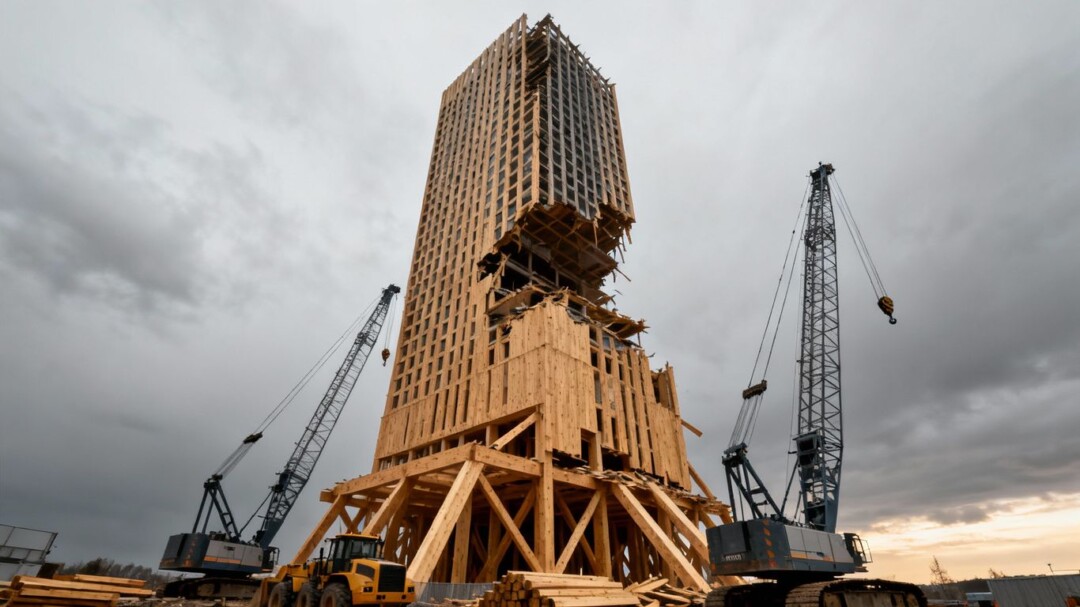
The Mjøstårnet, once celebrated as the world’s tallest wooden building, is slated for demolition and will be repurposed as fuel. This ambitious structure, which stood as a testament to sustainable construction, will be dismantled and its timber used to generate energy, marking a surprising turn for the architectural marvel.
A Monument to Sustainable Architecture
The Mjøstårnet, located in Brumunddal, Norway, achieved global recognition upon its completion in 2019. Standing at 85.4 meters (280 feet) tall, it held the title of the world’s tallest timber skyscraper. The building was a symbol of innovation in the construction industry, showcasing the potential of wood as a primary building material for high-rise structures.
From Landmark to Biomass
Despite its architectural significance and the sustainable principles it embodied, the Mjøstårnet’s future has taken an unexpected direction. Plans are now in motion to take down the building. Rather than being recycled or repurposed in another form, the timber from the Mjøstårnet will be used as biomass fuel. This decision highlights a pragmatic approach to the end-of-life cycle for large wooden structures, prioritizing energy generation.
Key Takeaways
- The Mjøstårnet, formerly the world’s tallest wooden building, is scheduled for demolition.
- Its timber will be utilized as fuel for energy production.
- This marks a significant shift in the building’s lifecycle, from architectural icon to energy resource.
Environmental Considerations
The use of timber in construction is often lauded for its environmental benefits, including carbon sequestration. However, the eventual disposal or repurposing of such large wooden structures presents its own set of challenges and considerations. Utilizing the Mjøstårnet’s timber for biomass fuel offers a way to recover energy from the material, contributing to renewable energy sources. This approach contrasts with traditional demolition methods that might result in landfill waste.
The Future of Tall Timber Buildings
The Mjøstårnet’s story raises questions about the long-term sustainability and end-of-life planning for future tall timber buildings. While the construction phase offers environmental advantages, the industry will need to continue developing comprehensive strategies for deconstruction, reuse, and energy recovery to ensure the full lifecycle of these structures aligns with sustainability goals.