

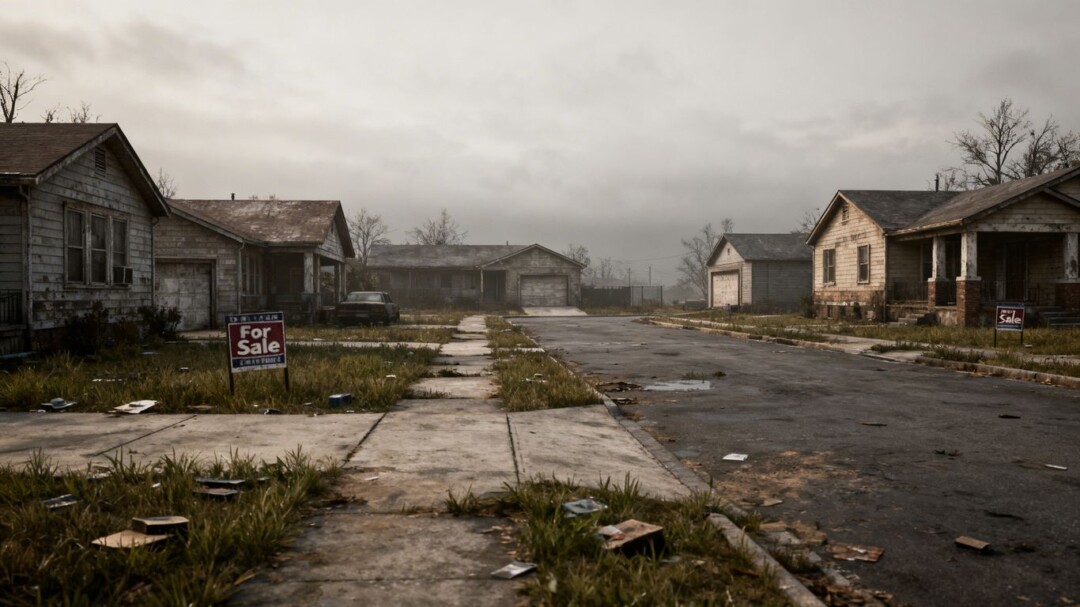
The U.S. housing market experienced another challenging year in 2025, with sales of previously occupied homes remaining at a three-decade low. Persistent high home prices, coupled with elevated mortgage rates, continued to sideline many potential buyers. While the year saw a slight improvement in the final quarter, the overall trend underscores a prolonged slump in the market.
Key Takeaways
- Existing U.S. home sales in 2025 were essentially flat compared to 2024, totaling 4.06 million units, marking the lowest level since 1995.
- The median national home price rose 1.7% to $414,400 in 2025, continuing a trend of annual increases.
- Mortgage rates, which began climbing in 2022, started to ease in late summer 2025, closing the year at 6.15%.
- December 2025 saw a surge in sales to a seasonally adjusted annual rate of 4.35 million units, the fastest pace in nearly three years.
- Inventory levels remain below pre-pandemic norms, with a 3.3-month supply at the end of 2025.
A Market in Stasis
Sales of existing homes in the U.S. have been on a downward trajectory since 2022, a period marked by rising mortgage rates that began to climb from historic lows seen during the pandemic. This sustained slump, now entering its fourth year, is attributed to a confluence of factors: high mortgage rates, years of significant home price appreciation, and a chronic undersupply of homes resulting from more than a decade of below-average new construction.
Lawrence Yun, chief economist for the National Association of Realtors (NAR), described 2025 as a "tough year for homebuyers, marked by record-high home prices and historically low home sales." However, he noted a positive shift in the fourth quarter, with declining mortgage rates and moderating home price growth offering a glimmer of hope.
Government Intervention and Market Realities
In response to the affordability crisis, the Trump administration has proposed measures such as 50-year mortgages, a ban on large investors purchasing homes, and a $200 billion initiative to buy mortgage bonds to lower rates. However, some economists express skepticism about the potential impact of these proposals.
The average rate for a 30-year mortgage hovered around 7% for much of 2025 before beginning to decline in the latter half of the year. By year’s end, the average rate had fallen to 6.15%, its lowest point since October 2024, according to Freddie Mac. This decrease contributed to a notable uptick in sales in December.
December’s Uptick and Lingering Challenges
December 2025 witnessed a 5.1% increase in sales from November, reaching a seasonally adjusted annual rate of 4.35 million units. This exceeded economists’ expectations and represented the strongest sales pace in almost three years. Home prices also saw a modest increase, with the median sales price reaching $405,400 in December, an all-time high for the month and the 30th consecutive month of year-over-year price gains.
Despite these positive signs, affordability remains a significant hurdle, particularly for first-time homebuyers who lack existing home equity. Economic uncertainty and job market concerns also contribute to potential buyers remaining on the sidelines. The slowdown in sales has led to an increase in the number of unsold homes, with 1.18 million available at the end of December, a 3.5% rise from the previous year. This inventory level translates to a 3.3-month supply, still below the 5-to-6 month supply considered a balanced market.
Outlook for 2026
Yun forecasts a 14% increase in existing home sales for 2026, a more optimistic outlook than many other economists, who predict growth ranging from 1.7% to 9%. While mortgage rates are expected to continue easing, most forecasts suggest the average 30-year mortgage rate will remain above 6%. A significant drop in rates would be necessary to encourage homeowners with low existing mortgage rates (nearly 69% have rates at or below 5%) to sell and take on new, higher-rate loans. Nevertheless, the combination of lower mortgage rates and slowing price growth is anticipated to boost sales activity heading into the spring homebuying season, driven by considerable pent-up demand.