

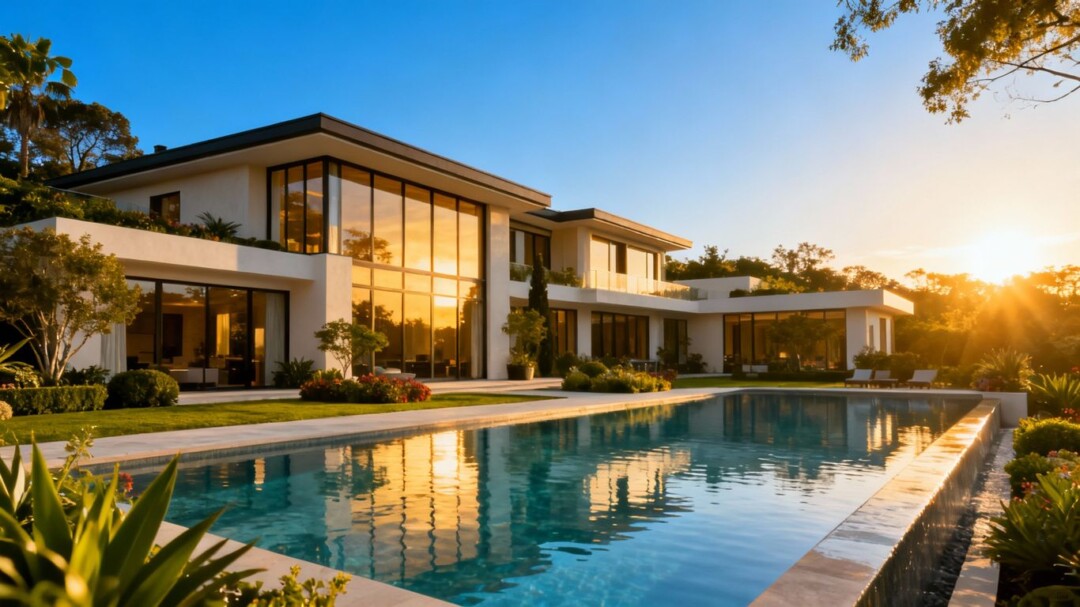
South Florida’s luxury real estate market is experiencing a notable shift, with some areas seeing price corrections while others maintain strong demand. This divergence contrasts with national trends, highlighting unique regional dynamics. Buyers are increasingly prioritizing understated elegance and investment value over sheer size, signaling a move towards ‘quiet luxury.’
Key Takeaways
- The luxury housing market in Southwest Florida is showing a split, with Cape Coral-Fort Myers experiencing price drops while Naples-Marco Island remains a high-value market.
- Nationally, the luxury market benchmark has seen a slight decrease, but this masks significant variations between cities.
- A growing trend towards "quiet luxury" emphasizes understated elegance, convenience, and investment value over large, ostentatious properties.
- While some luxury homeowners are significantly reducing asking prices, particularly for newly built homes, others are seeing sustained demand.
Divergent Market Performance in Southwest Florida
The luxury real estate landscape in Southwest Florida presents a tale of two markets. The Cape Coral-Fort Myers metropolitan area has witnessed one of the steepest luxury price declines in the nation, with the entry point for the top 10% of listings falling by 7.8% year-over-year to approximately $1.06 million. This indicates a market that is adjusting to elevated prices and evolving seller expectations.
In contrast, just 45 miles south, the Naples-Marco Island area continues to be among the country’s most exclusive luxury markets. Despite a modest 2.1% price dip, luxury listings here begin around $3.44 million. Naples’ ultra-affluent segment remains robust, ranking seventh nationally by price threshold and averaging nearly 2,000 million-dollar listings annually, underscoring sustained demand from high-net-worth individuals viewing Collier County as a long-term investment.
The Rise of "Quiet Luxury"
A significant trend shaping the luxury housing market is the emergence of "quiet luxury." This concept moves away from the traditional emphasis on sprawling estates and ostentatious displays of wealth. Instead, affluent buyers are increasingly drawn to properties that offer a balance of convenience, style, and investment value. These homes often feature high-end finishes and require less maintenance, reflecting a preference for understated elegance and practicality. This shift is influencing buyer preferences and property desirability across various luxury markets.
Price Adjustments and Seller Strategies
Across Florida, a notable number of luxury homeowners have been compelled to significantly reduce their asking prices. This phenomenon is driven by a combination of national economic uncertainties and specific market dynamics within the state, including a surge in new construction. Some newly built, high-end properties have seen price cuts ranging from hundreds of thousands to millions of dollars in an effort to attract buyers in a more cautious market.
However, the data also suggests that higher-priced homes are experiencing fewer price reductions compared to lower-priced segments. While the overall market may be softening, the ultra-luxury tier, representing the top 1% of listings, has shown some stabilization. Real estate professionals note that while the market is more buyer-friendly than in recent years, prices remain relatively high, and sellers may need to exercise patience and flexibility.
Sources
- Luxury Markets Buck National Trends, Naples & Fort Myers | Real Estate, Gulfshore Business.
- ‘Quiet Luxury’ Is Coming for the Housing Market, | Florida Realtors.
- Florida’s Luxury Homeowners Slash Millions Off Asking Prices, Newsweek.