

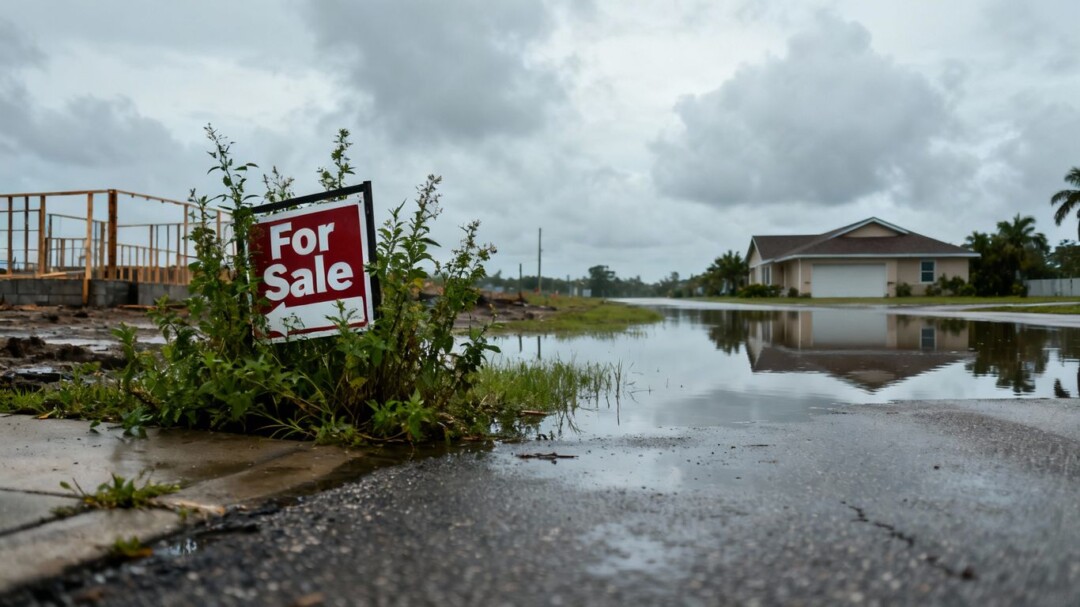
A federal government shutdown is significantly impacting Florida’s real estate market, primarily by freezing the issuance of new flood insurance policies. This disruption is causing delays and cancellations of home sales, particularly in flood-prone areas where such insurance is a mandatory requirement for mortgages. The National Flood Insurance Program (NFIP) is unable to write new policies or renew existing ones, creating a domino effect on transactions.
Key Takeaways
- The federal government shutdown has halted the National Flood Insurance Program (NFIP), preventing new policy issuances and renewals.
- This directly impacts home sales in Florida’s flood zones, as lenders require flood insurance for mortgages.
- Some buyers are forced to find cash to close deals, while others face significant transaction delays.
- While private flood insurance exists, it’s often not a viable alternative in higher-risk areas.
- The shutdown also affects other housing-related federal programs and loan processing.
Flood Insurance Freeze Creates Transaction Paralysis
The core of the problem lies in the NFIP’s inability to operate during the shutdown. For homes located in FEMA-designated flood zones, obtaining flood insurance is a prerequisite for securing a mortgage. Without the NFIP functioning, banks cannot underwrite these loans, effectively putting sales on hold. Realtors report instances where buyers had to scramble for cash to complete purchases, a solution not feasible for most.
While existing NFIP policies can sometimes be transferred to new owners through an "assignment of policies" process, this loophole only offers temporary relief. Furthermore, Florida’s state-backed Citizens Property Insurance Corp. has temporarily deferred its flood insurance documentation requirement for policyholders, but this is a stopgap measure.
Broader Market Impacts
The shutdown’s reach extends beyond flood insurance. The Department of Agriculture has suspended new direct and guaranteed loans, and other federal agencies involved in housing programs are experiencing disruptions. While entities like Fannie Mae and Freddie Mac continue normal operations, restricted access to federal data could slow down loan verifications. The National Association of Realtors estimates that approximately 1,400 transactions nationwide could be affected daily by the shutdown, with impacts intensifying over time.
Urgency for Resolution
Real estate organizations are urging Congress to reach a bipartisan agreement to reopen the government or, at minimum, pass legislation to reauthorize the NFIP. With hurricane season still active, the lack of a functioning flood insurance program poses a significant risk to homeowners and the stability of the housing market in vulnerable areas like Florida.
Sources
- Shutdown Slows Florida Flood Insurance, Home Sales, | Florida Realtors.
- Florida real estate could take a hit during government shutdown, Tampa Bay Times.
- Impact of Government Shutdown on Real Estate in SWFL | Real Estate, Gulfshore Business.