

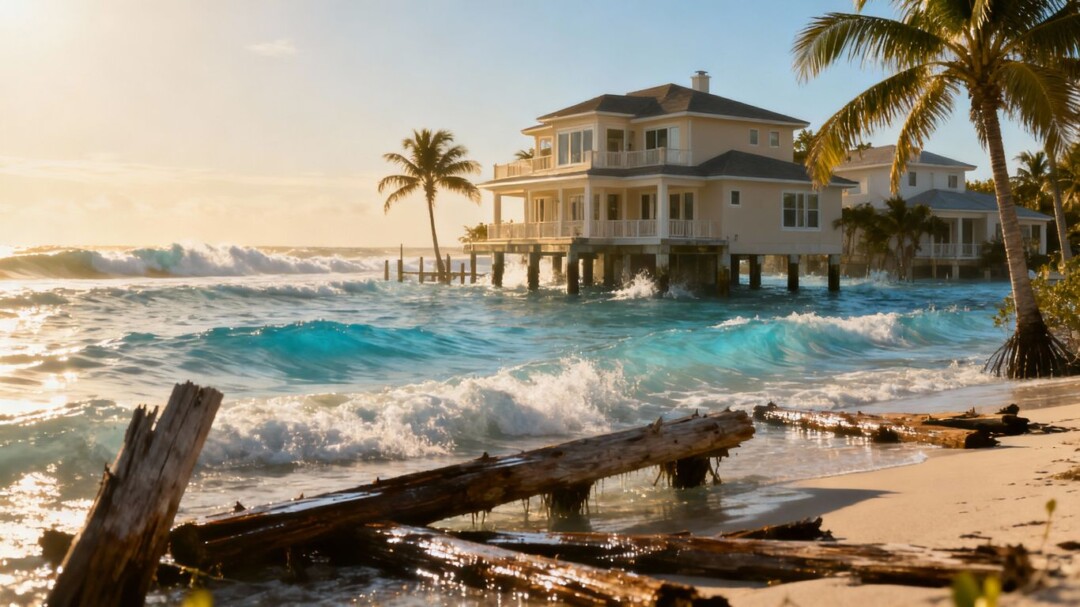
South Florida’s real estate market is experiencing a peculiar phenomenon: despite increasing risks from climate change, including more frequent flooding and rising sea levels, property values are not reflecting these threats. Homes in flood-prone areas continue to sell, often at significant profits, creating a disconnect between environmental reality and market valuation.
Key Takeaways
- Despite repeated flooding events and expert warnings about sea-level rise, South Florida’s real estate market remains remarkably resilient, with property values often increasing after disasters.
- Factors like housing shortages, the allure of waterfront living, and a perception that long-term climate risks are distant contribute to this market anomaly.
- While some coastal markets, particularly on the Gulf Coast after recent hurricanes, show early signs of price depreciation, the overall trend in South Florida suggests a slow-moving correction, if any.
- Real estate platforms are beginning to incorporate climate risk data, and some buyers are showing increased awareness, but this has yet to significantly impact overall demand or pricing.
The Climate Change Disconnect
Homeowners in areas like Fort Lauderdale and Miami have experienced significant flooding, sometimes multiple times in a few years. Yet, when they sell, their properties often fetch higher prices than they paid, sometimes hundreds of thousands of dollars more. This trend is puzzling experts who predict substantial drops in coastal property values due to climate change impacts like sea-level rise and more intense storms.
A ‘Climate Denial Bubble’?
Some analysts refer to this situation as a "climate denial bubble," where market prices do not yet account for the long-term risks. Reports have estimated that coastal home values could drop significantly by 2030, and some counties are considered overvalued by billions due to flood risks alone. However, the market has yet to see a major correction.
Resilience and Short-Term Focus
Several factors contribute to this resilience. A persistent housing shortage and the strong desirability of waterfront living mean that demand often outweighs flood concerns for many buyers. Furthermore, many individuals purchasing property, especially those relocating from other states, may not plan to hold onto the property for decades, thus downplaying the long-term implications of climate change. Real estate agents often report that while buyers inquire about flooding, it rarely becomes a deal-breaker.
Signs of a Shifting Tide?
While South Florida’s market remains robust, there are nascent signs of change. On the Gulf Coast, areas hit hard by recent hurricanes have seen some property values decline. Additionally, popular real estate websites are increasingly highlighting flood and climate risks, and some research indicates buyers are more likely to choose properties with lower risk when informed. Economists also note a subtle shift in migration patterns, with some data suggesting a slight move away from the riskiest areas, though other factors like affordability also play a role.
The Future Outlook
Experts anticipate that any market correction due to climate change will likely be gradual rather than sudden. The enduring appeal of coastal living, combined with a shortage of housing, suggests that property values may continue to hold strong in the short to medium term. However, the long-term sustainability of these markets remains a significant question, with potential for more drastic impacts if climate change accelerates or insurance costs continue to skyrocket.