

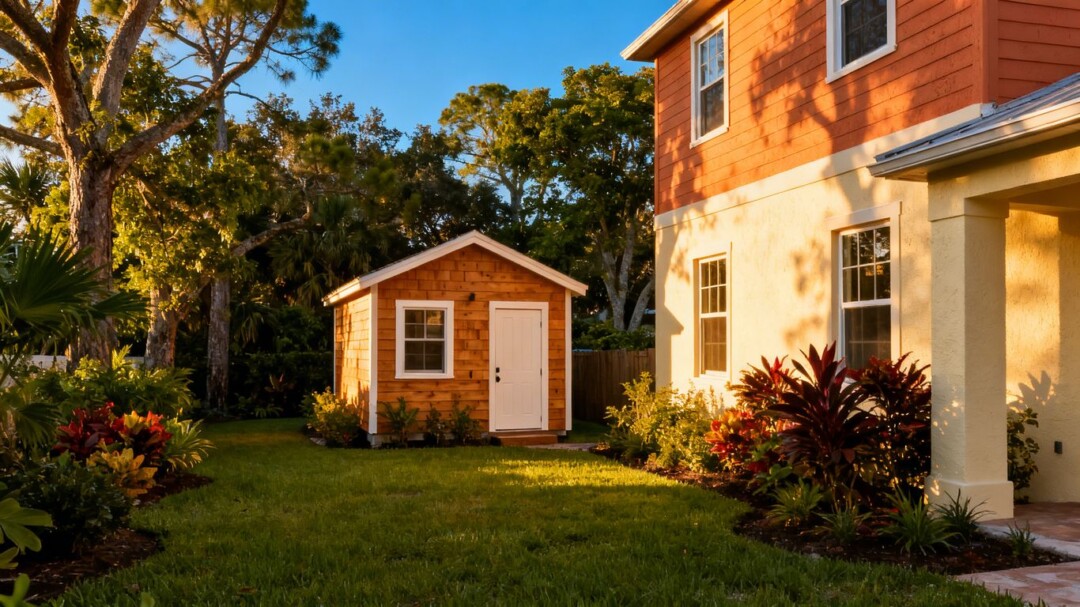
Florida’s ambitious Live Local Act, designed to boost housing affordability through zoning reform and incentives, is facing potential delays. A legislative dispute over accessory dwelling units (ADUs) and their use as short-term rentals has emerged as a significant hurdle, threatening to derail updates to the landmark legislation.
Key Takeaways
- A dispute over accessory dwelling units (ADUs) and their regulation as short-term rentals is jeopardizing updates to Florida’s Live Local Act.
- The Live Local Act, passed in 2023, aims to increase housing affordability by streamlining approvals and incentivizing workforce housing.
- Legislators are considering a "glitch bill" (Live Local 4.0) to refine existing policies, but the ADU provision has become a sticking point.
- A separate legal issue concerning sovereign immunity for affordable housing developers is also being addressed through legislative changes.
The Live Local Act’s Momentum
Since its inception in 2023, Florida’s Live Local Act has been a driving force in the state’s efforts to combat rising housing costs. The legislation mirrors similar initiatives in other states, focusing on unlocking commercial land, expediting development approvals, and expanding the availability of workforce housing. This proactive approach comes as Florida experiences significant population growth, leading to increased demand for housing that outpaces supply. The coalition reports that over 180 Live Local projects are in the pipeline statewide, with six already under construction.
The Accessory Dwelling Unit (ADU) Sticking Point
The current legislative session’s "glitch bill," colloquially known as Live Local 4.0, aims to further refine the act by clarifying land-use mandates, tax exemptions, and introducing new tiers for transit-oriented and rural development. However, a contentious debate has arisen concerning ADUs in single-family neighborhoods. While the Senate’s version of the bill allows local governments to restrict ADUs from being used as short-term rentals, the House version does not include this provision. This disagreement over local control versus statewide uniformity for ADU short-term rental use has become a critical chokepoint, potentially impacting the passage of any new Live Local updates.
Addressing Sovereign Immunity
Another crucial element being addressed in the proposed legislative changes stems from a recent court ruling. A lawsuit filed by affordable housing developer Coral Rock Development Group highlighted a gap in the Florida Fair Housing Act. The court ruled that the act did not explicitly waive sovereign immunity, allowing a city to reject an affordable housing project based on its financing source. To rectify this, the proposed legislation includes language to waive sovereign immunity, ensuring that affordable housing projects cannot be discriminated against based on their funding mechanisms. This change is seen as vital for developers like Michael Wohl of Coral Rock, who emphasized the importance of protecting affordable housing initiatives from local opposition.
Future Outlook
The coming weeks are critical as the legislative session deadline approaches. The resolution of the ADU dispute is paramount, as its outcome is intrinsically linked to the broader success of the Live Local Act’s expansion. Lawmakers are working to find common ground to ensure that Florida can continue its push for housing affordability without being stalled by local control disagreements.