

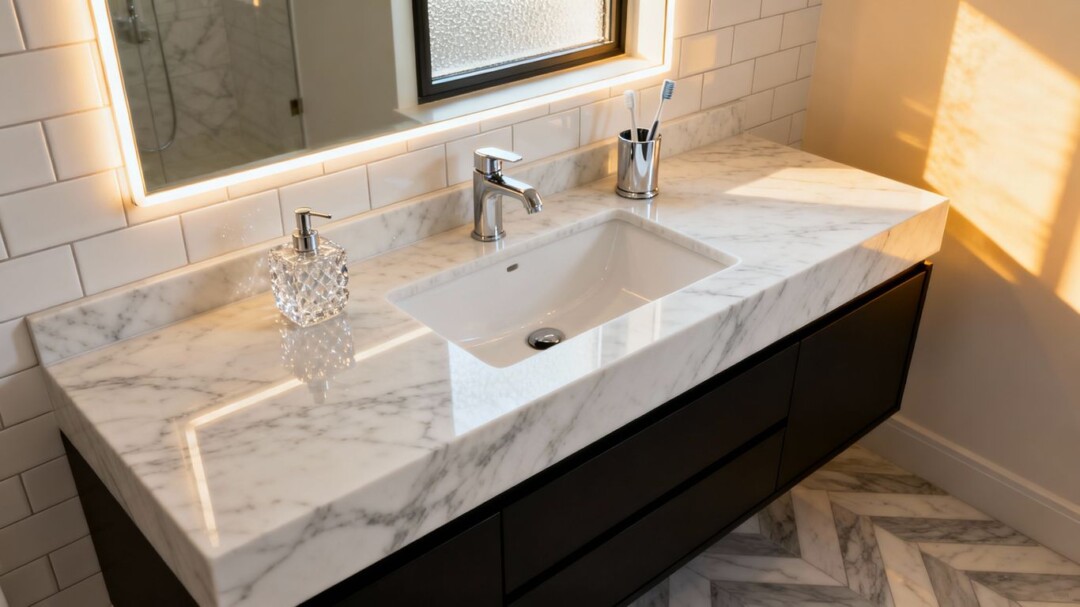
Carrara marble, a symbol of Italian artistry and refined taste, is a popular choice for bathroom vanities, promising timeless beauty and long-term value. This classic stone, quarried from Tuscany, Italy, has graced architecture and sculpture for millennia. Its unique, soft white backgrounds with flowing gray veins create a natural, painterly effect that engineered materials cannot replicate, instantly becoming a centerpiece in any bathroom.
Key Takeaways
- Carrara marble offers timeless elegance and adds real estate value.
- It is susceptible to staining and etching from acidic substances.
- Both polished and honed finishes are available, each with distinct aesthetic and practical considerations.
- Proper installation and regular maintenance are crucial for its longevity.
The Allure of Carrara Marble
Beyond its historical significance, Carrara marble brings a cool, sophisticated presence to modern interiors. Each slab is a unique work of art, inviting touch with its soft, velvety surface. Its natural variation adds personality, while its repairable surface can often be restored by professionals. Furthermore, natural stone, especially imported marble, is considered a premium upgrade that can increase a home’s appraisal value.
Pros and Cons of Carrara Marble Vanity Tops
While undeniably beautiful, Carrara marble has practical considerations:
Advantages:
- Timeless Beauty: Its classic elegance never goes out of style.
- Natural Variation: Each piece is unique, adding character.
- Repairable Surface: Minor scratches and etches can often be fixed.
- Heat Resistance: Can handle hot styling tools without discoloration.
Disadvantages:
- Stains Easily: Porous nature can absorb liquids if not properly sealed.
- Etching from Acids: Acidic substances can dull the surface.
- Requires Regular Maintenance: Needs consistent sealing to maintain appearance.
- Higher Cost: More expensive than materials like quartz or ceramic.
Polished vs. Honed Finish
Choosing between a polished and honed finish impacts both the look and usability:
- Polished Carrara: Offers a shiny, reflective, luxurious look that enhances veining. It’s best for powder rooms or guest baths with less daily use, as it shows etching and fingerprints more readily.
- Honed Carrara: Features a matte, soft, velvety appearance that better hides etch marks and minor blemishes. It’s ideal for master bathrooms or high-traffic areas where practicality is key.
Carrara Marble vs. Other Vanity Top Materials
| Material | Pros | Cons | Overall Rating (10) |
|---|---|---|---|
| Carrara Marble | Natural elegance, unique veining, reparable | Prone to stains/etching, higher maintenance | 8 |
| Quartz | Durable, non-porous, low-maintenance | Uniform appearance, not heatproof | 7 |
| Solid Surface | Affordable, easy to mold, wide color range | Can discolor, less heat resistant | 6 |
| Ceramic | Easy to clean, acid-resistant, budget-friendly | Limited aesthetic appeal, fragile | 6 |
| Stainless Steel | Hygienic, durable, modern industrial look | Can feel cold, scratches easily | 5 |
Identifying High-Quality Carrara Marble
Authentic Carrara marble is distinguished by its irregular, non-repeating veining, cool touch, depth, and soft shimmer. Composites often have uniform patterns and feel room temperature. Grading systems (Carrara C, CD, D) denote color tone and veining clarity, with CD or higher generally recommended for vanity tops.
Installation and Care
Proper installation involves ensuring a level surface, accurate measurements, and professional handling due to the stone’s weight. Sealing immediately after installation is crucial. Daily care involves wiping spills promptly with a soft cloth and mild, pH-neutral soap. Annual sealing, tested by a water drop absorption test, is recommended to maintain its protective qualities.