

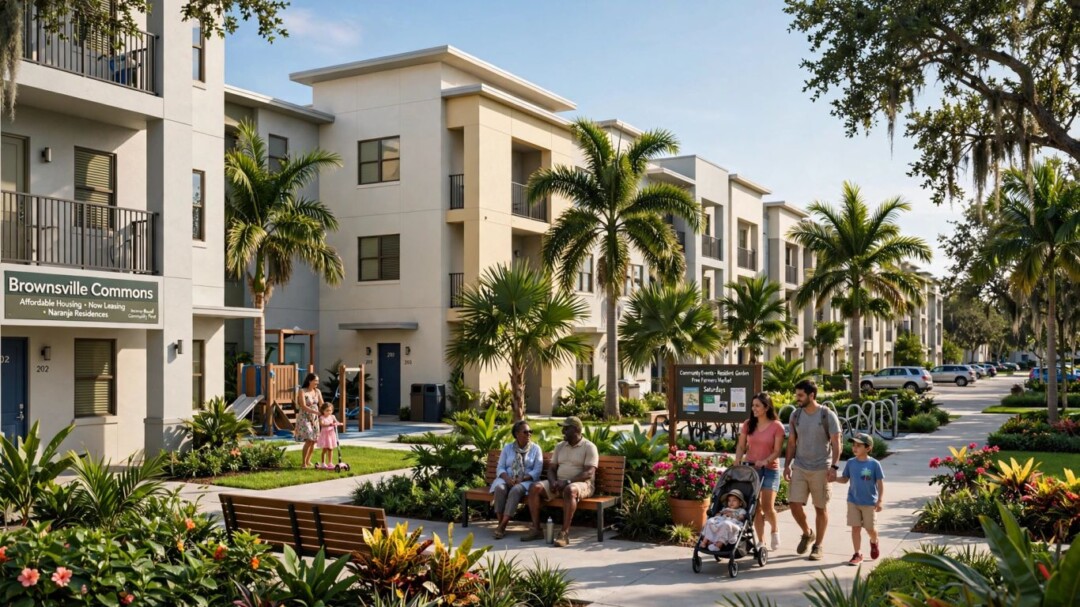
Plans for more than 300 affordable rental homes in Brownsville and Naranja could expand housing options in two Miami-Dade County neighborhoods. The projects add to the county’s pipeline of lower-cost housing, though key details—including the number of units at each site, income eligibility and construction schedules—have not been specified in the information available.
Key takeaways
The proposals represent planned rental housing, not homes already completed or available to lease.
- More than 300 affordable units are planned across Brownsville and Naranja.
- The announcement does not specify the project-by-project unit totals or affordability terms.
- Construction and leasing timelines have not been provided.
Where the new homes are planned
The projects are slated for Brownsville and Naranja, communities within Miami-Dade County. The announcement identifies the neighborhoods but does not provide site addresses, building designs or a breakdown of how the units will be divided between the two locations.
What the announcement establishes
The planned homes are described as affordable rentals, indicating they are intended to serve renters seeking housing at below-market or otherwise income-qualified rates. However, the precise definition of affordability, eligible household income ranges and expected rents have not been detailed. Those terms will be important for residents assessing whether the homes could meet their needs.
The available information also does not identify developers, financing sources, approvals or expected start and completion dates. As a result, the projects should be understood as additions to the housing pipeline rather than units ready for occupancy.
Why the projects matter
Adding rental homes with affordability requirements can broaden housing choices for households that may struggle to find options within their budgets. The impact will depend on how many units are ultimately delivered, which income groups they serve and when they become available.
For residents and housing advocates, forthcoming details on rents, eligibility and schedules will help clarify the projects’ reach. Until those details are announced, the headline figure of more than 300 units offers a measure of the planned scale, but not yet a full picture of who will be served.