

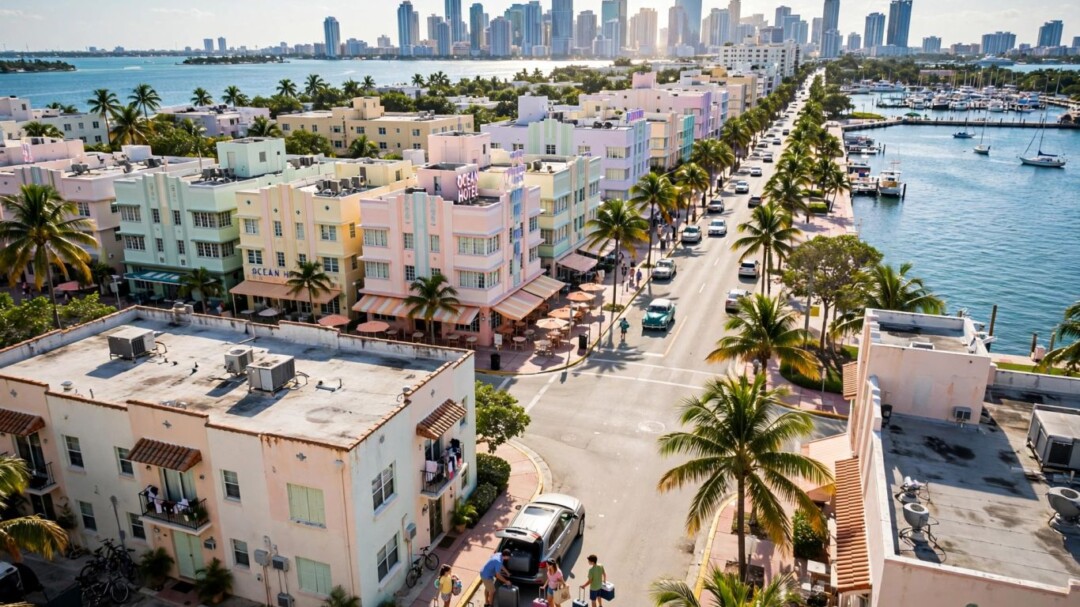
Miami’s appeal to East Coast households is fading as housing and living costs climb, according to recent migration and real estate data. Florida still gained residents from elsewhere in the country, but far fewer than during the pandemic-era peak. In South Florida, middle-income buyers are increasingly looking elsewhere even as wealthy newcomers continue to arrive.
Key takeaways
- Florida’s domestic migration fell to 201,191 people, down from 598,737 in 2022.
- Miami-Dade lost nearly 73,000 residents to other counties and states last year.
- New York City shoppers accounted for 11% of nonlocal online traffic to Miami listings this fall, about two-thirds below the 2023 peak.
- Central and western Florida are attracting buyers seeking lower costs, while luxury demand in Miami remains strong.
The figures point to a change in who can afford to move to South Florida, rather than a complete loss of interest in the region. The market increasingly serves high-income buyers while creating hurdles for households that depend on local wages or need mortgage financing.
Affordability advantage has narrowed
The Shimberg Center for Housing Studies at the University of Florida reported that domestic migration to Florida fell to about 551 people a day, compared with roughly 1,640 a day in 2022. Miami-Dade led the state in domestic out-migration, with a net loss of nearly 73,000 residents last year.
Miami’s cost of living reached 14.1% above the national average, according to a U.S. Bureau of Economic Analysis comparison based on 2024 data. That put the metro behind only San Francisco among major cities in the report, while New York stood at 12.5% above average. Home prices, insurance, property taxes and condominium fees have also risen, adding to the cost of a move.
Reforms adopted after the 2021 Champlain Towers South collapse require older condominiums to undergo structural inspections and maintain fully funded reserves. The measures address building safety, but have also contributed to higher costs for some condo owners through fees, insurance and assessments.
Buyers look beyond South Florida
Anthony Lamacchia, chief executive of Lamacchia Realty, told Realtor.com that Central Florida has become his firm’s leading destination for clients leaving New England. Some buyers are also considering western Florida communities, where housing can be less expensive than in South Florida. Others are moving to lower-cost cities outside Florida.
The shift is visible in online home-shopping data: New York City buyers’ share of nonlocal traffic to Miami listings dropped to 11% this fall. Realtor.com also reported that about 43.2% of Miami purchases were all-cash, making competition harder for buyers who rely on financing.
A two-tier market poses a workforce challenge
The slowdown among everyday buyers contrasts with continued strength at the top of the market. Miami’s luxury sales have surged, and wealthy executives and investors have established businesses and residences in the area. Analysts say rising costs for land, construction, labor, insurance and financing encourage developers to focus on higher-priced housing.
That dynamic raises concerns about whether essential workers can afford to live near their jobs. Hospitals, schools, restaurants and construction projects depend on workers who may be priced out of the communities they serve. The challenge for Miami, local real estate observers say, is to turn investment and growth into housing and transportation options that work for a broader range of residents.