

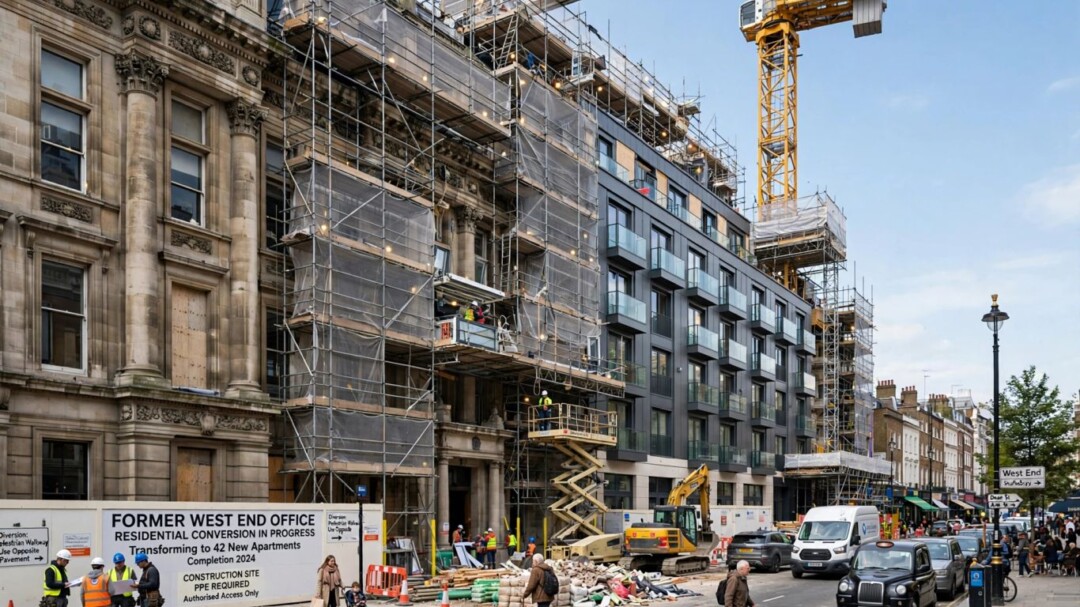
A joint venture between Jemal Real Estate Strategies and DivcoWest plans to convert an eight-story office building at 1255 23rd Street NW in Washington, D.C., into approximately 323 apartments. The proposal includes up to 36 affordable homes, while retaining ground-floor retail. Madison Realty Capital supplied a $40 million loan for the acquisition and predevelopment.
Key takeaways
- The 342,000-square-foot property is in the West End, near Georgetown, George Washington University and Dupont Circle.
- The plan calls for about 323 apartments, including up to three dozen affordable units.
- Roughly 22,000 square feet of ground-floor retail will remain.
- Madison Realty Capital provided a $40 million loan; DivcoWest will keep an equity stake alongside JRES.
The conversion would bring new housing to an area described as having limited supply, particularly of affordable units. The project’s architect is FILLAT+ Architecture, and CBG Building Company is the general contractor.
A prominent West End location
Built in 1982, the office building sits a few blocks from the Foggy Bottom-GW University Metro station. Its location offers access to employment centers, transit, shops and established neighborhoods, including Georgetown and Dupont Circle. The property also stands near George Washington University.
The building includes 257 covered parking spaces. The planned residential use would retain its existing retail component, with approximately 22,000 square feet of shops or other commercial space at street level remaining in place.
Partnership and project financing
DivcoWest, the property’s current owner, is partnering with Jemal Real Estate Strategies and will retain an ownership interest in the project. The joint venture’s plan is to reposition the office property for residential use, with Madison Realty Capital’s financing supporting both the acquisition and early-stage work.
The reported plan outlines the intended apartment count and project team, but does not specify a construction schedule or anticipated completion date. The affordable component could reach 36 units, though the available project information does not detail affordability levels or eligibility requirements.