

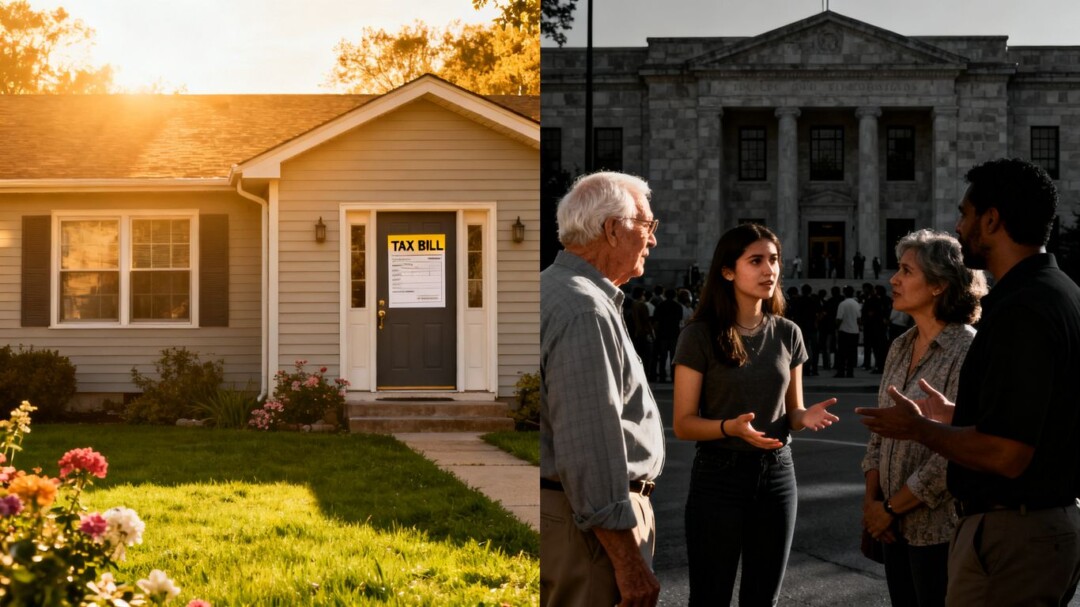
Florida voters will decide Nov. 3 whether to approve Amendment 3, a proposed constitutional change that would expand the homestead exemption for non-school property taxes and lower the assessment cap on other properties. Supporters say it could ease homeowners’ costs; local officials and critics warn that lost revenue could affect public services or shift costs elsewhere.
Key takeaways
- The measure needs at least 60% voter approval and would take effect Jan. 1, 2027, if passed.
- It would increase the homestead exemption to $150,000 in 2027 and $250,000 in 2028, while lowering the annual nonhomestead assessment cap from 10% to 5%.
- School taxes would not receive the larger exemption, and local governments could face substantial revenue losses.
The proposal has prompted questions about who benefits, how local budgets might change, and whether tax savings for homeowners could mean higher costs or fewer services for others.
What the amendment would change
For qualifying homesteaded properties, the exemption would apply to non-school property taxes, rising to $150,000 in 2027 and $250,000 in 2028, with inflation adjustments thereafter. The change would not apply to school district levies. The separate cap on annual assessment increases for nonhomestead properties—including many rental homes, second homes and commercial properties—would drop from 10% to 5%.
The proposal also sets a residency transition: people who were not Florida residents on Dec. 31, 2026, would initially receive the existing exemption when they qualify for homestead status, with the higher amount available after five years, subject to the amendment’s terms. Existing Save Our Homes protections and portability rules would remain unchanged.
Homeowners and buyers weigh the details
Florida Realtors supports the amendment and has planned educational outreach to answer questions about its provisions. Supporters argue that reducing property-tax bills could help families afford to remain in their homes. The actual benefit would vary with property value, local tax rates and the share of a bill attributable to eligible non-school levies. Special assessments and other charges not based on property value would not be reduced by the exemption.
For prospective residents, the residency date could influence the timing of a move. Real estate professionals and property appraisers have emphasized that buyers should distinguish the proposed exemption from school taxes, special assessments and other parts of a tax bill.
Local budgets and possible trade-offs
State estimates cited by reporting put the potential first-year local-government revenue loss at roughly $4.6 billion to $5 billion, with losses potentially growing over time. A Florida Policy Institute online calculator breaks down estimated effects across counties and special districts. Its examples include projected impacts on conservation and water management in Palm Beach County, roads in St. Lucie County and children’s services in Okeechobee County.
Local governments could respond through spending cuts, reserves, higher property-tax rates or fees, among other options. Critics—including local officials and some economists—say the measure offers no replacement funding plan and could affect public safety, infrastructure and other services. They also warn that costs could shift to renters, visitors or other taxpayers. The scale and distribution of any effects would depend on local budgets and decisions after the vote.
- How Florida may fill local budgets after big tax reductions | Inside the Magazine, Gulfshore Business.
- Amendment 3 Explained: What Florida’s November Ballot Means for Homeowners and Prospective Buyers, PR Newswire.
- Real estate agent speaks about Amendment 3 support in Florida, Tampa Bay 28.
- Amendment 3 webinar answers property tax questions, | Florida Realtors.
- New tool estimates impacts on gov’t budgets, WPTV.