

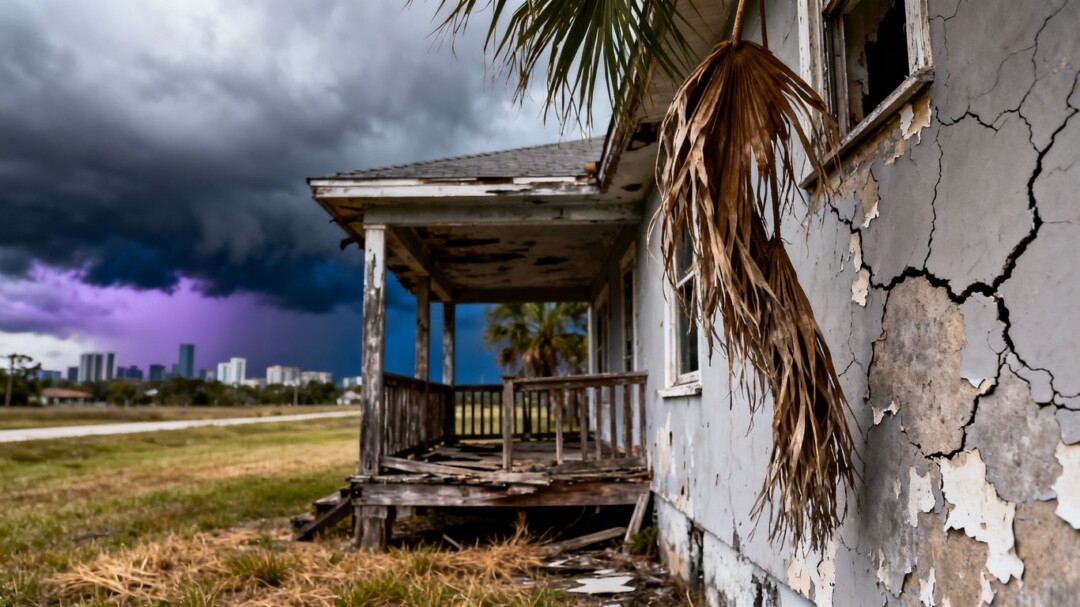
Florida’s real estate market is facing a growing insurance crisis, with soaring premiums and insurers withdrawing coverage, raising concerns about a potential housing market downturn reminiscent of 2008. The situation is particularly acute in coastal and vulnerable neighborhoods, where rising costs are exacerbating existing inequalities and threatening the affordability of homeownership.
Key Takeaways
- Soaring property insurance rates are making it difficult for Floridians to afford homeowners insurance, leading to a "risk sorting" effect where only the wealthy can afford protection.
- The insurance crisis is impacting the entire housing finance system, as mortgages typically require insurance, potentially leading to falling home prices and economic instability.
- Climate change and increasingly intense hurricanes are driving up insurance costs and exacerbating the problem.
- Current market responses are piecemeal and driven by individual property markets, deferring a larger collective reckoning about how communities will adapt to climate risk.
- There is a growing need for public policies that integrate insurance with resilience measures, such as stronger building codes and community-level adaptation strategies.
A Tangible Crisis Unfolding
The insurance crisis in Florida is not an abstract economic issue; it’s a tangible reality for many homeowners. In neighborhoods like Shore Acres in St. Petersburg, the aftermath of recent hurricanes like Helene and Milton revealed a stark contrast in recovery. Older homes, many in disrepair, sat alongside pristine, elevated newer homes that appeared untouched by the storms. This visual disparity highlights how climate shocks and market responses are reshaping the cost of living in the Sunshine State.
Sustained, year-over-year price increases in homeowners insurance are common. Many residents struggle to keep up with payments, face being dropped by insurers, or are required to make costly repairs like replacing their roofs just to secure coverage. This situation is critical because insurance is fundamental to the housing finance system. Without it, obtaining or maintaining a mortgage becomes impossible, which can lead to a decline in home prices, a slowdown in the real estate market, and a reduction in local government tax bases.
Risk Sorting and Growing Inequality
As for-profit insurers become more selective to protect themselves from mounting losses, risk sharing is transforming into "risk sorting." This means that only individuals, neighborhoods, and cities with the financial means can afford to pay for adequate insurance and invest in costly infrastructure to mitigate storm damage. Case studies from Miami show how high insurance costs are beginning to sort neighborhoods by wealth, resilience, and insurability. This trend could push affordable homeownership out of reach in many communities, while investors acquire less vulnerable land, potentially displacing existing residents.
This "splintering protectionism" creates a patchwork of financially protected or excluded areas, often reinforcing historic patterns of racial and economic injustice in housing markets. The emotional and financial burden of rebuilding after hurricane season is becoming too much for some, leading them to abandon their homes.
Seeking Solutions Beyond Market Forces
Experts suggest that effective solutions require public policies that better integrate adaptation and insurance. This means providing homeowners with support for both storm-proofing their homes and covering repair costs after a disaster. While Florida has a complex system of semipublic insurance institutions, it has not adequately addressed resilience at the home and neighborhood level.
Reform proposals often focus on linking insurance backstops, such as expanded public insurance options, with concrete resilience measures. These include stronger building codes, home retrofitting, new infrastructure, and better spatial planning. The idea is that leaving adaptation decisions solely to individual homeowners is insufficient, as those who cannot afford necessary upgrades are left vulnerable.
Public institutions, potentially at local, state, or federal levels, could act as a "one-stop shop" offering consumer insurance alongside adaptation investment programs. Such agencies could pool risks through a single-payer system and reduce them through investments in resilience, prioritizing long-term safety and affordability over profit. These entities could also incorporate transparent and democratic decision-making, giving communities more say in decisions typically made by private market actors.
The fundamental questions for Florida moving forward are: What and who are we trying to protect, on what time horizon, and at what costs? The current system is already making these decisions, creating financial fault lines between those who can afford protection and those who cannot. The challenge lies not just in stabilizing insurance markets, but in creating new forms of collective protection that connect finance, risk reduction, and community decisions about living with climate risk.