

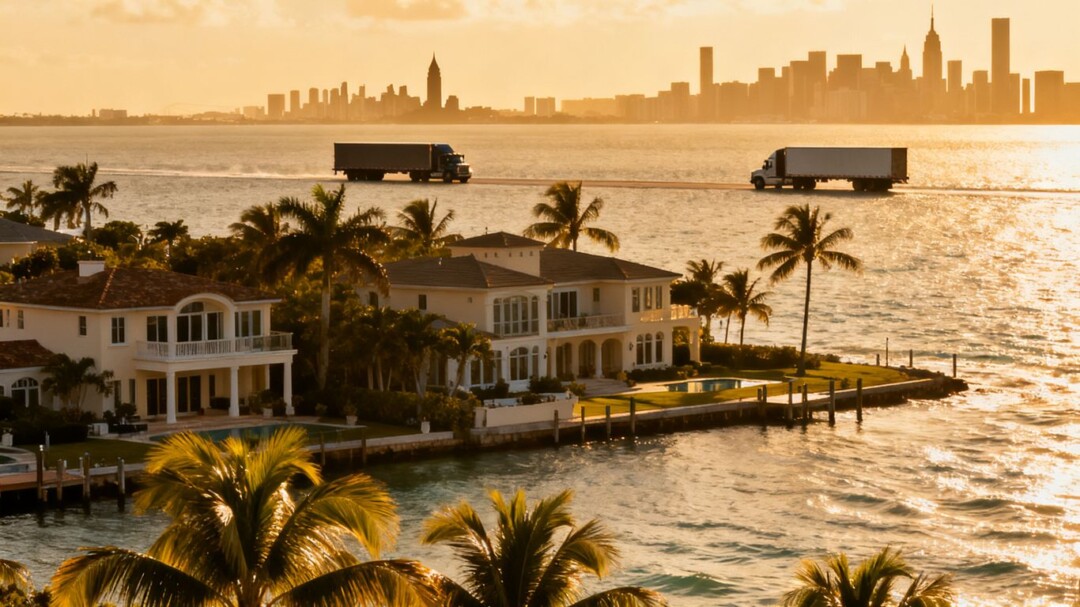
A significant influx of wealth from high-tax states like California and New York is dramatically reshaping Florida’s luxury real estate market. As affluent individuals seek refuge from escalating property taxes and a perceived "tax-the-rich" sentiment in their home states, Florida’s high-end property sector is experiencing unprecedented growth. This migration is also sparking crucial conversations about property tax reform within Florida itself, with a key ballot measure set to decide the state’s future tax landscape.
Key Takeaways
- Wealthy individuals are relocating from California and New York to Florida, driving demand in the luxury real estate market.
- New York City has implemented a "pied-à-terre" tax on luxury second homes, potentially encouraging further out-migration.
- Florida is considering a constitutional amendment to overhaul its property tax system, including a homestead exemption, with a focus on shifting the burden away from primary residents.
- Governor Ron DeSantis is positioning Florida as a haven for the wealthy, while also advocating for tax relief for Floridians.
- Despite the luxury boom, rising costs are impacting affordability for some Florida residents, leading to discussions about the state’s economic balance.
The "Mamdani Effect" and New York’s Tax Strategy
New York City has introduced a "pied-à-terre" tax targeting second homes valued above $1 million. This tax, supported by Mayor Zohran Mamdani and Governor Kathy Hochul, imposes annual rates ranging from 4% to 6.5% on properties between $1 million and $5 million, with higher rates for more expensive homes. While some in the real estate sector anticipate a minimal long-term impact, arguing that those who wish to live in New York will do so regardless of the added cost, the measure reflects a broader trend of urban centers seeking to increase revenue from luxury real estate.
Florida’s Property Tax Overhaul on the Ballot
Florida is poised to vote on a significant property tax reform this November. The state legislature has passed a constitutional amendment that, if approved by voters, would introduce a new $250,000 homestead exemption. Governor Ron DeSantis champions this measure as a crucial step towards eliminating property taxes for Florida homeowners, framing it as a way to attract wealth and provide relief to residents. However, critics, including some local governments and think tanks like The Tax Foundation, warn that the amendment could lead to a less stable and competitive tax code, potentially shifting burdens in "highly distortionary ways."
Wealth Migration and Affordability Concerns
The influx of high-net-worth individuals, often referred to as the "Mamdani effect" in reference to New York City’s mayor, is creating a "gold rush" in Florida’s luxury real estate market, particularly in South Florida. While this influx boosts the state’s economy, it also contributes to rising costs for housing, insurance, and everyday goods. A recent poll indicated that a significant portion of Florida residents are considering leaving due to the increasing cost of living, with housing affordability being a primary concern. Experts note a growing wealth disparity, raising questions about whether the influx of the super-rich will displace lower and middle-income residents.
Local Development and Taxpayer Burdens
Beyond state-level tax policies, local real estate dealings also highlight financial complexities. In Miami-Dade County, a controversial deal involving a Fisher Island property saw the county agree to purchase land for $400 million, a price significantly higher than the developer’s original purchase. This transaction has drawn criticism, with some community leaders suggesting potential incompetence, negligence, or corruption, and raising concerns that Miami-Dade taxpayers will ultimately bear the financial burden of a deal that benefits a developer without any construction taking place.
Sources
- NYC Taxes Luxury Homes; Florida Puts Property Taxes on the Ballot — RISMedia, RISMedia.
- DeSantis embraces tax-the-rich talk in Florida, Miami Herald.
- Florida’s real estate ‘gold rush’ draws the super-rich as rising costs push others out | Florida, The Guardian.
- How Miami taxpayers could be left holding a $400m bill for luxury real estate | Florida, The Guardian.