

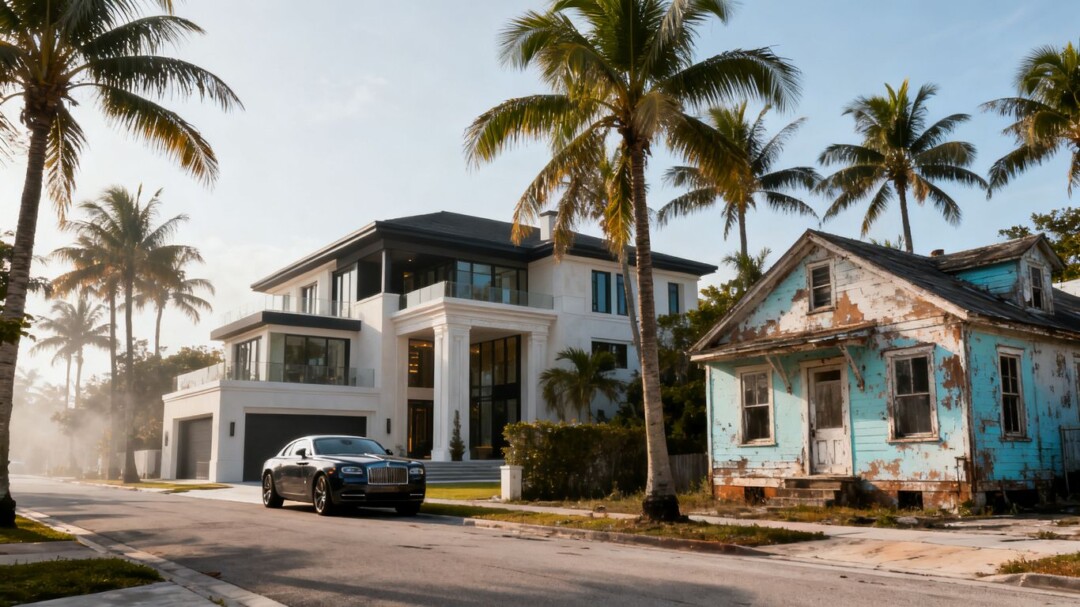
Palm Beach County is experiencing a significant surge in luxury real estate development, leading to soaring housing costs that are increasingly out of reach for many local residents. This trend is creating a widening gap between high-end properties and the availability of affordable housing options, prompting concerns about displacement and the changing demographic of the area.
Key Takeaways
- Luxury developments are driving up housing prices across Palm Beach County.
- Longtime residents and middle-class families are struggling to find affordable homes.
- Local organizations are stepping in to offer assistance for homebuyers.
- Mayor acknowledges the affordability gap but defends luxury development for economic benefits.
The Luxury Development Surge
West Palm Beach, in particular, is seeing a proliferation of high-end residential buildings, including luxury towers and waterfront condominiums. Projects like the Shorecrest condominiums exemplify this trend, adding millions in property value but exacerbating the affordability crisis. While these developments bring economic benefits and job opportunities, they also highlight a stark wealth disparity within the city.
Mayor’s Stance on Development
West Palm Beach Mayor Keith James has openly admitted that the luxury units being built are unaffordable for most current residents. He stated, "I can’t afford to live in them. Most people who are historically residents of West Palm Beach probably can’t." Despite this acknowledgment, Mayor James defends the strategy, arguing that the influx of wealthy individuals will contribute to the city’s tax base and overall economy. He also noted the presence of "abject poverty" in areas just blocks away from these luxury developments.
Housing Advocates and Resident Concerns
Housing advocates and local organizations are raising alarms about the imbalance between luxury and affordable housing. Christine Frederick, CEO of The Lord’s Place, a homeless services organization, pointed out that affordable housing development is not keeping pace with demand. Many low-income residents feel left behind, struggling to survive in a community where housing costs are rapidly escalating. Residents like Yahtta Gee have expressed concerns about displacement, particularly among minority communities, due to rising taxes and changing infrastructure.
Efforts to Bridge the Gap
In response to the growing crisis, organizations like Community Partners of South Florida are working to assist residents. This non-profit offers a comprehensive housing program that includes credit counseling, budgeting advice, debt reduction, and down payment assistance. The program targets families earning between $25,000 and $187,000 annually, who may earn too much for subsidized housing but cannot afford the luxury market. The average home price in the county is nearing $700,000, while the program aims to help families secure homes priced between $200,000 and $390,000.
India and Obrien Edwards, a couple who struggled for years to find a home, found success through Community Partners. "We would not be in our house right now if we did not turn to Community Partners," India Edwards shared, encouraging others not to give up and to seek out available resources.
Development Imbalance
Data reveals a significant imbalance in development, with at least eight luxury buildings slated for construction in West Palm Beach compared to roughly six low-income housing projects. While Mayor James acknowledges this shortfall, he maintains that the city is doing everything it can to address the housing needs, though he concedes it may not be enough to fill the gap entirely.
Broader Implications
The housing challenges in West Palm Beach mirror broader affordability issues across South Florida. The city’s approach to development serves as a potential case study for other rapidly growing municipalities facing similar pressures, raising questions about long-term community sustainability and the ability of current residents to remain in their generational homes.