

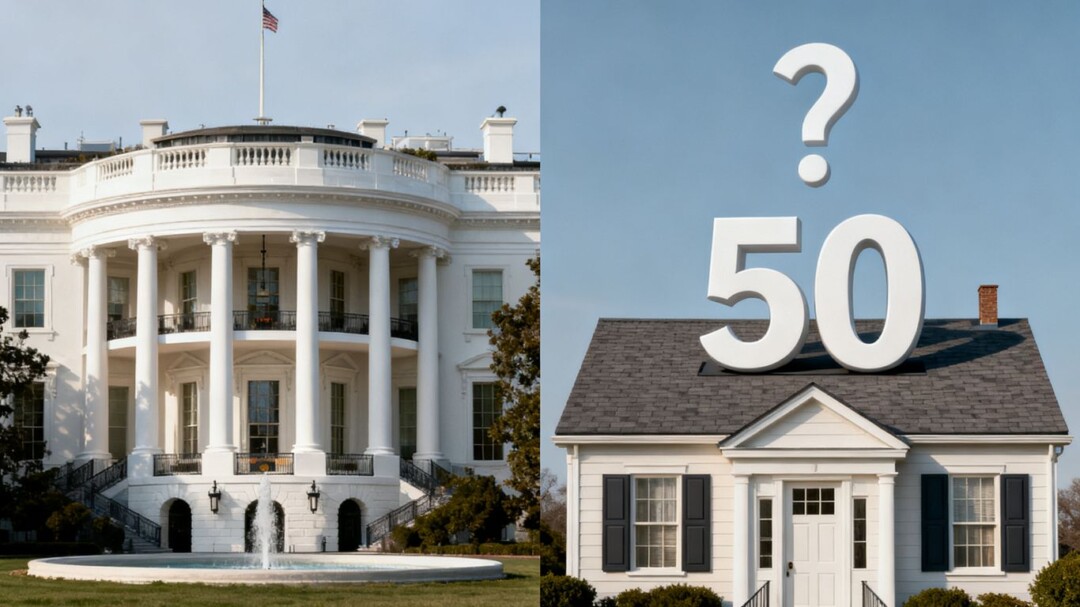
The White House is considering a proposal to back 50-year mortgages as a potential solution to the nation’s housing affordability crisis. While proponents suggest it could lower monthly payments for homebuyers, critics argue it fails to address fundamental issues like housing supply and high interest rates, while significantly increasing the total interest paid over the loan’s life.
Key Takeaways
- A 50-year mortgage could reduce monthly payments by spreading them over a longer period.
- Borrowers would pay substantially more in interest over the life of the loan.
- The proposal does not address critical issues like housing supply shortages and high construction costs.
- Longer loan terms may not align with average life expectancy and could pose underwriting challenges.
- Legislative changes would be required for government-sponsored enterprises like Fannie Mae and Freddie Mac to back such mortgages.
The Appeal of Lower Monthly Payments
The primary benefit of a 50-year mortgage, as highlighted by proponents like Bill Pulte, director of the Federal Housing Finance Agency, is the potential to decrease a borrower’s monthly payment. For instance, on a $415,200 home with a 10% down payment and a 6.17% interest rate, a 50-year mortgage could lower the monthly payment from approximately $2,288 on a 30-year loan to $2,022. This reduction could make homeownership more accessible for some.
Significant Drawbacks and Increased Interest Costs
However, extending the mortgage term to 50 years comes with substantial financial drawbacks. A significantly larger portion of each payment would go towards interest, delaying equity accumulation. It could take 30 years to build $100,000 in equity with a 50-year mortgage, compared to 12-13 years with a 30-year mortgage. An analysis suggests borrowers could pay an additional $389,000 in interest over the life of a 50-year loan compared to a 30-year loan. Some analysts estimate the total interest paid could double.
Unaddressed Core Housing Issues
Critics argue that a 50-year mortgage does little to solve the root causes of the housing affordability crisis, particularly the severe lack of housing supply. Factors such as high construction costs due to tariffs on building materials, regulatory hurdles, and labor shortages are hindering new home construction. Economists also warn that introducing more buyers with longer loan terms into a supply-constrained market could inadvertently drive up home prices further.
Longevity and Underwriting Challenges
The average age of a first-time homebuyer is now around 40. A 50-year mortgage would mean a borrower could be 90 years old by the time the loan is fully repaid, exceeding the average American life expectancy. This raises concerns about underwriting these loans and the potential for mortgage debt to be passed on to heirs. Similar extended loan terms in other sectors, like auto and student loans, have seen rising delinquencies.
Legislative Hurdles and Presidential Ambivalence
Implementing 50-year mortgages would require significant legislative changes. Under the Dodd-Frank Act, Fannie Mae and Freddie Mac are limited to insuring 30-year mortgages. Any 50-year mortgages would initially be considered "non-qualifying," making them harder to sell to investors. President Trump has also expressed mixed feelings about the proposal, suggesting it "might help a little bit" but downplaying its impact.