

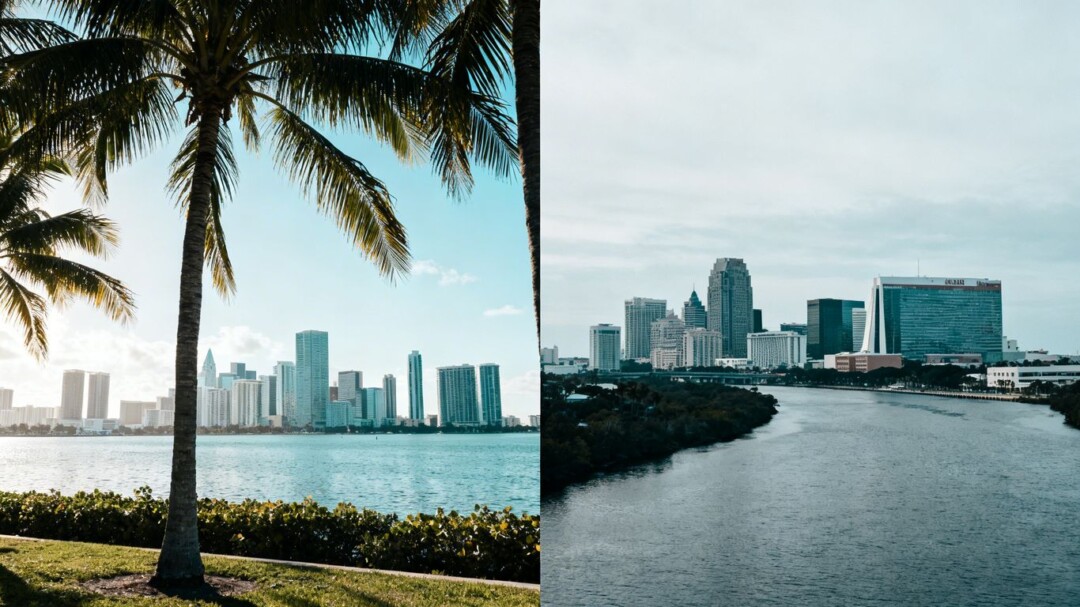
Florida’s vibrant real estate market is showing signs of a slowdown, with key cities like Miami and Jacksonville experiencing falling median list prices. While national reports have raised concerns about declining home values, local data suggests a more nuanced picture of a cooling market rather than a collapse. Buyers are finding slightly more leverage, but strategic pricing remains crucial for sellers.
Key Takeaways
- Miami’s median list price dropped 3.5% year-over-year in March to $627,000, though it remains significantly above the national median.
- Jacksonville saw a 2.0% year-over-year dip in its median list price to $289,000 in March.
- Inventory levels are tighter in Miami and Jacksonville compared to the national trend.
- Homes are taking longer to sell in both cities, indicating a shift in market dynamics.
- Realtors emphasize the difference between list prices and actual sale prices, with some arguing that Florida’s market is returning to normal rather than crashing.
Miami Market Softens
Miami’s typically fast-paced real estate market experienced a softening in March. Median list prices declined by 3.5% year-over-year to $627,000, a notable shift from previous trends. Homes are also taking longer to sell, with the typical property sitting on the market for 75 days, 18 days longer than the national median. Despite this cooling, inventory remains tight, with active listings down 2.9% year-over-year. Sellers who price their homes strategically are still seeing success, as evidenced by a below-national-average rate of price cuts.
Jacksonville’s Competitive Landscape
In Jacksonville, the market also saw a modest price dip, with the median list price falling 2.0% year-over-year to $289,000 in March. However, this decline aligns with the national trend and is not seen as a local signal of distress. More significantly, inventory has shrunk by 17.5% year-over-year, making the market more competitive for buyers. The share of sellers cutting prices has also decreased, suggesting growing seller confidence. While homes are taking longer to sell (57 days on average), well-priced properties continue to attract attention.
A Tale of Two Metrics: List Price vs. Sale Price
Industry experts highlight a crucial distinction between list prices and actual sale prices. While some national reports focus on list price declines, Florida Realtors data indicates that closed sales and average sale prices have seen increases in February. Realtors argue that list prices can be aspirational, and actual home values are determined by finalized transactions. Distressed property sales, such as foreclosures and short sales, remain a very small fraction of the overall market, far below historical highs.
Navigating the Current Market
For buyers, the current market in Miami and Jacksonville offers more negotiating room than in recent years. However, the tightening inventory in both cities means that well-priced homes are still in demand. Sellers are advised to price realistically from the outset to ensure a timely sale. The market appears to be transitioning from a seller’s market to a more balanced environment, rewarding pragmatism and strategic decision-making.
Sources
- Real Estate Market Trends in Miami, FL: Prices Fall, Realtor.com.
- Real Estate Market Trends in Jacksonville, FL: Prices Fall, Yahoo Finance.
- Some say Florida home values are falling. Here’s what the facts show., Daytona Beach News-Journal.